Languages
Friday, November 13, 2026



News and Views from the Global South
Development & Aid
In India, Ending FGM Demands Truth and Transparency
“My daughter is eight years old. In May 2017, I had her ‘Khatna,’ her circumcision, done. I had taken her to a traditional cutter. Once back home I made her sleep on the bed. After some time, around 4:00 p.m. I took her to the bathroom, she was bleeding as if she had started her menses. It seemed like she was urinating blood. By 6:00 p.m. my daughter had been bleeding so heavily, the blood had soaked three bed sheets and I was very worried. And my daughter was quiet and she also kept asking me if she will be fine.” Excerpt from: How I got her from the hands of death: WeSpeakOut study 2018
Vietnam Takes the Lead on Indo-Pacific Economic Integration
This was the year that Vietnam was poised to make progress on its rise as a regional leader. Under the auspices of Vietnam’s ASEAN chairmanship, a breakthrough in global trade has been achieved despite rising protectionism and a global pandemic.
More Children in Zimbabwe Are Working to Survive: What’s Needed
The ability of Zimbabwean families to take care of children has been compromised by a collapsing economy, compounded by COVID-19. About 4.3 million people in rural communities, including children, are food insecure this year. The World Food Programme indicates that at least 60% of the population of Zimbabwe need food aid.
Despite Conflict and COVID-19, Children Still Dream to Continue Their Education in Afghanistan
As if four decades of war were not enough, then came the pandemic. For each of the past five years, Afghanistan has been identified by the United Nations as the world’s deadliest country for children and, despite progress made in peace talks between the government and the Taliban, child and youth casualties from the ongoing conflict continue to mount in 2020.
Peacekeeping is a Double-Edged Sword
UN peacekeeping dangerously overlooks the reality that peace operations have both unintended and negative consequences. Any intervention into the politics and culture of a community is bound to create tensions between local practices and foreign peacebuilding practices.
The Covid Pandemic: Broadening the Discourse
SARS-CoV-2, the corona virus that causes COVID-19, has been spreading exponentially across the world over the last ten or so months. As of November 6th, according to the Center for Systems Science at Johns Hopkins University, there have been 49,195,581 cases of COVID-19, including 1,241,031 deaths.
Is Development for the World Bank Mainly Doing Business?
The World Bank has finally given up defending its controversial, but influential Doing Business Report (DBR). In August, the Bank “paused” publication of the DBR due to a “number of irregularities” after its much criticized ranking system was exposed as fraudulent.
Q & A: Escalating Tensions in Ethiopia adds to Tenuous Refugee Setting
Already reeling from conflict, extreme weather events and growing displacement due to the COVID-19 pandemic, escalating tensions in Ethiopia’s Tigray region have placed the country on the brink of civil war and many are looking to Nobel Peace Prize-winning Prime Minister Abiy Ahmed to avert a potential humanitarian disaster.
Chile’s Energy Revolution Has an Achilles’ Heel
The Atacama Desert, a giant reservoir of solar power, is the battering ram of the transformation undertaken by Chile to decarbonise its energy mix, in a country with enormous potential in non-conventional renewable sources.
From Paraguay to Italy: Development at All Costs
I am speaking with Gladys and Raúl about civic space in Paraguay, when Raúl suddenly tells me about the fires. Thick smoke has reached the capital Asunción where he is based. In October, Paraguay became Dante’s Inferno.
Pandemic Induced Drop in Remittance Flows to South Asia
Remittances are an essential part of economic activity in low and middle-income countries (LMIC), including those in South Asia. Because of the pandemic remittances to LMIC are expected to drop from $548 billion on 2019 to $508 billion in 2020 and $470 billion in 2021. The implied growth rates for 2020 and 2021 are -7.2% and -7.5%. For South Asia the drop will be from $140 billion in 2019 to $135 billion in 2020 and $ 120 billion in 2021 with implied growth rates of -3.6% and -10.9%. https://www.knomad.org/publication/migration-and-development-brief-33
India: How Did Young People Access Care During the Lockdown?
COVID-19 has developed into an unprecedented public health crisis, the impact of which has been seen across global health systems and services. As the crisis continues to evolve in India, there is a need to examine the impact of the pandemic and ensuing nation-wide shutdown on young people’s lives, particularly, their experience of mental ill health.
Punches & Insults: Why Zimbabwe’s Women Candidates Want to Change the Political Playing Field
“I have long given up on active politics,” Gertrude Sidambe, a 36-year-old member of one of Zimbabwe’s opposition parties, tells IPS. When female members of the ruling Zimbabwe African National Union – Patriotic Front complained last month about political violence as male members chose brawn over brains to solicit for positions, the party’s National Secretary for Women’s Affairs Mabel Chinomona advised that they enter the punch-and-insult battlefield and “fight” like everyone else.
Growing Resilient Food Systems Post Covid Is Key for Africa
When it comes to food security, the challenge is not always about producing more - it’s also about quality: producing food that is wholesome and preserved safely.
UN Takes Preventive Measures Following 5,660 Lab-Confirmed COVID-19 Cases System-Wide
As we navigate the COVID-19 pandemic response, I would like to assure you once again that the health and safety of personnel and delegates continues to be our number one priority.
South Africa Has Failed to Harness the Digital Revolution: How It Can Fix the Problem
The COVID-19 pandemic has precipitated a migration from physical work spaces in many sectors of the economy to online, digital services, supported by staff working from home. Parts of the economy such as mining, manufacturing and hospitality still require workers to be physically present. But other sectors have discovered that virtual platforms are effective substitutes for offices.
Education Cannot Wait Interviews LEGO Foundation CEO John Goodwin
John Goodwin joined the LEGO Foundation as CEO in April 2017 to pursue a career where he could combine his business skills with his passion for philanthropy and driving positive social impact.
Solving the Challenge of Food Security Key to Peacebuilding in the Sahel
In 2013, when Jamila Ben Baba started her company, the first privately owned slaughterhouse in Mali, she did so in the midst of a civil war as Tuareg rebels grouped together in an attempt to administer a new northern state called Azawad. Ben Baba, who is originally from Timbuktu, in northern Mali — where much of the civil war conflict took place — based the business in the country’s western region of Kayes and grew it into what is considered the largest private slaughter house in the West African nation.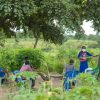
Africa Must not Assume a ‘Business as Usual’ Approach to COVID-19 Recovery
The corona virus pandemic is impacting Africa’s population in quite differentiated ways and is significantly entrenching inequality. At the greatest risk are lives and livelihoods of the poor.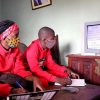
Television Education in Mozambique
"We missed our teachers, they were very friendly and helped us solve the complex exercises, but with the coronavirus, we need to adapt and learn to solve our exercises alone at home," says Alzira Ngomane, 17 years old, and her brother Amilcar Ngomane, 14, from the Albazine district, in the city of Maputo, Mozambique.
Driving Climate Change from the Top in the Dominican Republic
When President Luis Abinader arrived at his inauguration in an electrically driven car as a symbolic gesture of his Government’s intentions to make sustainable development one of its main objectives – he signalled the start of addressing climate change commitments in the country.« Previous Page — Next Page »


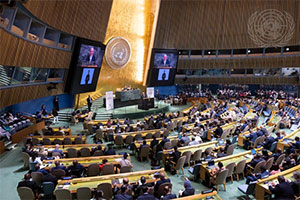 2026 High-level Political Forum on Sustainable Development. Credit: UN Photo/Eskinder Debebe
In 2015, the United Nations and its Member States adopted the Sustainable Development Goals (SDGs) in an effort to make the world a more sustainable and peaceful place for future generations. Progress on the 17 SDGs has been uneven, and inequality persists across the globe. 10 years after adoption, the 2025 UN SDGs Report revealed that only 35% of the SDG targets are on track, with more than half moving too slowly, and 18% moving backwards from the 2015 baseline. Poverty remains one of the world’s most pressing issues, with hunger, violence, and inequality impeding the opportunities for all people to achieve success. In September 2024, the United Nations Summit of the Future introduced a new goal: to eradicate global poverty by 2030, ensure universal rights to basic services, and increase the overall standard of living in terms of industrialization, economic well-being, citizen health, and literacy. Furthermore, recent shifts in United States foreign aid policy – notably, major budget cuts to USAID and the termination of thousands of development programmes– have severely threatened vital lifelines of financial aid to impoverished communities around the world. Additionally, the United States’ withdrawal from the Paris Climate Agreement has undercut international efforts at sustainable development. With the upcoming 2030 deadline, the UN Secretary-General has called for urgent multilateralism across six priority areas: food systems, energy, digital connectivity, education, jobs and social protection, and climate and biodiversity. IPS sheds light on marginalized communities that struggle on a daily basis to survive and have their stories heard and respected.
Updated by Yilan Batista and Shuli Wong August 2026

The Week with IPS

NEXT STOP - SDGs
Tracking global progress towards a sustainable world
Tracking global progress towards a sustainable world
