Languages
Thursday, November 19, 2026



News and Views from the Global South
Development & Aid
Covid-19: Caring for Care Workers
COVID-19 has brought the world to a halt. Nations, businesses, and schools have closed, and billions are confined to their homes. Yet millions of care workers step out daily to keep the lights on and support those in need.
Migrant Women Exploited by Those They Trust
Maliha Masud (25), was promised an affluent life and opportunities for higher education. A bright student studying Biochemistry and Molecular Biology, she wanted to complete her studies and become someone her parents would be proud of. She was promised an opportunity to get her Master’s degree from a good university in the United States but, two years later, was left battered and wounded at the doorstep of a shelter.
Shedding Some Light at the End of the Covid-19 Tunnel: Plotting a Way Forward
Lockdowns have been the main measures to ‘flatten the curve’ of COVID-19 infections. But lockdowns typically incur huge economic costs, distributed unevenly in economies and societies. In fact, some governments acknowledged that they were choosing ‘life over economy’. ‘Life vs. Economy’: A false dichotomy As lockdowns have been repeatedly extended arguing that economy can be revived but not the dead, it has become increasingly clear that ‘lives and livelihoods’ are intrinsically intertwined. The longer the lockdowns, higher is the risk of hunger and hence death.
The Struggle for Land and Food in the Locked-down Philippines
Landless farmers who produce rice for the landlords of big “haciendas” can’t get more than a little pocket money from their harsh work—not enough to provide diverse and healthy food for their families. Seasonal workers on sugar-cane plantations know that they can count on only six months of earnings. When summer arrives, those whose irrigation facilities have been destroyed by typhoons, or those who never had any, struggle while waiting for the rain.
COVID-19: Reset Food Systems Now for a Better Future
The COVID-19 pandemic has highlighted the inherent fragility of food systems, Marta Antonelli told an international video conference organised by the Barilla Center for Food Nutrition (BCFN).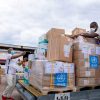
Beyond the COVID-19 Pandemic: What Now?
In the midst of the COVID 19 pandemic, the much-anticipated 73rd World Health Assembly (WHA) of the WHO concluded without any major controversies or disagreements.
Covid-19 Recessions: This Time It’s Really Different
The world economic contraction so far this year is largely due to measures, especially at the national or local level, to contain or prevent Covid-19 contagion, particularly those restricting business operations, thus reducing economic activity, output, incomes and spending.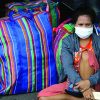
Lifelines in Danger
The COVID-19 pandemic is crippling the economies of rich and poor countries alike. Yet for many low-income and fragile states, the economic shock will be magnified by the loss of remittances—money sent home by migrant and guest workers employed in foreign countries.
Blog: Making technology an effective weapon in the battle against COVID-19
Imagine a world without the internet and erase the last few decades of technological advancement. Then imagine how governments, schools and businesses would have dealt with the COVID-19 pandemic.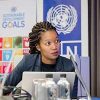
The Curious Case of Covid-19 in Africa
With very weak health systems and overall capacity constraints to effectively respond to the deadly coronavirus disease, Africa’s fate against the invisible enemy, was going to be nothing short of catastrophic according to early predictions. Although Africa is yet to reach its peak, many countries are not seeing the exponential growth in case numbers, or in mortality rates as seen in other regions of the world. So far, the continent has the lowest mortality rates with higher recovery rates globally.
World Comes Together with $1.35 billion for Yemen
World leaders gathered on Tuesday to pledge $1.35 billion in aid for Yemen, which currently undergoing what many is the world’s “worst humanitarian crisis”, with Saudi Arabia announcing a contribution of $500 million.
WORLD ENVIRONMENT DAY 2020
 My name is Emma, I’m 10 years old, and I live in Canada. I am sharing this video with you, today, because I learned at school that my future – the future of all children – will be determined by what we do together today.
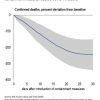
How the Great Lockdown Saved Lives
Since the COVID-19 outbreak was first reported in Wuhan, China in late December 2019, the disease has spread to more than 200 countries and territories. In the absence of a vaccine or effective treatment, governments worldwide have responded by implementing unprecedented containment and mitigation measures—the Great Lockdown. This in turn has resulted in large short-term economic losses, and a decline in global economic activity not seen since the Great Depression. Did it work?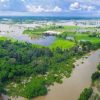
How to Transform UN’s Environmental Goals into a People’s Agenda for Africa
The COVID-19 insurgence has highlighted the need for multilateral cooperation among sustainability stakeholders. As the journey towards achieving Agenda 2030 and the Sustainable Development Goals (SDGs) is fraught with imminent global challenges, global environmental leaders agree that now is the time to act collectively for nature, leaving no one behind.
Prioritising Life or the Economy Will Determine the Post-Pandemic Focus in Urban Areas
The first priority in the COVID-19 pandemic was to save lives, in an effort to avoid even more devastating economic losses if strict lockdown and isolation were not put in place.
This Year of Living Dangerously
Indonesia’s founding President Sukarno delivered his annual Independence or National Day address on 17 August 1964 anticipating the forthcoming year as Tahun vivere pericoloso, the ‘year of living dangerously’. 2020 may well be the world’s turn, and not only due to the obvious Covid-19 threat to the world.
Is the Fight for Human Rights & Racial Justice Overriding the Coronavirus Risk?
The deadly coronavirus pandemic, which has claimed the lives of over 372,000 people worldwide, has reinforced the concept of “social distancing” which bars any gathering of over 10 or 20 people – whether at a social event, a wedding, a political rally or even a funeral.
Beyond the Crisis
Looking back to the start of 2020, the world has changed almost beyond recognition. To protect public health, the global economy was put into stasis. Shops closed, factories were mothballed, and people’s freedom of movement was severely curtailed. No country has escaped the health, economic, and social impacts of the COVID-19 crisis. Tragically, more than 260,000 people have died and millions have been infected. The IMF is projecting global economic activity to decline on a scale not seen since the Great Depression. It is truly a crisis like no other.
COVID 19 – Conspiracy or Apocalypse? – Part I
As the COVID-19 virus spread rapidly around the globe, so did various theories about what caused the pandemic. According to the standard scientific theory, the virus probably originated in bats and then crossed over to humans, probably via another intermediate host. It then spread rapidly across the globe, piggybacking on the international travel network.
For Love or Land – The Debate about Kenyan Women’s Rights to Matrimonial Property
Ida Njeri was a civil servant with access to a Savings and Credit Cooperative Society (SACCO) through her employer, and her husband a private consultant in the information and communication sector, when she began taking low-interest loans from the cooperative so they could buy up land in Ruiru, Central Kenya. She’d willing done it. Part of their long-term plan together for having a family was that they would acquire land and eventually build their dream home. But little did Njeri realise that 12 years and three children later the law would stand against her right to owning the matrimonial property.
The Consequential Effects of Covid-19 on the Climate Crisis
The tragedy of the coronavirus pandemic and its associated challenges have thrown our world into chaos, with the virus destroying lives and livelihoods in its path.« Previous Page — Next Page »


 2026 High-level Political Forum on Sustainable Development. Credit: UN Photo/Eskinder Debebe
In 2015, the United Nations and its Member States adopted the Sustainable Development Goals (SDGs) in an effort to make the world a more sustainable and peaceful place for future generations. Progress on the 17 SDGs has been uneven, and inequality persists across the globe. 10 years after adoption, the 2025 UN SDGs Report revealed that only 35% of the SDG targets are on track, with more than half moving too slowly, and 18% moving backwards from the 2015 baseline. Poverty remains one of the world’s most pressing issues, with hunger, violence, and inequality impeding the opportunities for all people to achieve success. In September 2024, the United Nations Summit of the Future introduced a new goal: to eradicate global poverty by 2030, ensure universal rights to basic services, and increase the overall standard of living in terms of industrialization, economic well-being, citizen health, and literacy. Furthermore, recent shifts in United States foreign aid policy – notably, major budget cuts to USAID and the termination of thousands of development programmes– have severely threatened vital lifelines of financial aid to impoverished communities around the world. Additionally, the United States’ withdrawal from the Paris Climate Agreement has undercut international efforts at sustainable development. With the upcoming 2030 deadline, the UN Secretary-General has called for urgent multilateralism across six priority areas: food systems, energy, digital connectivity, education, jobs and social protection, and climate and biodiversity. IPS sheds light on marginalized communities that struggle on a daily basis to survive and have their stories heard and respected.
Updated by Yilan Batista and Shuli Wong August 2026

The Week with IPS

NEXT STOP - SDGs
Tracking global progress towards a sustainable world
Tracking global progress towards a sustainable world
