Languages
Thursday, November 19, 2026



News and Views from the Global South
Development & Aid

COVID-19: Why We Must Reset Our Thinking
Covid-19 is the most significant event since the Second World War. It changes everything. It brings great sadness to many of us as we lose loved ones, as we see people losing their jobs, and as we see people around the world suffering immensely.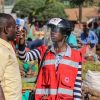
Finding Money for Public Health, Green Economic Recovery & SDGs
The coronavirus pandemic underscores the profound fragility and unsustainability of today’s world. It exposes the chronic underinvestment in human health and well-being and the consequences of a relentless exploitation of biodiversity and the natural environment.
‘Passing the Buck’ Becomes Reckless ‘Conspiracy Blame Game’
Although Wuhan local authorities undoubtedly ostracized local medical whistle-blowers, notably Dr Li Wenliang, who suspected a new virus was responsible for flu-like infections in Wuhan in late 2019, official responses were apparently not delayed, and possibly even expedited, as the novel character of the SARS-CoV-2 virus, responsible for Covid-19 infections, was not immediately self-evident.
COVID-19 and the assault on fundamental rights
A spectre is haunting the conscientious citizens of Bangladesh—the spectre of the Digital Security Act, 2018 (DSA). By now the law has become synonymous with curtailment of freedom of expression and repression. The recent developments of involuntary disappearance, re-appearance and subsequent detention of several commentators and social activists have raised the alarm if indeed we as a nation are shying away from upholding one of the cardinal principles of the Muktijuddher Chetona (the spirit of the Liberation War) to freely express our views.
Africa’s Health Dilemma: Protecting People from COVID-19 While Four Times as Many Could Die of Malaria
Experts across Africa are warning that as hospitals and health facilities focus on COVID-19, less attention is being given to the management of other deadly diseases like HIV/AIDS, tuberculosis and malaria, which affect millions more people.
NGOs – with Local Groups in the Lead – are on COVID-19 Frontlines
NGOs, at the international, national - and most of all local - level are on the frontlines every day. I just heard from Oxfam staff in Bangladesh, that when asked whether they were scared to continue our response with the Rohingya communities in Cox’s Bazar, they replied: “They are now my relatives. I care about them — and this is the time they need us most.’”
VE Day Marks the End of the Second World War-But the World is Still at War
The world commemorated the 75th Anniversary to mark the end of the 2nd World War also called VE Day on 08 May 2020. With her nation, and much of the world still in lockdown due to COVID 19, England’s Queen marked 75 years since the allied victory in Europe with a poignant televised address. From Windsor Castle, Queen Elizabeth said, “the wartime generation knew that the best way to honour those who did not come back from the war, was to ensure that it didn’t happen again”.
Women Taking Charge during COVID-19
As the COVID-19 mayhem carries on in most countries, the role of mothers, daughters, and female caregivers have been affected the most. Besides looking after the household and home schooling children, they are also working on the front lines, actively or passively caring for their respective communities.
COVID-19: The Digital Divide Grows Wider Amid Global Lockdown
The digital divide has become more pronounced than ever amid the global coronavirus lockdown, but experts are concerned that in the current circumstances this divide, where over 46 percent of the world's population remain without technology or internet access, could grow wider -- particularly among women.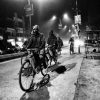
The Role of Civil Society in Times of Crisis
The ongoing COVID-19 pandemic has shown us something that most of us haven’t seen in our lifetimes: Large numbers of people unable to have two meals a day.
Religion & its Discontents: Considerations Around COVID-19 & Africa
COVID-19 has spread to many nations around the world, and has been declared a pandemic by the World Health Organization. In the global south, the COVID-19 pandemic has stretched the available medical and health resources, triggered economic shocks, and caused social upheavals and insecurity in many countries and localities.
Black Americans are Bearing the Brunt of Coronavirus Recession – This Should Come as no Surprise
As the COVID-19 pandemic worsened in April, many Americans were shocked by the extent that black Americans were being disproportionately impacted: higher infection rates, more deaths and greater job loss. But many black Americans were not surprised.
COVID-19 & Human Health Risks Linked to Wildlife Trade Practices
At the time of writing, the COVID-19 pandemic is raging worldwide, causing human mortality and socio-economic disruption on a massive scale and it appears highly likely that profound impacts will continue for many years to come.Time for the World Bank and IMF to Be the Solution, Not the Problem
The World Bank and the International Monetary Fund (IMF) have a historic opportunity to help stabilize a world reeling from COVID-19. Doing so will require the institutions to change course and aggressively support poor countries’ ability to invest broadly in the government services their populations need.
World’s Poor Hit by Double Jeopardy: a Deadly Virus & a Devastating Debt Burden
The world’s poorer nations, reeling under an unrelenting attack on their fragile economies by the COVID-19 pandemic, have suffered an equally deadly body blow: being buried under heavy debt burdens.
Coronavirus Hasn´t Slowed Down Ecological Women Farmers in Peru’s Andes Highlands
It's eight o'clock in the morning and Pascuala Ninantay is carrying two large containers of water in her wheelbarrow to prepare with neighbouring women farmers 200 litres of organic fertiliser, which will then be distributed to fertilise their crops, in this town in the Andes highlands of Peru.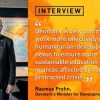
The Power of Education in Emergencies: Interview with Denmark’s Minister of Development Cooperation Rasmus Prehn
Denmark is Education Cannot Wait’s (ECW) third largest donor, with US$79.1 million in contributions to date. In this insightful interview with Denmark’s Minister for Development Cooperation, Rasmus Prehn, we explore the importance of girls’ education and gender equality, the humanitarian-development nexus, expanded engagement with the private sector, education in emergency response to the COVID-19 pandemic and more. A former high school teacher, with a master’s degree in social science, Minister Prehn has been a member of Danish Parliament since 2005, and was named Minister for Development Cooperation on June 27, 2019. Minister Prehn is the former chairman of the Danish Research, Education and Further Education Committee, a tireless advocate for education in emergencies, and a true champion for achievement of the Sustainable Development Goals, especially SDG4: inclusive and equitable, quality education for all.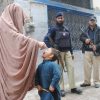
Polio, Measles Outbreaks ‘Inevitable’, Say Vaccine Experts
Interruptions to vaccination programmes caused by the COVID-19 pandemic could result in new waves of measles or polio outbreaks, health experts warn.
COVID-19: Developing Countries Must Not be Left Behind
Globalization has been a driver for increased prosperity world-wide, but it has been in reverse in the last years due to the growth of populism in the USA and Europe. The COVID-19 pandemic may well provide further momentum to increasingly national-interest oriented policies in the west.
Q&A: COVID-19 Means we Must Innovate Data Collection, Especially on Gender
The current coronavirus pandemic can offer insight into how to shake-up traditional methods of data collection, and might provide an opportunity to do it in more innovative ways, in turn enhancing progress towards gender equality.
Global Impact of New Corona Virus and Population Issues
The new coronavirus (COVID-19) continues to wreak havoc across the world, as the number of infections and deaths rapidly rise. It has the potential to infect anybody regardless of age or gender. There are grave concerns that the economic fallout from COVID-19 may be comparable to that of the Great Depression. According to Johns Hopkins Coronavirus Resource Center, there are 2,064,668 confirmed cases of COVID-19 and 137,124 deaths due to SARS-CoV-2 (the virus causing COVID-19). In Japan as of noon April 15, there were 8,100 cases of COVID-19 , 119 deaths, and 901 patients discharged from hospitals.« Previous Page — Next Page »


 2026 High-level Political Forum on Sustainable Development. Credit: UN Photo/Eskinder Debebe
In 2015, the United Nations and its Member States adopted the Sustainable Development Goals (SDGs) in an effort to make the world a more sustainable and peaceful place for future generations. Progress on the 17 SDGs has been uneven, and inequality persists across the globe. 10 years after adoption, the 2025 UN SDGs Report revealed that only 35% of the SDG targets are on track, with more than half moving too slowly, and 18% moving backwards from the 2015 baseline. Poverty remains one of the world’s most pressing issues, with hunger, violence, and inequality impeding the opportunities for all people to achieve success. In September 2024, the United Nations Summit of the Future introduced a new goal: to eradicate global poverty by 2030, ensure universal rights to basic services, and increase the overall standard of living in terms of industrialization, economic well-being, citizen health, and literacy. Furthermore, recent shifts in United States foreign aid policy – notably, major budget cuts to USAID and the termination of thousands of development programmes– have severely threatened vital lifelines of financial aid to impoverished communities around the world. Additionally, the United States’ withdrawal from the Paris Climate Agreement has undercut international efforts at sustainable development. With the upcoming 2030 deadline, the UN Secretary-General has called for urgent multilateralism across six priority areas: food systems, energy, digital connectivity, education, jobs and social protection, and climate and biodiversity. IPS sheds light on marginalized communities that struggle on a daily basis to survive and have their stories heard and respected.
Updated by Yilan Batista and Shuli Wong August 2026

The Week with IPS

NEXT STOP - SDGs
Tracking global progress towards a sustainable world
Tracking global progress towards a sustainable world
