Languages
Thursday, November 19, 2026



News and Views from the Global South
Development & Aid

United States Leads the World in Covid-19 Deaths
It’s an indisputable fact: the United States leads the world in the number of Covid-19 deaths. As of 15 May, three months after the country’s first confirmed coronavirus death, the US death toll from the pandemic has reached a remarkable 88,000 deaths. That rising figure is more than double the number of coronavirus deaths of the next highest country, the United Kingdom at 34,000 deaths.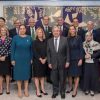
South Africa Must Respond – & Lead– on COVID-19 & SDGs
Sitting on the southern tip of Africa during a time of social distancing, while the entire planet fights Covid-19, we cannot help but reflect on how vulnerable our country is to this scourge.
My Adherence My Fallacy: Stigma and Mental Health
The World Health Organization (2019) states that every 40 seconds someone dies by suicide. Annually, this represents over 800,000 people, more than the number of people who die in conflict and by homicide put together. Every suicide is a tragedy that has long-lasting effects on the people left behind and most cases stem from prolonged mental health issues and abuses that are not reported.
Forgotten Children
Children residing in Child Care Institutions (CCIs, commonly known as orphanages) in India have often found themselves to be the forgotten lot, when it comes to support and development initiatives by the government. This has also been the case during the current lockdown.
The Government of Kenya and UN commit to expanding education, training and employment opportunities for young people, on an unprecedented scale
Hon. Joseph Mucheru, Cabinet Secretary for ICT, Innovation and Youth, (CS) and Kenya’s representative in the Generation Unlimited (GenU) Global Board convened today the UN Kenya Country team to identify opportunities on how to swiftly expand education, training and employment opportunities for young people, on an unprecedented scale.
COVID-19 Has Blown Away the Myth About ‘First’ and ‘Third’ World Competence
One of the planet’s – and Africa’s – deepest prejudices is being demolished by the way countries handle COVID-19.
Modern Slavery in Asia Pacific Fuelled by Widespread Poverty, Migration & Weak Governance – Part 1
Aged 17, Moe Turaga was saddled with the responsibility of providing for his mother and young siblings when a family member approached him with the promise of a job and education in Australia. Dreaming of a bright future for himself and his family, he seized the opportunity and left the protective confines of his home in Fiji, only to find himself trapped in modern slavery on a remote agriculture farm in the state of Victoria.
Curbing Land Degradation & Protecting the Environment in Mongolia
Mongolia is one of the most sparsely populated countries in the world. Yet, more than 70 percent of its surface is affected by land degradation. Mining activities in several parts of the country have been a source of humanitarian and environmental concern. However, different stakeholders are coming together to work towards restoration and rehabilitation.
Dr Stuart Minchin, Director-General of SPC: With the crisis, we’re learning new ways of working

A conversation with SPC's Director-General on how the Pacific Community (SPC) helps Pacific countries respond to the COVID-19 crisis.
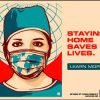
Stay Home? Wash Hands? But 1.8 Billion Remain Homeless & 3.0 Billion Have No Access to Water
The relentless battle against the devastating coronavirus pandemic has been underlined by several widespread advisories from health experts – STAY HOME. WASH YOUR HANDS. WEAR MASK. KEEP SOCIAL DISTANCE.
Without Universal Health Coverage We Are Sitting Ducks When the next Pandemic Strikes
We live in a different world to the one we inhabited six short months ago. With more than 4 million people infected and over 280,000 dead globally by mid May 2020, Covid-19 has ruthlessly exposed the vulnerability of a globalised world to pandemic disease. People are slowly coming to terms with the frightening and heartbreaking death toll, and we are still not out of the danger.
Could BCG, a 100-year-old Vaccine for Tuberculosis, Protect Against Coronavirus?
This week, the Bill and Melinda Gates Foundation announced it will donate A$10 million to help fund an Australian trial testing whether a very old vaccine, BCG, can be used against a new threat, COVID-19. So what is the BCG vaccine and what might its place be in the fight against coronavirus?
The Commonwealth’s Response to COVID-19
The Coronovirus pandemic has been an unforgiving test of advanced economies. Health systems in the United States, France, Italy, Spain, and the UK have been put under immense pressure, with shortages of doctors, ventilators, personal protective equipment and the capacity to test for the virus. Their economies have been battered and the consequences are spoken of in terms of the Great Depression.
We Cannot Let the Education Gap Widen at the Start of the Decade of Action
Prior to the COVID-19 pandemic, we estimated that 75 million children and youth - of whom 39 million are girls - were not able to access a quality education in countries impacted by armed conflicts, forced displacement, natural disasters and climate change-induced emergencies. The impact of COVID-19 has both globally and exponentially deepened the already existing critical education crisis.
Malawi’s Vulnerable Shortchanged in Human Trafficking Prevention Efforts
Malawi is not doing enough to enforce its laws on human trafficking, resulting in a number of cases against perpetrators being dismissed by the courts, according to a local rights group. But local officials say that this Southern African nation — one of the poorest countries in the world — just doesn’t have the financial resources to do so.
Why Some National Health Care Systems Do Better than Others
In public health discussions, it is generally recognized that the social returns to health care investments are greater than the private returns, and much of such investments should be financed by the state.
Housing is Both a Prevention & Cure for COVID-19
Public health officials are calling the “stay home” policy the sacrifice of our generation. To flatten the curve of COVID-19 infections, this call of duty is now emblazoned on t-shirts, in street art and a celebrity hashtag.
UNESCO and Education Cannot Wait provide the Ministry of Education and Higher Education with online learning material for teachers and students
(UNESCO/Ministry of Education and Higher Education/ECW) - The COVID-19 pandemic has translated into a major education crisis. In Lebanon, 1.2 million children are affected by school closures and have seen their learning routines disrupted. While Lebanon has switched to distance teaching and learning to mitigate the effects of this disruption, challenges related to preparedness, infrastructure and capacity, as well as the digital gaps, have put additional strains on students, parents, teachers, and the educational authorities.
Protecting Women’s Reproductive Health During the Pandemic
“When I was 13… I got pregnant from my older brother… He raped me starting when I was 11,” a girl from Guatemala told one of us in 2015. She was one of the 2 million girls under 15 worldwide who give birth each year, often due to sexual violence.
COVID-19: Zimbabwe’s Smallholder Farmers Step into the Food Supply Gap
Bulawayo, Zimbabwe' second city of some 700,000 people, has experienced a shortage of vegetables this year, with major producers citing a range of challenges from poor rains to the inability to access to bank loans to finance their operations. But this shortage has created a market gap that Zimbabwe smallholders — some 1.5 million people according to government figures — have an opportunity to fill.
COVID-19: Why We Must Reset Our Thinking
Covid-19 is the most significant event since the Second World War. It changes everything. It brings great sadness to many of us as we lose loved ones, as we see people losing their jobs, and as we see people around the world suffering immensely.« Previous Page — Next Page »


 2026 High-level Political Forum on Sustainable Development. Credit: UN Photo/Eskinder Debebe
In 2015, the United Nations and its Member States adopted the Sustainable Development Goals (SDGs) in an effort to make the world a more sustainable and peaceful place for future generations. Progress on the 17 SDGs has been uneven, and inequality persists across the globe. 10 years after adoption, the 2025 UN SDGs Report revealed that only 35% of the SDG targets are on track, with more than half moving too slowly, and 18% moving backwards from the 2015 baseline. Poverty remains one of the world’s most pressing issues, with hunger, violence, and inequality impeding the opportunities for all people to achieve success. In September 2024, the United Nations Summit of the Future introduced a new goal: to eradicate global poverty by 2030, ensure universal rights to basic services, and increase the overall standard of living in terms of industrialization, economic well-being, citizen health, and literacy. Furthermore, recent shifts in United States foreign aid policy – notably, major budget cuts to USAID and the termination of thousands of development programmes– have severely threatened vital lifelines of financial aid to impoverished communities around the world. Additionally, the United States’ withdrawal from the Paris Climate Agreement has undercut international efforts at sustainable development. With the upcoming 2030 deadline, the UN Secretary-General has called for urgent multilateralism across six priority areas: food systems, energy, digital connectivity, education, jobs and social protection, and climate and biodiversity. IPS sheds light on marginalized communities that struggle on a daily basis to survive and have their stories heard and respected.
Updated by Yilan Batista and Shuli Wong August 2026

The Week with IPS

NEXT STOP - SDGs
Tracking global progress towards a sustainable world
Tracking global progress towards a sustainable world
