Languages
Thursday, November 19, 2026



News and Views from the Global South
Development & Aid

Financial Scams Rise as Coronavirus Hits Developing Countries
In the Philippines, Peru, India, Kenya, South Africa and many other developing countries, poor people who are already struggling with the health impact of the coronavirus pandemic have been targeted by online fraudsters trying to take unfair advantage of them.
Argentina Responds Boldly to Coronavirus Crisis
Like much of the West, Argentina did not take many early precautionary actions after the Covid-19 epidemic was confirmed in January, but became the first Latin American country to act decisively with a 12 March public health emergency declaration. The presidential decree came a day after the World Health Organization (WHO) declared a global pandemic, just over a week after the first case was detected in the republic on 3 March.
Has COVID-19 Reversed Progress for India’s Small Tea Growers?
As the sun sets over the hills, Prafulla Debbarma, a small tea grower in Dhanbilash village in north eastern India, walks along the labyrinth path of his farm and past a thick blanket of well-grown tea plants. In the fading light, the farmer appears deeply worried. This tea farm, the sole source of his livelihood, remains unharvested thanks to the ongoing COVID-19 crisis.
The Unseen Link Between Clean Cooking and the COVID-19 Pandemic
The COVID-19 pandemic has exacerbated inequalities and revealed to what extent current economic models are not sustainable. It has also shown that most countries are not equipped to cope with a health crisis.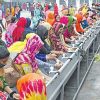
New Normal? Better Normal!
In these times of Covid-19, the big challenge for most of us is how to protect ourselves and our families from the virus and how to hold on to our jobs. For policymakers, that translates into beating the pandemic without doing irreversible damage to the economy in the process.
COVID-19 Deaths Before A Vaccine?
How many COVID-19 deaths will occur before a vaccine becomes available worldwide? As with many seemingly simple questions about an uncertain future, the proper answer to that important query is: “it depends”.
Impact of COVID-19 on Tourism in Small Island Developing States
The COVID-19 pandemic and the measures put in place to contain its diffusion are taking a heavy toll on the tourism sector. According to the United Nations World Tourism Organization (UNWTO), the COVID-19 pandemic will result in a contraction of the tourism sector by 20% to 30% in 2020.
Journalism is Not a Crime…and Fake News on Social Media is Not Journalism
This year’s World Press Freedom Day on 3 May falls during COVID-19 lockdowns in many of our countries. Restriction on movement means journalists all over the world are facing obstacles in getting interviews and data, and verifying stories before publishing.
Protect Journalists’ Rights so We can Stop the COVID-19 Disinfodemic
Andrew Sam Raja Pandian, a digital journalist and founder of a news portal in the southern state of Tamil Nadu, was arrested for running two news articles related to COVID-19.
Across the World, Construction Workers are Caught Between Coronavirus Risk and Joblessness
A daily commute of two-and-a-half hours each way would take a toll on anyone, but for Özkan, a construction worker in Istanbul, the hardest part of his long journey is coping with his fears about what might happen after he gets home.OSCE PRESS RELEASE: COVID-19/Human Trafficking
How to address the consequences of the COVID-19 pandemic for the most vulnerable in our societies, especially for human trafficking victims and survivors, is the focus of a set of recommendations to governments published by the OSCE Special Representative and Co-ordinator for Combating Trafficking in Human Beings Valiant Richey today.
Africa’s Youth Scholars Harvest Ideas on the Business of Agriculture
In Rwanda, Benimana Uwera Gilberthe, a scholar and pepper producer, experienced first-hand the challenges of breaking into agribusiness. While in Nigeria, Ayoola Adewale is trying to understand if poultry egg farming will prove a profitable and viable business opportunity to the youth of the continent’s most populous nation. Also in Nigeria, Esther Alleluyanatha is understanding the link between young people leaving their villages for larger cities, the remittances they send home, and the implications on rural livelihoods and agriculture productivity.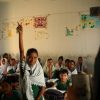
The COVID-19 Pandemic and the Reinvention of the Spirit of Solidarity and Cooperation
An invisible adversary has thrown the world – Global South and Global North alike – into disarray. The psychosocial and economic consequences of the COVID-19 crisis will remain with us long after it has been overcome. There will be no anti-viral return to the pre-coronavirus status quo, nor can we afford to idly wait for a viral transformation of our world. The future is not inevitable, abstract promise – it will depend on our collective readiness to forge it, or to be forged by it.
Public Health and Epidemics
For some time Wuhan in China and Lombardy in Italy were epicentres of the COVID-19 virus, something that has changed when the contagion is spreading fast in the US. A Lombardy in the grip of a deadly epidemic might among several Italians give rise to memories of their school days. For almost a century, Alessando Manzoni’s massive novel The Betrothed (I promessi sposi) from 1842 has been obligatory reading for all Italians during their last primary school year. A quite impressive endeavour considering that the novel is more than 700 pages long.
Only Sustainable Investment & Global Cooperation Can Counter COVID’s Blow to SDGs
We are today in a time of crisis—a time when our shared choices will shape the way history tells our story and the paradigm shift it has so forcefully provoked.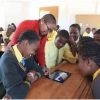
How South Africa can Address Digital Inequalities in E-learning
South Africa’s education system is complex, with historical inequalities dating back to apartheid. Most of the country’s pupils come from disadvantaged backgrounds. Language is an issue; most pupils do not speak English as a mother tongue, yet English dominates in many classrooms. And, as the COVID-19 crisis has showed, there’s a huge digital divide at play.
Press Freedom Needs Protection from Pandemic too
Wearing an orange jacket and face mask, Li Zehua, a Chinese freelance journalist, can be seen filming himself in a car. He is sure that state security agents have been pursuing him since he began documenting events in Hubei’s capital Wuhan, the first epicentre of the COVID-19 pandemic. A second YouTube video, circulating widely since he launched his appeal, ends abruptly when two men knock at his apartment. He has just reappeared online after two months, saying police interrogated him and put him in quarantine and that he was well looked after during this period.
Amid Covid-19 Hunger Fear Mounts in Bangladesh
 The world is at risk of widespread famines resulting from lockdowns to contain the spread of the coronavirus pandemic. The devastating economic impact of Covid-19 is seeing a huge rise in the number of hungry people.

The Crises of 2020 Will Delay the Transition to Clean Energy
The oil slump, global recession and uncertainty about the magnitude of the COVID-19 pandemic will fuel the appetite for cheaper fossil fuel energy and delay investments in renewables, affecting the targets of the Paris Agreement on climate change and the Sustainable Development Goals (SDGs).
Argentina’s Debt Restructuring “Groundhog Day”… or Maybe Not? Three Key Points
On April 17, the Alberto Ángel Fernández administration in Argentina officially unveiled its offer for debt restructuring on USD 66 billion foreign currency-denominated bonds. Starting on that date, the offer is valid for 20 days, a period during which difficult negotiations with bondholders are expected to take place. Based on the first reactions from some of creditor groups, one could well get the sense that the offer is “dead on arrival.”
Remembering Beethoven – a Genius with a Disability
Do you recognize this man? You do, of course. It is the silhouette of Beethoven, the famous composer and pianist, well known all over the world. The year 2020 marks his 250th anniversary and the UN city of Bonn, Germany is very proud of its famous son, born here, next to the river Rhine. The calendar for 2020 shows many festivals, musical events, and exhibitions, attracting tourists and people appreciating classic music from all around the globe. We all immediately recognize his famous Fifth Symphony with the sound known worldwide of ‘da-da-da-daaaa’. As Europeans we honor his Ninth Symphony, this having been chosen as the European anthem.« Previous Page — Next Page »


 2026 High-level Political Forum on Sustainable Development. Credit: UN Photo/Eskinder Debebe
In 2015, the United Nations and its Member States adopted the Sustainable Development Goals (SDGs) in an effort to make the world a more sustainable and peaceful place for future generations. Progress on the 17 SDGs has been uneven, and inequality persists across the globe. 10 years after adoption, the 2025 UN SDGs Report revealed that only 35% of the SDG targets are on track, with more than half moving too slowly, and 18% moving backwards from the 2015 baseline. Poverty remains one of the world’s most pressing issues, with hunger, violence, and inequality impeding the opportunities for all people to achieve success. In September 2024, the United Nations Summit of the Future introduced a new goal: to eradicate global poverty by 2030, ensure universal rights to basic services, and increase the overall standard of living in terms of industrialization, economic well-being, citizen health, and literacy. Furthermore, recent shifts in United States foreign aid policy – notably, major budget cuts to USAID and the termination of thousands of development programmes– have severely threatened vital lifelines of financial aid to impoverished communities around the world. Additionally, the United States’ withdrawal from the Paris Climate Agreement has undercut international efforts at sustainable development. With the upcoming 2030 deadline, the UN Secretary-General has called for urgent multilateralism across six priority areas: food systems, energy, digital connectivity, education, jobs and social protection, and climate and biodiversity. IPS sheds light on marginalized communities that struggle on a daily basis to survive and have their stories heard and respected.
Updated by Yilan Batista and Shuli Wong August 2026

The Week with IPS

NEXT STOP - SDGs
Tracking global progress towards a sustainable world
Tracking global progress towards a sustainable world
