Languages
Friday, November 20, 2026



News and Views from the Global South
Development & Aid

A New Deal for Sustainable Development
Almost nine decades ago, newly elected US President Franklin Roosevelt introduced the New Deal in 1933 in response to the Great Depression. The New Deal consisted of a number of mutually supportive initiatives, of which the most prominent were: a public works programme financed by budget deficits; a new social contract to improve living standards for all working families, including creation of the US social security system; and financial regulation to protect citizens’ assets and channel financial resources into productive investments.
How can Taps, Toilets & Good Hygiene Help Ensure Sustainable & Resilient Agricultural Supply Chains?
Water underpins the global economy and agriculture is by far the world’s largest water consumer, accounting for 70% of freshwater withdrawals. Global water demands are projected to increase by 55% by 2050 and climate change will present further pressures on water accessibility.
Cairo Dream Requires $264 Billion to Deliver Women’s Call for Justice and Bold Leadership
For each of the 830 women dying each day from pregnancy complications and childbirth, an estimated 20 others suffer serious injuries, infections or disabilities. This is the reality that millions of women face, and informs the Nairobi Summit’s three critical commitments which are to bring preventable maternal deaths, gender-based violence and harmful practices, as well as unmet need for family planning, to zero. To achieve this objective money is needed.
Nairobi Summit to Redouble Efforts to Urgently Deal with Reproductive Rights for Women and Girls
More than 6 000 delegates in the population development sector are gathering in the Kenyan capital of Nairobi this week to renew the promise made to girls and women 25 years ago in Cairo.
When is Universal Health Coverage Good for Attaining Universal Sexual and Reproductive Health and Rights?
This is a special year for all rights-based health advocates, as we celebrate 25 years of the International Conference on Population and Development (ICPD).
Investment to Make Africa a World leader in Renewables
Africa, where close to half of its 1.2 billion people have access to electricity, is set to become a world leader in renewable energy. As global business and development leaders met in Johannesburg, South Africa, to attend the Africa Investment Forum (AIF), held Nov. 11 to 13, one of the key focuses of the deals being discussed was around sustainable, renewable energy.
Call to Action as Thousands Breathe New Life to the Cairo Promise at ICPD 25 Summit in Nairobi This Week
Every day 830 women die while giving life. At least 33,000 girls are forced into child marriage with 11,000 girls undergoing female genital mutilation. These are some of the cruel realities young women face every day. However, there is renewed hope that delegates expected to attend the International Conference on Population and Development (ICPD) in Nairobi this week will re-energise and breathe new life to the Cairo Promise.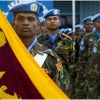
UN Peacekeeping Should Not Violate Charter or Principles of Sovereignty of Member States
Given the political, economic and social exigencies of contemporary peacekeeping, it is important that the Department of Political and Peacebuilding Affairs (DPPA) remains engaged in the process.
Mo Money Mo Solutions – the African Development Bank’s Ready to Double Investment Across the Continent
Buses carrying cross-border traders and goods from Cotonou in Benin to Bamako in Mali have recently been using the Lomé route — travelling through the capital of Togo and then getting onto the Ouagadougou corridor on their way to the Malian capital.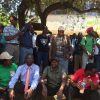
Zimbabwe’s Inflation Makes it Hard to Keep Track of Cost of Living
Stung by the country’s spiralling inflation, Zimbabwe’s government workers took to the streets this week for the first ever police-sectioned march demanding improved wages.
Nearly Half of Nepali Children Still Malnourished
For the first two decades after 1990, Nepal took great strides in reducing malnutrition. But progress has stalled.
The Nairobi Summit Is about the Future of Humanity and Human Prosperity
As we count down the remaining days to the opening of the Nairobi Summit or the International Conference for Population and Development(ICPD), I am confounded by how much humanity has managed to simultaneously empower more women than at any other time in history, while at the same time failing to see that ‘women’s issues’ are actually ‘everyone’s issues’.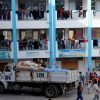
UN Agency for Palestinians in Crisis as Chief Quits
The United Nations agency for Palestinian refugees was in “crisis mode” on Wednesday after director Pierre Krahenbuhl resigned amid a misconduct probe over whether he fast-tracked his girlfriend into a top aid job, analysts said.
Four Ways the African Development Bank Can Support a More Secure Africa
Free movement of people and goods across Africa increases the risk of transmission of infectious diseases. The continent must realise that it is no longer a question of if disease outbreaks will occur, but instead, of when, and how fast.
Urgent Need to Replace Competition with Cooperation in the Aral Sea Basin
The water resources in Central Asia’s Aral Sea Basin support the lives and livelihoods of about 70 million people — a population greater than Thailand, France, or South Africa.
Italy’s Olive-Oil Industry Sees Simmering Threats from Climate Change and Nasty Bacteria
On a warm Saturday morning in late October, the silver-green leaves of the 200 productive olive trees on a rolling country property in Umbria, in central Italy, sparkled in the brilliant sun. Fausto Venturi, a local farmer who devotes autumn weekends to making olive oil, could not have been happier.
Burkina Faso: Climate Change Triggers Rural Exodus
Ibrahim Harouna and his neighbours sit under a tree at his uncle’s house, playing chess and chatting amid the simmering heat of Ouagadougou, the capital of Burkina Faso.
Europe’s Green Deal is Turning Red
Global temperatures are set to rise by a catastrophic 3°C by the end of the century unless we take major action. The next 10 years in particular are crucial.
The Fight for Bread Became a Fight for Freedom
My name is Alaa Salah. I am 22 years old and I grew up in Khartoum. Before the revolution, I was a student of architectural engineering. I did not grow up around politics, but in an ordinary middle-class family—my mother is a designer and my father owns a construction company.
Trade Liberalization for Development?
The International Monetary Fund (IMF), the World Bank and the World Trade Organization (WTO), all dominated by rich countries, have long promoted trade liberalization as a ‘win-win’ solution for “all people—rich and poor—and all countries—developed and developing countries”, arguing that “the gains are large enough to enable compensation to be provided to the losers”.
Prepare to Win: Tsunami Awareness and Preparedness
Once considered rare in their occurrence, in the last 10 years tsunamis have struck nearly every year: from Samoa to Chile, and from Iceland to New Zealand.« Previous Page — Next Page »


 2026 High-level Political Forum on Sustainable Development. Credit: UN Photo/Eskinder Debebe
In 2015, the United Nations and its Member States adopted the Sustainable Development Goals (SDGs) in an effort to make the world a more sustainable and peaceful place for future generations. Progress on the 17 SDGs has been uneven, and inequality persists across the globe. 10 years after adoption, the 2025 UN SDGs Report revealed that only 35% of the SDG targets are on track, with more than half moving too slowly, and 18% moving backwards from the 2015 baseline. Poverty remains one of the world’s most pressing issues, with hunger, violence, and inequality impeding the opportunities for all people to achieve success. In September 2024, the United Nations Summit of the Future introduced a new goal: to eradicate global poverty by 2030, ensure universal rights to basic services, and increase the overall standard of living in terms of industrialization, economic well-being, citizen health, and literacy. Furthermore, recent shifts in United States foreign aid policy – notably, major budget cuts to USAID and the termination of thousands of development programmes– have severely threatened vital lifelines of financial aid to impoverished communities around the world. Additionally, the United States’ withdrawal from the Paris Climate Agreement has undercut international efforts at sustainable development. With the upcoming 2030 deadline, the UN Secretary-General has called for urgent multilateralism across six priority areas: food systems, energy, digital connectivity, education, jobs and social protection, and climate and biodiversity. IPS sheds light on marginalized communities that struggle on a daily basis to survive and have their stories heard and respected.
Updated by Yilan Batista and Shuli Wong August 2026

The Week with IPS

NEXT STOP - SDGs
Tracking global progress towards a sustainable world
Tracking global progress towards a sustainable world
