Languages
Friday, November 20, 2026



News and Views from the Global South
Development & Aid

Countercyclical Fiscal Policy Needed to Counter Global Economic Downturn
A conjuncture of developments, short- and medium-term, have conspired to further slow the world economy. In recent months, the International Monetary Fund (IMF), among others, has acknowledged that global economic prospects are worsening, forcing it to make not one, but at least five consecutive growth forecast revisions, all downward.
Caribbean Adopts Remote Sensing to Prepare for Hurricanes
 The Caribbean is currently deploying a new technology to help it build resilience to natural disasters. Known as LIDAR, the acronym for light detection and ranging, the technology is being used to gather data that will help regional governments better predict the impacts of climate-related events and determine how best to prepare for them.

Medical Centres Cover Every Village in Tibet
 Tibetan medicine is one of the world's oldest known traditional medicines, originally developed during the pre-Buddhist era in the kingdom known as Shang Shung. IPS correspondent Crystal Oderson visited one of the major Tibetan health facilities in Lhasa.... and got a glimpse of the age old tradition.

Q&A: How Vietnam went from Zero to Hero in Developing Solar Projects and What Other Countries Can Do for Climate Change
A week ago, downtown New York witnessed one of the most historic moments in the climate action moment — hundreds of thousands of people attended the Climate Strike, where teen activists delivered powerful speeches and blows to world leaders for not taking climate change seriously.
Investments to Cushion African Countries against Climate Shocks Not Enough
African Development Bank (AfDB) President Akinwumi Adesina unveiled millions of dollars of new pledges at the United Nations this week amid growing fears of climate change ravaging the continent and derailing anti-poverty targets.
10,000 People a Day Must be Freed to End Slavery by 2030
"Six years after initiating my term as Special Rapporteur, it is sobering to say that the way to freedom from slavery remains long in spite of the legal abolition of slavery worldwide," said UN expert on contemporary forms of slavery, Urmila Bhoola.
Oceans in Crisis as they Absorb the Brunt of Climate Change
Warnings of strong winds, high waves and reduced visibility along the East African coastline are increasingly common. But local fisher folk like Ali Sombo from Kwale County, situated along Kenya's Indian Ocean Coastline, don't always heed the warnings by the Kenya Meteorological Department (KMD) to stay clear of the open sea during rough waters.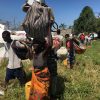
Climate Emergency: A Humanitarian Call to Action
We saw this coming. As humanitarians, our risk assessments in different parts of the world have always factored in the potential for extreme weather events and the spread of vector-borne diseases, of drought, desertification, and mass displacement. Emergency first responders like us work up scenarios for interventions and gain experience each time we put our planning to the test in real crises.
How to ‘Fix the Business of Food’ and Save the Planet
With up to one billion undernourished people around the world, and agriculture and land use systems increasingly vulnerable to climate change and land degradation, more companies within the global food industry need to start aligning their operations with the United Nations Sustainable Development Goals or SDGs.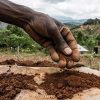
Fighting Climate Change: We Must Not Forget the Soils
Around the world, citizens took to the streets to demand their governments address climate change. In the U.S., this widespread activism illustrates the findings of a newly released report by the Chicago Council on Global affairs which found for the first time that the majority of Americans consider climate change a threat and the most critical foreign policy issue facing the country.
How Slow Moving Asbestos Regulations Compromise Health
Last year, the United States introduced a new asbestos rule that was received both positively and negatively and Canada banned the mineral altogether. Countries like the U.K. and Australia continue to struggle with the health implications of historic asbestos use, despite both having bans for several years. In contrast, nations like Russia and Vietnam continue to manufacture and use the mineral frequently.
UN Welcomes ‘Most Comprehensive Agreement Ever’ on Global Health
Describing it as an “important landmark” on our “journey to health for all”, Secretary-General António Guterres on Monday welcomed the UN Political Declaration on universal health coverage, or UHC, which commits countries to advance towards full coverage for their citizens in four major areas around primary care.
Nature’s Solution to Climate Change
When it comes to saving the planet, one whale is worth thousands of trees.

Jersey, a Gorilla and the Civil War in Cameroon
A month ago I visited Jersey, one of the few European territories still welcoming refugees, though in the case of Jersey they have to be wealthy and are generally fleeing not from war and misery, but from taxes. Once Jersey and the nearby island of Guernsey harbored one of Europe´s most famous political refugees – Victor Hugo (1802-1885), who after he had been too outspoken in his criticism of the autocrat Louis Napoleon found it more convenient to live on the Channel Islands than in France. In spite of being very close to France and with a population that at the time was mainly French-speaking, these islands were nevertheless British territory.
Africa’s Industrial Development: Turning Challenges into Opportunities
When world leaders gathered in New York for the 70th session of the General Assembly back in 2016, and proclaimed the period 2016-2025 as the Third Industrial Development Decade for Africa (IDDA III), it reaffirmed the importance of industrialization in supporting Africa’s own efforts towards sustained, inclusive and sustainable economic growth and accelerated development.
We Need Biodiversity-Based Agriculture to Solve the Climate Crisis
The Earth is living, and also creates life. Over 4 billion years the Earth has evolved a rich biodiversity — an abundance of different living organisms and ecosystems — that can meet all our needs and sustain life.
The Social Impact of Economic Inequality
Increasing economic inequality is a defining challenge of our time. In recent years, it has triggered analysis and reflection by many scholars, politicians and others on its causes and consequences on economic growth and efficiency, politics and democracy, human rights, individual behaviors, access to health, social cohesion and environmental degradation. The perception that the top 1% of income earners are gaining at the expense of the other 99% has resulted in widespread public debates in many countries on the social and political repercussions of inequality.
In Southern Brazil, Need Becomes an Environmental Virtue
The state of Santa Catarina in southern Brazil is the largest national producer and exporter of pork and this year it also leads in exports of chicken, of which it is the second-biggest producer in the country.
World’s Hard Fought Battle Against Climate Change
UN Secretary-General Antonio Guterres describes the ongoing crisis as a “climate emergency”-- as the world continues its hard fought battle against devastating droughts, floods, hurricanes and rising sea levels that threaten the very existence of small island developing states located in low-lying areas.
Confronting the New Climate Reality in Asia and the Pacific
In less than ten days world leaders will be gathering at the United Nations in New York for the Climate Action Summit. Their goal is simple; to increase ambition and accelerate action in the face of a mounting climate emergency. For many this means ambition and action that enables countries to decarbonize their economies by the middle of the century. But that is only half the equation. Equally ambitious plans are also needed to build the resilience of vulnerable sectors and communities being battered by climate related disasters of increasing frequency, intensity and unpredictability.
Kenya Plans to Leverage on Strategic Partnerships to Advance the “silicon Savannah” and Fast-track the Attainment of the Sustainable Development Goals
The Government of Kenya today signed a Communique with the Center for Effective Global Action (CEGA) at the University of California, Berkeley, along with The Rockefeller Foundation, and the United Nations to inspire future action and support for the delivery of Kenya’s Big Four agenda. The agreement brings together strategic partnerships work with the Government of Kenya to build SDG focused partnerships to drive financing and innovations that help tackle complex development goals.« Previous Page — Next Page »


 2026 High-level Political Forum on Sustainable Development. Credit: UN Photo/Eskinder Debebe
In 2015, the United Nations and its Member States adopted the Sustainable Development Goals (SDGs) in an effort to make the world a more sustainable and peaceful place for future generations. Progress on the 17 SDGs has been uneven, and inequality persists across the globe. 10 years after adoption, the 2025 UN SDGs Report revealed that only 35% of the SDG targets are on track, with more than half moving too slowly, and 18% moving backwards from the 2015 baseline. Poverty remains one of the world’s most pressing issues, with hunger, violence, and inequality impeding the opportunities for all people to achieve success. In September 2024, the United Nations Summit of the Future introduced a new goal: to eradicate global poverty by 2030, ensure universal rights to basic services, and increase the overall standard of living in terms of industrialization, economic well-being, citizen health, and literacy. Furthermore, recent shifts in United States foreign aid policy – notably, major budget cuts to USAID and the termination of thousands of development programmes– have severely threatened vital lifelines of financial aid to impoverished communities around the world. Additionally, the United States’ withdrawal from the Paris Climate Agreement has undercut international efforts at sustainable development. With the upcoming 2030 deadline, the UN Secretary-General has called for urgent multilateralism across six priority areas: food systems, energy, digital connectivity, education, jobs and social protection, and climate and biodiversity. IPS sheds light on marginalized communities that struggle on a daily basis to survive and have their stories heard and respected.
Updated by Yilan Batista and Shuli Wong August 2026

The Week with IPS

NEXT STOP - SDGs
Tracking global progress towards a sustainable world
Tracking global progress towards a sustainable world
