Languages
Saturday, November 21, 2026



News and Views from the Global South
Development & Aid

Q&A: Caught Up in the Opportunities of Climate Change and Less So With Adaptation
Caribbean countries have been signalling their willingness to dedicate time and resources to implement and sustain effective multi-hazard early warning systems.
Leprosy Remains a Stubborn, Unseen Problem in the Philippines
The stubborn challenge of diagnosis and treatment of leprosy among difficult to reach populations in the Philippines should soon become easier with the rollout of a mobile app connecting field health workers with physicians and clinics.
A Global Imperative: Empowering Women is Critical for World’s Economy & People
March 8 marks International Women’s Day, which provides a chance to reflect on the struggle for greater gender equality. The roots of this annual event reach back more than a century, yet its focus on respect and opportunities for women remains strikingly relevant today—from sexual harassment and violence to unequal laws and unfairness in the workplace, where women are too often underemployed, underpaid, and underpromoted.
Education Key to Gender Equality in Asia & the Pacific
Equal rights have been demanded and promised for generations, but last year a shift occurred in the women’s movement. Across Asia and the Pacific and around the world, women demonstrated to condemn a status quo which continues to deprive too many women and girls of respect and equal opportunity.
The Misconceptions of Contraception
In light of rates of sexually transmitted infections (STIs) and unintended pregnancies, governments are exploring ways to tackle taboos around condoms. In a new study, the UN Population Fund (UNFPA) reviews the availability and accessibility of condoms, hoping to dismantle potentially harmful misconceptions.
Developing Agriprenuers to Save Nigeria’s Youth from Crime
When Lawrence Afere told his parents he was going into farming rather than getting a job in Nigeria’s lucrative oil and gas sector, they swore he was bewitched.
Accelerating the Caribbean’s Climate Resilience
The Caribbean Climate Smart Accelerator launched last year June with the backing of Virgin’s Richard Branson has given itself five years to help the region become climate resilient.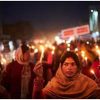
Sexual Assault Survivors March to End Gender Violence in India
In an historic first, thousands of people participated in a 10,000-kilometre long Dignity March across India to raise awareness about sexual violence, bring an end to stigma faced by survivors, and highlight the barriers women and children face in accessing justice.
Hate Speech Threatens Our Humanity
Do politicians’ words matter? Since becoming US President, Donald J Trump has dismissed his opponents and others he does not like as evil, stupid or both. He has referred to undocumented immigrants as animals, and to poor countries as shitholes.
Does Climate Change Offer New Opportunities for Agriculture in Argentina?
Climate change poses a global threat to food production, but for agriculture in Argentina it could also present new opportunities. In some areas of the country, farming conditions will improve, according to an analysis by experts of the latest climate projections.
The Wall: Thirty Years Ago European Walls Were Destroyed, but Others Are Being Built
On January 25, 2017, the Trump administration signed Executive Order 13767, instructing the Government to begin new constructions and replacements of walls between the US and Mexico. From December 22, 2018 to January 25, 2019, the federal government was partially shut down due to President Trump's declared intention to veto any spending bill that did not include $5 billion in funding for a border wall. It was with good reason the Congress withheld such an enormous sum of money. As the European experience indicates, building walls between countries has proven to be both obsolete and disastrous.
Modern Day Slavery Rated World’s Largest Single Crime Industry
After an exhaustive study of modern day slavery, the Geneva-based International Labour Organization (ILO) concluded there are over 40 million people who are victims of slavery, including 25 million in forced labour and 15 million in forced marriages – with at least 71 percent of them comprising women and girls.
A Spotlight on those Suffering in Silence
While news of political scandals and tweets may inundate social media feeds, numerous humanitarian crises have slipped under the radar, leaving victims “suffering in silence.”Bangladesh faces a challenge to ensure welfare of its aging population
(IPS/UNB) – Bangladesh economy’s impressive growth trajectory over the last decade has been buttressed by the demographic dividend resulting from a large portion of its population -- around 65 percent on average -- being of working age.
Local School Is a Model for Energy and Water in Rapa Nui
A school in the capital of Easter Island (Rapa Nui, in the local indigenous tongue) gives an example of clean management with the use of solar energy, rainwater recovery and an organic vegetable garden, as well as rooms and spaces built with waste materials.
The Future of Urbanism: Is the UAE Pioneering it?
According to data from the UN Development Programme (UNDP), the Arab world is one of the most urbanised areas in the world, with more than 70 per cent of the population of the six-member Gulf Cooperation Council (GCC)--- Bahrain, Kuwait, Oman, Qatar, Saudi Arabia, and the United Arab Emirates (UAE)-- living in urban areas.
World’s Youth Are Being Left Behind
Globally, youth are being left behind in education and employment, threatening the future vision of sustainable, inclusive, and prosperous societies.
The Unwanted People of Myanmar: A Tropical Srebrenica in the Land of the Golden Pagodas
The massacre of Srebrenica will enter human history as one of our darkest chapters. From 11 to 22 July 1995, Bosnian Serb military forces massacred approximately 8,000 Muslim Bosniaks. It became the largest massacre committed on European soil since the end of the Second World War. In November last year, the Bosnian Serb military commander Ratko Mladic was convicted of war crimes and of genocide. This constituted relief for the victims of the Srebrenica genocide and a victory for international justice after 22 years.
How Development Excludes Adivasi Peoples
Failing to understand the Adivasi world view and imposing the dominant development paradigm on Adivasi peoples is affecting their identity and well-being. The mainstream development paradigm has aggravated discontent among Adivasi communities. The reasons are not difficult to recognise—it encourages the siege of native resources, drives competition, is surplus-driven, instils private ownership, and consequently, is affecting the cultural identity of Adivasi peoples.
Maldives Reiterates Commitment to ‘Free, Open Indo-Pacific Region’ & Democracy
Maldives Foreign Minister Abdulla Shahid has reiterated his nation's commitment to a “free and open” Indo-Pacific region and to democracy. During his meeting with Secretary of State Michael Pompeo in Washington Feb 20, Shahid “underscored the importance of his government's reform efforts to (ensure) the vitality of Maldives' democracy,” the department's Deputy Spokesperson Robert Palladino said.
DRC’s First Peaceful Transition of Power Was At Expense of Women
When Felix Tshisekedi, the 55 year old son of the former opposition leader, won the recent presidential election in the Democratic Republic of Congo, it should have felt like a new dawn for many of us living here.« Previous Page — Next Page »


 2026 High-level Political Forum on Sustainable Development. Credit: UN Photo/Eskinder Debebe
In 2015, the United Nations and its Member States adopted the Sustainable Development Goals (SDGs) in an effort to make the world a more sustainable and peaceful place for future generations. Progress on the 17 SDGs has been uneven, and inequality persists across the globe. 10 years after adoption, the 2025 UN SDGs Report revealed that only 35% of the SDG targets are on track, with more than half moving too slowly, and 18% moving backwards from the 2015 baseline. Poverty remains one of the world’s most pressing issues, with hunger, violence, and inequality impeding the opportunities for all people to achieve success. In September 2024, the United Nations Summit of the Future introduced a new goal: to eradicate global poverty by 2030, ensure universal rights to basic services, and increase the overall standard of living in terms of industrialization, economic well-being, citizen health, and literacy. Furthermore, recent shifts in United States foreign aid policy – notably, major budget cuts to USAID and the termination of thousands of development programmes– have severely threatened vital lifelines of financial aid to impoverished communities around the world. Additionally, the United States’ withdrawal from the Paris Climate Agreement has undercut international efforts at sustainable development. With the upcoming 2030 deadline, the UN Secretary-General has called for urgent multilateralism across six priority areas: food systems, energy, digital connectivity, education, jobs and social protection, and climate and biodiversity. IPS sheds light on marginalized communities that struggle on a daily basis to survive and have their stories heard and respected.
Updated by Yilan Batista and Shuli Wong August 2026

The Week with IPS

NEXT STOP - SDGs
Tracking global progress towards a sustainable world
Tracking global progress towards a sustainable world
