Languages
Sunday, November 8, 2026



News and Views from the Global South
Development & Aid

‘The International Response Should Follow the Principle of ‘Nothing about Us, Without Us’’
CIVICUS speaks with Ukrainian gender rights activist Maryna Rudenko about the gendered impacts of the war in Ukraine and the importance of including women in peacebuilding efforts. Russia’s full-scale invasion of Ukraine has profoundly impacted on women and girls. Many have been displaced and are struggling with poverty and unemployment. Those who’ve stayed endure daily missile attacks, damaged infrastructure, lack of basic services and sexual violence from Russian forces if they live in occupied territories. Women activists, caregivers and journalists are particularly vulnerable. The international community must increase support to ensure justice for victims and women’s inclusion in peace efforts.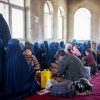
World Immunization Week Highlights the Urgency of Global Vaccine Access
For 2025, the theme of World Health Immunization Week (24-30 April), “Immunization for All is Humanly Possible”, emphasizes the need to eradicate disparities in access to vaccines, particularly for children. By encouraging governments to implement vaccination programs at the local and national levels, the World Health Organization (WHO) seeks t0 ensure worldwide access to life-saving vaccines.
The World Bank, at 80, and the True Goals of Multilateral Cooperation and Global Development
The Rogun Dam in the mountains of Southern Tajikistan, if ever completed, would be the tallest dam in the world. Late last year, the World Bank committed almost $3 billion to finance its development, claiming the project would benefit locals.
Indispensable—Native Hawaiian Elder Says of Indigenous Ocean Management Systems
Indigenous people play a vital role in ocean protection due to their deep-rooted connection to the marine environment and their traditional knowledge of sustainable resource management. They often possess centuries-old practices and stewardship ethics that prioritize ecological balance and community well-being.
Sights Set on Highest Ambition as World Rows Through Toughest Ocean Crisis
Participants from over 100 countries will leave the 10th Our Ocean Conference in Busan, the Republic of Korea, with stark reminders that with sea levels rising dangerously, coastal regions and low-lying areas globally, particularly densely populated areas, are threatened.
Mexico Bans GM Corn Cultivation in Constitutional Reform: Action Follows Trade Ruling That Ignored Evidence of Genetic Contamination
On March 17, Mexican President Claudia Scheinbaum signed into law a constitutional reform banning the cultivation of genetically modified (GM) corn. The action followed a December ruling by a trade tribunal, under the U.S.-Mexico-Canada (USMCA) trade agreement, in favor of a U.S. complaint that Mexico's 2023 presidential decree, with broader restrictions on the consumption of GM corn, constituted an unfair trade practice by prohibiting the use of GM corn in tortillas.
Tanzania’s Women Miners Digging for Equality in a Male-Dominated Industry
Under the scorching Tanzanian sun, Neema Mushi wipes sweat from her dust-covered face and swings her pickaxe into the earth. The impact sends dust swirling into the air, coating her tattered clothes. She barely notices. For the past eight years, this has been her life—digging, sifting, sieving, and hoping to strike gold in the male-dominated pits of Geita. It is a grueling task riddled with obstacles.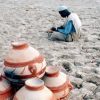
Floods and Droughts are Two Sides of the Same Crisis
Water emergencies are deeply personal to us. Coming from Southeast Asia and southern Africa—two regions that struggle with water challenges—we have witnessed firsthand how water defines the fate of communities and nations.
Global Community in Busan to Define Sustainable Future for Life Under Water
“As the son of a haenyeo, a traditional Korean female diver, I grew up by the sea, often watching the ocean with my mother. Captivated by the beauty and majesty of the sea, I chose to study marine science and have devoted my entire career to the ocean,” said Do-hyung Kang, Minister of the Ministry of Oceans and Fisheries of the Republic of Korea.
Korea’s Troubled Waters: Traditional Women Divers Protecting an Ocean in Crisis
Ahead of the 10th Our Ocean Conference, with the theme "Our Ocean, Our Action," comes a global call to protect the world's oceans.
Venezuela’s Oil trapped in Hurricane Trump’s Onslaught
Reduced to a marginal oil producer over the past decade, Venezuela has suffered another blow as United States president Donald Trump ordered punitive measures to blockade and further restrict the country’s oil exports.
African Giving Practices: Understanding a Tradition of Generosity and Community Support
Across Africa, giving is not just an act of charity; it’s a deep-rooted tradition embedded in culture, community, and mutual care. The concept of giving has evolved through generations, often taking on forms that are as diverse as the continent itself.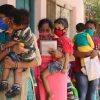
Reclaiming Equity: Why G20 Must Center Women, Children & Adolescents in the UHC Agenda
As the G20 Health Working Group convened in KwaZulu-Natal under South Africa’s presidency earlier this year, a central question echoed across plenaries: How can we accelerate universal health coverage (UHC) in an increasingly unequal world?
Girls’ Education Bridges the Digital Divide
There is a global digital divide, threatening to leave entire generations of women and girls behind. Today, we place them at the centre of our shared massive action as we commemorate International Girls in ICT Day. Today, we reaffirm our commitment to harness the transformative power of education and provide these girls with the training, skills and resources they need to be part of the digital revolution that is shaping our planet. Today, we must recommit to financing their education.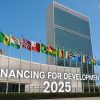
Financing for Whom? The Financing for Development Summit Must Address Social Dimensions
The Fourth International Conference on Financing for Development (FfD4) will bring world leaders together to forge a new international consensus on how to finance a better future for all. Yet, in practice, the first drafts of its outcome reveal a glaring omission: people. Despite rhetoric about inclusivity, the drafts are strikingly weak on social issues, as if financing and macroeconomic policies exist in a vacuum, detached from the lives they impact.
The Growth of One-Person Households
In much of the past, few people lived alone. At the start of the 20th century, one-person households were relatively rare and are estimated to have accounted for less than 10% of all households worldwide.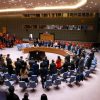
UN Warns of an Imminent Collapse in Haiti
As gang violence in Haiti continues to target civilians and critical infrastructures, humanitarian organizations and the Haitian National Police (HNP) have found it increasingly difficult to manage the growing scale of needs. The United Nations (UN) and its partners fear that Haiti will approach a nationwide collapse due to numerous shortfalls in funding, a widespread lack of essential resources, and rampant insecurity.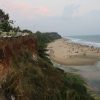
Rampant Tourism, Climate Change Threatens Varkala’s Unique Geodiversity
From the top of the cliff, the beach down below appears like a box of sand, with people scattered on it like tiny ants. This is Varkala, arguably the most sought-after coastal tourism spot in Kerala, India, right now. The Varkala cliff—spanning across Edava Cliff, North Cliff, and South Cliff—is 7.5 km long and has a maximum height of 40 m. Religious rituals take place at the part of Papanasam beach that divides the North and South Cliffs.
A Nation Bleeds While the World Watches: The Tragedy in Sudan Must End
The ongoing civil war in Sudan is tragic, but the greater tragedy is that if the international community sits on its hands and does nothing to stop this horrific war and prevent further escalation of the conflict, it will come at an unfathomable price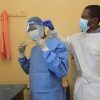
African Countries Still Underfunding Health by as Much as 50 Percent
The majority of African countries are yet to commit 15 percent of their GDP to funding the health sector, despite the growing disease burden weighing down the continent and two decades after the coming into force of the Abuja declaration on health sector funding.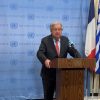
UN Chief, Brazil Gather World Leaders to Reaffirm Commitments Paris Agreement
UN Secretary-General António Guterres and President Lula da Silva of Brazil on Wednesday, April 23, held a closed-door meeting with heads of state to discuss strengthening global efforts against the climate crisis and to ensure a just energy transition.« Previous Page — Next Page »





 2026 High-level Political Forum on Sustainable Development. Credit: UN Photo/Eskinder Debebe
In 2015, the United Nations and its Member States adopted the Sustainable Development Goals (SDGs) in an effort to make the world a more sustainable and peaceful place for future generations. Progress on the 17 SDGs has been uneven, and inequality persists across the globe. 10 years after adoption, the 2025 UN SDGs Report revealed that only 35% of the SDG targets are on track, with more than half moving too slowly, and 18% moving backwards from the 2015 baseline. Poverty remains one of the world’s most pressing issues, with hunger, violence, and inequality impeding the opportunities for all people to achieve success. In September 2024, the United Nations Summit of the Future introduced a new goal: to eradicate global poverty by 2030, ensure universal rights to basic services, and increase the overall standard of living in terms of industrialization, economic well-being, citizen health, and literacy. Furthermore, recent shifts in United States foreign aid policy – notably, major budget cuts to USAID and the termination of thousands of development programmes– have severely threatened vital lifelines of financial aid to impoverished communities around the world. Additionally, the United States’ withdrawal from the Paris Climate Agreement has undercut international efforts at sustainable development. With the upcoming 2030 deadline, the UN Secretary-General has called for urgent multilateralism across six priority areas: food systems, energy, digital connectivity, education, jobs and social protection, and climate and biodiversity. IPS sheds light on marginalized communities that struggle on a daily basis to survive and have their stories heard and respected.
Updated by Yilan Batista and Shuli Wong August 2026

The Week with IPS

NEXT STOP - SDGs
Tracking global progress towards a sustainable world
Tracking global progress towards a sustainable world
