Languages
Wednesday, November 11, 2026



News and Views from the Global South
Population
RIGHTS-COLOMBIA: Victims Speak Out and Demand Respect
"One encounter, many paths: united against forgetting," the placards read, as 3,500 victims of the civil war in Colombia demand recognition and respect, from the authorities and society.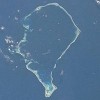
ENVIRONMENT: Tiny Tuvalu Fights for Its Literal Survival
The second smallest nation on Earth hopes to turn itself into an example of sustainable development that others can emulate.ARGENTINA: Regional Leader in Traffic Deaths
Traffic accidents in Argentina have been claiming an average of 20 lives a day over the past decade, making it the top country in Latin America for these tragedies. They are also the main cause of death among people under 35, but in spite of this there are no official plans to end the slaughter on the roads.
SRI LANKA: Not All Tsunami Reconstruction Is Equal
It has been 30 months since the waves struck the coasts of Sri Lanka in the morning hours of Dec. 26, 2004. Since then, in a pattern that has become symbolic of the divided nature of the South Asian island, parts of the country have motored ahead with the reconstruction effort, while others have lagged woefully behind.BOLIVIA: Indigenous and Mestizo Power Flexes Muscles
An immense tide of people demonstrating to keep the Bolivian seat of government in this city took to the streets last week to show support for the indigenous Aymara and mestizo leadership, in the greatest expression of popular power in the history of the country.POLITICS: Most Muslims Reject Extremism
Growing numbers of Muslims in the Middle East and in predominantly Muslim countries in Asia and Africa are rejecting "Islamic extremism" and the use of suicide bombing, according to a new 47-nation global attitudes survey released by the Pew Research Centre on Tuesday.POLITICS: Poor Countries More Optimistic About Future
Public opinion in most poor countries and Central Europe is generally significantly more optimistic about future living conditions for their children than in wealthy, developed nations, according to newly released findings of the latest Pew Global Attitudes Project (GAP) survey released here Tuesday.
Q&A: "What's Important Is the Need, Not the Politics"
When conflicts and natural disasters flare up around the world, the United Nations Office for the Coordination of Humanitarian Affairs (OCHA) plays a critical role in delivering relief through a wide and complex array of U.N. agencies and non-governmental aid groups.PARAGUAY: Stroessner’s Crimes Under the Microscope
Paraguay's Truth and Justice Commission has launched a campaign to collect testimonies from 2,000 victims and relatives of people who disappeared during the dictatorship of Alfredo Stroessner, who ruled this country with an iron fist for 35 years.ENVIRONMENT-PAKISTAN: Relief for Flood Victims – Too Little, Too Late
''Our stuff is already packed and we’re ready to evacuate," said Allah Rakha,50, at a mobile medical camp set up on the Main Nara Valley (MNV) embankment which is, miraculously, still standing up to rainy weeather and pressure from flood waters.COLOMBIA: 'Independence? What Independence?' Indigenous Peoples Ask
Colombia celebrated 197 years of independence from Spain on Friday, Jul. 20. On Monday, at dawn, some 5,000 indigenous people set off on an 800-kilometre journey to ask the government, "what independence?"CHILE: State Upholds Gender Discrimination Within Marriage
Discrimination against married women under the law providing for joint ownership of marital property led Sonia Arce Esparza to take the Chilean state to the Inter-American Commission on Human Rights (IACHR) in 2001. An amicable agreement reached in March this year has not been implemented.POLITICS: Young Hmong Americans Confront a Dark History
The Hmong American community was catapulted into the national spotlight when, on Jun. 4, 11 California residents were arrested for plotting to overthrow the government of Laos.BALKANS: Some Get Lazier, Others Work Harder
Contrary trends arise in Serbia these days, where official statistics show Serbs are a lazy nation, while those who seek new opportunities show otherwise.COLOMBIA: Displaced People Find Relative Calm in Bogota
What do Colombian children displaced by the war like most about this city? The tall buildings, the avenues, the museums and the cars. They love the parks, the sports fields and the rides in the amusement parks, according to a report by the Catholic Church and the main non-governmental source on displaced people.PORTUGAL: Epidemic of Conscientious Objection to Performing Abortion
Pleading "conscientious objection," a significant proportion of doctors in Portugal are preventing women from making use of the law authorising abortions up to 10 weeks of gestation, which entered into force on Sunday.MIGRATION-GERMANY: New Hope Arises for Integration
A summit on integration of some 15 million migrants into German society has produced an ambitious new programme.DEVELOPMENT-TANZANIA: More Women Dying Preventable Deaths
"I began walking when I felt contractions. I delivered on the roadside five kilometres from the hospital," says the 22-year-old Veronica Joseph.SECURITY-BRAZIL: Oedipus Caught in the Crossfire
A child mown down by a hail of bullets from a rifle aimed by an unseen gunman is one of the drawings kept on file by psychologist Ricardo Parente, and produced in evidence to support his claim that Freudian theory must be revised when treating cases in the violent shantytowns of Brazil.
BOLIVIA: La Paz Struggles Against Suffocation
The noise of traffic, dissonant car horns, people marching and shouting slogans, and firework and dynamite explosions is beginning to suffocate the urban centre of La Paz, Bolivia's seat of government, and is forcing consideration of medium term solutions.COLOMBIA: Using Communication to Build Peace
"We don't want to give birth to children who go off to war. We want our children to be filmmakers, painters, dentists, whatever they want, but not to repeat this disgraceful war," a Colombian woman tells IPS.« Previous Page — Next Page »





 One Thousand Internally Displaced Persons (IDPs) Relocated from Tomping Camp in South Sudan. Credit: UN Photo/Isaac Billy
It took hundreds of thousands of years for the world’s human population to cross one billion in 1804. Approximately 200 years later, the population has multiplied sevenfold. In 2023, the global population crossed 8 billion, and is expected to reach 9 billion before 2050. With the planet more crowded than ever, it is essential to keep track of population trends, urbanization, migration, and reproduction across the world.
Life expectancy has seen significant strides in the past century, largely due to economic development and increased standards of living. On the contrary, trends in global fertility are shifting, with certain regions in Africa and Asia reporting higher rates, while parts of Europe and North America report stagnant or lower rates. This is in part due to differences in sexual and reproductive healthcare, as well as societal and economic conditions around the world. For example, child marriage is prevalent in certain societies, where childbearing is also considered a familial duty. Meanwhile, stagnating economies frequently experience lower marriage and childbearing rates.
The increase in migration and urban development around the world is also linked to global population trends. By 2050, it is expected that approximately 66 percent of all people will live in cities. Furthermore, global crises such as warfare and natural disasters also prompt transnational migration. Transnational migration is linked to a variety of socioeconomic issues in both host and receiving countries: migrants often leave developing countries with less access to educational and economic opportunities and arrive in developed countries where they are frequently the targets of ethnic, racial, and cultural discrimination, and economic exploitation. Recent crises in Europe and the United States demonstrate the importance of advocating for migrants worldwide. As migrants from the Global South are increasingly stripped of their legal and civic rights in unlawful deportations, or targeted in acts of identity-based violence, it is essential to keep track of population trends and protect the human rights of migrant populations. Climate-related disasters are now a major driver of displacement, with nearly half of all new internal displacements in 2025 being disaster-related.
IPS is devoted to covering issues surrounding population trends, migration, and reproduction through its compelling articles, which use both statistics and human stories to provide readers with robust and informative viewpoints.

The Week with IPS

NEXT STOP - SDGs
Tracking global progress towards a sustainable world
Tracking global progress towards a sustainable world
