Languages
Saturday, October 3, 2026



News and Views from the Global South
Poverty & SDGs

Pacific Islanders Turn to Local Economies to Drive Post-pandemic Recovery
While Pacific Island countries have, so far, been spared a catastrophic spread of COVID-19, their economies have been devastated by the effects of border closures, internal lockdowns and the demise of international tourism and trade. With the global pandemic far from over, Pacific Islanders are looking to their local and regional economies to drive resilience and recovery.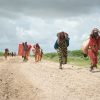
Corporate Reporting on SDGs: Challenges and Opportunities
Since the launch of the Sustainable Development Goals (SDGs) in 2016, the role of the private sector in fulfilling the 2030 Agenda has been widely acknowledged, as set out under SDG 12. Yet to assess how companies are actually contributing towards these Global Goals, we need greater transparency on their impacts.
Successful Crop Innovation Is Mitigating Climate Crisis Impact in Africa
17 February - African smallholder farmers have no choice but to adapt to climate change: 2020 was the second hottest year on record, while prolonged droughts and explosive floods are directly threatening the livelihoods of millions. By the 2030s, lack of rainfall and rising temperatures could render 40 percent of Africa’s maize-growing area unsuitable for climate-vulnerable varieties grown by farmers, while maize remains the preferred and affordable staple food for millions of Africans who survive on less than a few dollars of income a day.
Why Incarceration further Disadvantages Australia’s Indigenous
Keenan Mundine grew up in the Aboriginal community social housing called The Block, infamous for poor living conditions, alcohol and drug use, and violence, in Sydney’s Redfern suburb. At the age of about seven, soon after losing his parents to drugs and suicide, he was separated from his siblings and placed in kinship care.
The Perils of Child Marriage & the Promise of Freedom
How much is a girl worth? If you are Maja, the answer is a chicken, a six-pack of beer and 100 euros. That is how much her family, living in a Roma settlement in Serbia, received in exchange for her hand “in marriage.” She was 11 years old at the time. “They benefited maybe a month from it, and I was left with a problem for my whole life,” Maja, now 18, said.
COVID-19 Pandemic has Shown Humanity at its Best– & at its Worst
WHO and UNICEF have a long, deep and very special relationship. Neither of us could do what we do without the other. UNICEF’s success is WHO’s success, and we are proud to be your partner on so many issues: Ebola, polio, maternal health, nutrition, infection prevention and control, primary health care – the list is long.
To Prevent Another Civil War South Sudan Must Create a New, Unique Political System
The threat of a full-blown civil war in South Sudan remains unless the country’s leaders can broaden power sharing, warns a new report by the International Crisis Group (ICG) released almost year into the country’s formation of a government of national unity.
Forgotten Conflicts 2021: When Will the Crisis in the Central African Republic End?
Last October, an ICRC medical team helped a woman deliver a baby boy in the bush on their way to a health center we support in Grévaï, a small town in the north-central region of CAR. On her way to the market, by foot, the woman went into labour and only by chance did not have to go through it alone, surviving along with her baby.
The West vs the Global South: You Have the Numbers. We Have the Money
When the 134-member Group of 77, the largest single coalition of developing countries, was trying to strike a hard bargain in its negotiations with Western nations years ago, one of its envoys famously declared: “You have the numbers. We have the money.”
El Aromo Solar Project Sets Precedent for Renewable Energy in Ecuador
In December 2020, the “El Aromo” solar energy project was approved in coastal Manabí province, Ecuador. Operated by the Spanish company Solarpack, the project is expected to transform national solar output. El Aromo will occupy 2.9km2 of land that was previously cleared to build a multi-billion dollar oil refinery, plans that have since been abandoned. While El Aromo holds symbolic significance, it remains uncertain whether the project will mark a significant step toward more environmentally sustainable energy development in Ecuador.
Why it’s Crucial Not to Limit the Youth’s Access and Use of Family Planning
With the COVID-19 pandemic negatively affecting access to Adolescent and Youth Sexual and Reproductive Health (AYSRH) services, it’s imperative governments employ community-based initiatives and peer educators to ensure these services are still available to them.
Water Graves: Nightmare for Mexican Fishermen
All of Erizo's nightmares are the same. Since his return from the ocean - almost unrecognizable - every bad dream is identical. A wave punches his little boat and throws him into the deep sea where everything is so dark that he can't even see his own hands.
Internationally COVID-19 Extracted a Heavy Toll on Older People
Internationally COVID-19 extracted a heavy toll on older people – raising concerns in the Asia Pacific region where more than half of the world’s ageing population live.
Lebanon: How to Build Back Better after Political and Economic Crisis
Lebanon must “shield and preserve” the skills, knowledge, and experience of its people in order to move forward with its development, according to Christophe Abi-Nassif, the Lebanon programme director for the Middle East Institute (MEI).
Elections in Africa go on Amid COVID-19
Central African Republic and in Niger held their presidential and parliamentary elections on 27 December 2020 to round up a challenging year where despite fears of disruption from the COVID-19 pandemic, most countries in Africa managed to stick to their scheduled elections.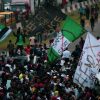
Q&A: What Nigerian Feminists Hope will Come Out of the #EndSARS Movement & Pandemic
As Nigeria’s biggest city, Lagos, reportedly experienced a massive shortage of oxygen cylinders last week — with demand increasing fivefold in one of the city’s main hospitals just as the country recorded some of its highest number of coronavirus cases — its youth leaders are concerned about the impact on vulnerable women.
We are Facing a Climate Emergency, Warns UN Chief
We begin this year with a heightened awareness of the importance of resilience. The COVID-19 pandemic has reminded us that we cannot afford to ignore known risks.
Implementation Research to Achieve Health Related #SDGs
The Sustainable Development Goals (SDGs) aim to ensure healthy lives and promote well-being for all ages. The main focus of the SDGs is to improve equity to meet the needs of women, children and disadvantaged populations in particular.
Global Economic Recovery Remains Precarious in post-COVID-19 Years
The United Nations has warned that the devastating socio-economic impact of the COVID-19 pandemic will be felt for years to come unless smart investments in economic, societal and climate resilience ensure a robust and sustainable recovery of the global economy.
Poor Lives Matter, but Less
Current development fads fetishize data, ostensibly for ‘evidence-based policy-making’: if not measured, it will not matter. So, forget about getting financial resources for your work, programmes and projects, no matter how beneficial, significant or desperately needed.
Closing the Gap between Developed and Developing Countries: Two Steps Forward, One Step Back
Developing countries as a group have been growing faster than developed countries for several decades. As a result the ratio between average incomes between the two sets of countries – albeit still very large - has been shrinking. This is good news. The other piece of good news is that over this period the number of people living in extreme poverty has also been dropping – from 1.9 billion in 1990 to about 650 million in recent years. China has recently declared an end to extreme poverty.« Previous Page — Next Page »


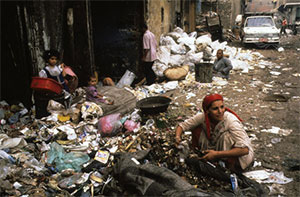 Romani people in Cairo, Egypt, forage through trash. Credit: UN Photo/Armineh Johannes
In 2015, the United Nations adopted the Sustainable Development Goals (SDGs) in an effort to promote “peace and prosperity for people and the planet.” To achieve that goal, it is essential to provide equal opportunities and access to basic services to all people. The 2025 UN SDG Report found that 35% of the 169 SDG targets are on track or making moderate progress, while 18% have reversed compared to the 2025 baseline. One in ten people still live in extreme poverty, one in eleven experience food insecurity, and over 1.1 billion people live in slums without access to clean water and sanitation. It is imperative to acknowledge the societal, technological, economic, and political issues that sustain poverty in countries around the world. Eradicating poverty will require significant frameworks in policy and governance on a national and international scale to ensure that all people will have equal access to basic services and economic opportunities by 2030. Furthermore, a dramatic reduction of United States foreign aid in 2025, including the termination of 83% of USAID programmes, threatens to erode years of fragile development gains.
Throughout the world, violent conflict and natural disasters also contribute to extreme poverty. The complete destruction of infrastructure and blockage of aid has significantly impoverished Palestine since October 7th. The destructive impact of Hurricane Maria in Puerto Rico left $91 billion in damage. An inadequate US government response also revealed significant and enduring questions within the issue of mitigating poverty: how do we rebuild infrastructure after its destruction? How do we restimulate economic development and bring in financial aid after disasters? Similar questions have been raised in the realm of regional cooperation, as devastating floods have wrecked hundreds of thousands of homes across multiple Southeast Asian nations in the past few years. Furthermore, the COVID-19 pandemic has greatly exacerbated the global poverty crisis, particularly in developing countries, setting back the United Nations goal of eradicating poverty by 2030.
IPS is committed to providing comprehensive features that focus on the persisting environmental, sociopolitical, and systemic issues that sustain poverty, and the steps taken worldwide towards poverty eradication.

The Week with IPS

NEXT STOP - SDGs
Tracking global progress towards a sustainable world
Tracking global progress towards a sustainable world

