Languages
Friday, October 2, 2026



News and Views from the Global South
Poverty & SDGs

International Women’s Day, 2021
Celebrating International Women’s Day on March 8, 2021 AD – What are We Waiting For?
Every year on March 8, the International Women’s Day is commemorated. What do women think about this famous anniversary, first honored 1911 in European countries? As I cannot speak for other women, I share with you my personal reflections on this special day, bringing in a developmental perspective.

International Women’s Day, 2021
Women’s Leadership Must Drive the Global Recovery from COVID-19
International Women’s Day is always an occasion to celebrate strong women and an important day in the global calendar to highlight the gender injustices still lingering in every part of the world.

Vaccine Passports Are Controversial But Their Technology Will Bring Big Benefits to Developing Countries
The United Nations is using the digital government technology behind vaccine passports to help developing countries provide essential services to their vulnerable populations. After a year of Zoom meetings and with vaccinations slowly rolling out, international travel is making a come-back.
International Women’s Day, 2021
Gender Equality is The Roadmap We Need to Overcome Our Most Pressing Global Challenges
In 2020, progress on gender equality stalled or regressed in many countries in large part because of the far-reaching impacts of the COVID-19 pandemic. According to a recent analysis, by 2021, around 435 million girls and women will be living on less than $1.90 a day, including 47 million pushed into poverty as a result of the pandemic. Global lockdowns contributed to a surge of gender-based violence worldwide, and estimates show that sexual and reproductive health and rights (SRHR), the bedrock of gender equality, have been severely disrupted, resulting in an additional 49 million women at risk of experiencing an unmet need for modern contraception. Our most pressing global issues have seldom been so daunting, and fault lines in existing social, political, and economic systems have never been so deep.

International Women’s Day, 2021
The Problem of the Respectable International Women’s Day – an Appeal for Good Trouble
The greatest danger to the effectiveness of International Women’s Day is that it has become respectable. It is time for it to be day of good trouble again.

What Role Can South-South Cooperation Play in Post COVID-19 Recovery?
Five years ago, at the 70th anniversary of the foundation of the United Nations, world leaders adopted the ambitious Agenda 2030 for Sustainable Development. The Agenda was to be accomplished through the achievement of 17 Sustainable Development Goals by 2030: eradicating poverty, ending hunger, addressing climate change – just to name a few.
International Women’s Day, 2021
Feminist Leadership at the United Nations — Gender Equality Within & Without
When the United Nations was founded in 1945, the principle of equality for all – regardless of sex, race, language, or religion - was enshrined in the organization's Charter.

End Inequality and Achieve Sustainable Development for All
Back in the 1990s, the discovery of antiretrovirals offered a ray of hope to save people’s lives from the HIV epidemic. Over this decade, people living with HIV benefited from the scientific advances and began to have longer, healthier and more productive lives. However, almost all the beneficiaries were from rich countries in the global north. As a result, about nine million people died by the year 2000 due to the inequality in accessing these life-saving medicines.
International Women’s Day, 2021
Gender Equality is our Captain for Sailing to a Green & Just Recovery
The climate crisis doesn’t stop for anyone or anything, not even the pandemic that has forced billions of us to radically overhaul our lives. And like the pandemic, climate change has no nationality, agenda or political affiliation.

International Women’s Day, 2021
To Lead is to Serve — A Pacific Woman’s Perspective
An often quoted indigenous reference in the Samoan language is, O le ala i le pule o le tautua, literally translated, “the pathway to leadership is through service” because to be able to lead is to be willing to serve.

The Global Insecurity of Climate Change
For Sudanese youth, climate change is synonymous with insecurity. “We are living in a continuous insecurity due to many factors that puts Sudan on top of the list when it comes to climate vulnerability,” said Nisreen Elsaim, Sudanese climate activist and chair of United Nations Secretary General's Youth Advisory Group on Climate Change.
Cuba Prioritises Sustainable Water Management in the Face of Climate Challenges
With the construction of aqueducts, water purification and desalination plants, and investments to upgrade hydraulic infrastructure, Cuba is seeking to manage the impacts of droughts and floods that are intensifying with climate change.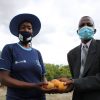
Natural Enemies: How Mango Farmers are Tackling an Invasive Fruit Fly Pest
Every harvest season, Susan Zinoro, a mango farmer from Mutoko, Zimbabwe, buries half the mangoes she’s grown that season. They have already started rotting either on the tree or have fallen to the ground before harvest. It’s a difficult task for Zinoro because she knows she is throwing away food and income meant for her family.
Developing Countries Struggling To Cope With COVID-19
The ongoing COVID-19 pandemic is adversely impacting most developing countries disproportionately, especially the United Nations’ least developed countries (LDCs) and the World Bank’s low-income countries (LICs). Years of implementing neoliberal policy conditionalities and advice have made most developing countries much more vulnerable to the COVID-19 pandemic by undermining their health systems and fiscal capacities to respond adequately.
Sustainable Energy Key to COVID-19 Recovery in Asia and the Pacific
The past year is one that few of us will forget. While the impacts of the COVID-19 pandemic have played out unevenly across Asia and the Pacific, the region has been spared many of the worst effects seen in other parts of the world. The pandemic has reminded us that a reliable and uninterrupted energy supply is critical to managing this crisis.
A Moral Obligation to Protect the Planet
Legends are the lodestars of history, the marriage of Sir Dorabji Tata with Meherbai on Valentine’s Day of 1898 among the most lyrical of them. Two years later, he gifted her the Jubilee Diamond, the sixth largest diamond in the world, twice as large as the Kohinoor.
Q&A: UN Environment Assembly Kicks Off With a Call to Make Peace with Nature
Its time for the world to radically change our ways if we are to make peace with the planet and create the environmental conditions so that all of humanity can thrive, delegates attending the Fifth Session of the United Nations Environment Assembly (UNEA-5) heard this morning.
UN Blueprint that Could Urgently Solve Earth’s Triple Climate Emergencies
“Our war on nature has left the planet broken. This is senseless and suicidal. The consequences of our recklessness are already apparent in human suffering, towering economic losses and the accelerating erosion of life on Earth,” António Guterres Secretary-General of the United Nations said.
Yemen Heads towards Worst Famine World has Seen in Decades
Yemen is heading towards the worst famine the world has seen in decades, the United Nations Security Council was warned in a briefing yesterday.
Q&A: Tigray – the Fighting will Continue & Exacerbate Civilian Suffering
While Ethiopia’s federal government may have administrative control of the Tigrayan capital, Mekelle, and other main cities in the region, including Shire, Adwa, and Aksum, after removing the regional government from power in late November — armed resistance in Tigray is not over and could continue for months.
Switzerland Buys itself Good Sustainability Scores at the Expense of Other Countries
According to the Sustainable Development Report 2020, Switzerland ranks at a shameful 163 of 165 in terms of so-called spillover effects. This means that Switzerland buys better sustainability scores in a number of areas, placing considerable burdens on other countries and the global environment.« Previous Page — Next Page »


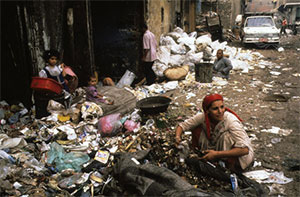 Romani people in Cairo, Egypt, forage through trash. Credit: UN Photo/Armineh Johannes
In 2015, the United Nations adopted the Sustainable Development Goals (SDGs) in an effort to promote “peace and prosperity for people and the planet.” To achieve that goal, it is essential to provide equal opportunities and access to basic services to all people. The 2025 UN SDG Report found that 35% of the 169 SDG targets are on track or making moderate progress, while 18% have reversed compared to the 2025 baseline. One in ten people still live in extreme poverty, one in eleven experience food insecurity, and over 1.1 billion people live in slums without access to clean water and sanitation. It is imperative to acknowledge the societal, technological, economic, and political issues that sustain poverty in countries around the world. Eradicating poverty will require significant frameworks in policy and governance on a national and international scale to ensure that all people will have equal access to basic services and economic opportunities by 2030. Furthermore, a dramatic reduction of United States foreign aid in 2025, including the termination of 83% of USAID programmes, threatens to erode years of fragile development gains.
Throughout the world, violent conflict and natural disasters also contribute to extreme poverty. The complete destruction of infrastructure and blockage of aid has significantly impoverished Palestine since October 7th. The destructive impact of Hurricane Maria in Puerto Rico left $91 billion in damage. An inadequate US government response also revealed significant and enduring questions within the issue of mitigating poverty: how do we rebuild infrastructure after its destruction? How do we restimulate economic development and bring in financial aid after disasters? Similar questions have been raised in the realm of regional cooperation, as devastating floods have wrecked hundreds of thousands of homes across multiple Southeast Asian nations in the past few years. Furthermore, the COVID-19 pandemic has greatly exacerbated the global poverty crisis, particularly in developing countries, setting back the United Nations goal of eradicating poverty by 2030.
IPS is committed to providing comprehensive features that focus on the persisting environmental, sociopolitical, and systemic issues that sustain poverty, and the steps taken worldwide towards poverty eradication.

The Week with IPS

NEXT STOP - SDGs
Tracking global progress towards a sustainable world
Tracking global progress towards a sustainable world

