Languages
Tuesday, October 13, 2026



News and Views from the Global South
Sustainable Development Goals
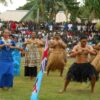
Fiji’s Truth and Reconciliation Commission Aims To Restore Trust and Peace After Decades of Political Crises
Fiji, a nation located west of Tonga in the central Pacific, is renowned for its natural beauty and beach resorts. But for 38 years it has endured a political rollercoaster of instability with four armed coups that overturned democratically elected governments and eroded human rights.
Bending the Curve: Overhaul Global Food Systems to Avert Worsening Land Crisis
Current rates of land degradation pose a major environmental and socioeconomic threat, driving climate change, biodiversity loss, and social crises. Food production to feed more than 8 billion people is the dominant land use on Earth. Yet, this industrial-scale enterprise comes with a heavy environmental toll.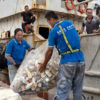
Are Negotiators Turning the Plastics Treaty into a Death Treaty?
The future plastics treaty is being sold as potentially an environmental breakthrough. But in its current form during this week’s negotiations, it contains a dangerous flaw that must be addressed before the final text is agreed — or it could undercut the world’s most widely ratified health treaty, the WHO Framework Convention on Tobacco Control (FCTC), and hand the tobacco industry the tools to expand its market under the banner of environmental action.
From Conflict to Climate Crusade, Refugees Lead the Charge in Kenya
For 18-year-old Lionel Ngukusenge, a refugee from Burundi, where he was forced into hiding because of a repressive regime, he has found another foe to contend with at the Kakuma refugee camp in Kenya: climate change.
Solar-Powered Fish Farming Feeds Indigenous Communities in the Peruvian Amazon
"Our organization is showing that it is indeed possible to move toward energy transition and not depend on oil," said Elaina Shajian, president of the Regional Coordinator of Indigenous Peoples of San Lorenzo (Corpi-SL), in the Peruvian Amazon.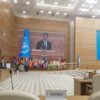
Landlocked Developing Countries to Start ‘New Decade of Delivery’
As the Third United Nations Conference on Landlocked Developing Countries (LLDC3) concludes today (Friday, August 8) in Awaza, Turkmenistan, with the adoption of the Awaza Political Declaration and the formal endorsement of the Awaza Programme of Action (2024–2034), there is optimism that LLDCs are finally at the dawn of a new era.
Beyond Lives Saved: Why Early Warning Systems Are a Smart Investment
Significant progress has been made globally in implementing national and local disaster risk reduction strategies. Yet, the impact of disasters on lives and economies persists and disaster resilience is one of the most regressed areas in Sustainable Development Goal implementation.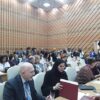
Women From Landlocked Developing Countries Set Sights on Open Horizons
“Progress towards gender equality and equity remains uneven and far too slow. One in four women in landlocked developing countries (LLDCs) live in extreme poverty, and this is nearly 75 million women,” said Rabab Fatima, Secretary-General of the Third United Nations Conference on Landlocked Developing Countries or LLDC3 ongoing in Awaza, Turkmenistan.
Africa’s ‘Land-Linked’ Nations Chart a New Trade Route to Prosperity
Once relegated to the periphery of Africa’s economic map due to their lack of coastline, the continent’s landlocked developing countries (LLDCs) are now reframing their geographic constraints as gateways to opportunity.
Landlocked Nations Form New Bloc to Confront Climate Crisis and Inequity
“The term ‘negotiation' must be understood in ethical context… When an arsonist comes and burns down my house and then asks me to negotiate so I can rebuild my house, that becomes the paradox.”
Landlocked Developing Countries’ Group to Negotiate Way Out of Agricultural Catastrophe
Agriculture is a critical sector in landlocked developing countries, as more than half (55 percent) of the population is employed in the agriculture sector – significantly higher than the global average of 25 per cent. As such, the deterioration of food security in landlocked developing countries (LLDCs) is an unfolding catastrophe.
Roma’s Long Standing Exclusion Compounded As Ukraine War Continues
As Russian forces continue to lay waste to civilian areas of towns and cities across Ukraine, Roma in the country are struggling to access compensation to help them rebuild their damaged homes.
UN Chief Hails Turkmenistan’s Quiet Diplomacy as Launchpad for Landlocked Solidarity
In the glass-panelled hallway straddling Buildings 2 and 3 at the Awaza Congress Centre, two smartly dressed young Turkmens stood behind an ornate national pavilion—anxious, alert, and surprisingly eloquent.
How One Caribbean Country Is Changing the Face of Debt
The beauty of the majestic Piton mountains, vibrant culture, dazzling beaches and lush landscapes of Saint Lucia are invaluable assets. The country also takes pride in having two Nobel laureates, which is remarkable for a nation with a population of over 180,000.
Equal Footing: Building Pathways for Landlocked Developing Countries to Participate in Global Economy
Heads of State, ministers, investors and grassroots leaders are gathered in Awaza on Turkmenistan’s Caspian coast for a once-in-a-decade UN conference aimed at rewiring the global system in support of 32 landlocked developing countries whose economies are often ‘locked out’ of opportunity due to their lack of access to the sea.
UN Trade and Environment Agencies Target Plastic Pollution through Global Negotiations and Trade Measures
They are lightweight, cheap, and able to be used in every sector of every supply chain. Few materials have revolutionized manufacturing and the global economy as much as plastics have. They are essential in almost everything, however this comes at a cost. A cost of 1.5 trillion annually in environmental damage, and a 75 percent waste ratio of all plastic ever produced.
The Missing Link in Africa’s Climate Plans: Animal Health
One would expect that this year’s wetter than average rainy season in parts of Africa would be viewed with relief, not fear. Yet many areas in the region sits at a knife’s edge—still recovering from years of drought and a historic famine, too much rain leads to flooding and water-borne diseases. Both varieties of extreme weather place enormous stress on livestock systems across the region, on which communities rely for both sustenance and livelihoods.
Belem City Limits: How to Host a Successful Climate COP
There is no question that most climate activists and governments were delighted when Brazil offered to host the 2025 UN Climate Conference taking place this November.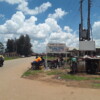
Spotlight on Landlocked Developing Countries Ahead of Third UN Conference
Landlocked developing countries face a unique set of challenges. Without coastal ports, they rely on transit nations, causing higher trade costs and delays.
Climate Reparations are Necessary but Not Sufficient: World Needs Less Growth & More Justice
While recent heat waves were causing thousands of deaths, the Trump administration was busy dismantling policies that regulate greenhouse gases on the theory they don’t harm human health.
Four Times Rejected: Stateless Lotshampa Refugees Appeal to Nepal’s Supreme Court
Four Bhutanese Lotshampa refugees—Aasis Subedi, Santosh Darji, Roshan Tamang, and Ashok Gurung—filed an appeal in Nepal’s Supreme Court on July 27, challenging a government order that would deport them from Nepal.« Previous Page — Next Page »





The Week with IPS

NEXT STOP - SDGs
Tracking global progress towards a sustainable world
Tracking global progress towards a sustainable world
