Languages
Tuesday, October 13, 2026



News and Views from the Global South
Sustainable Development Goals

Historic Inter-American Court Ruling: A Game-Changer for Environmental Defenders?
The Inter-American Court of Human Rights has issued one of the most progressive climate justice decisions of our time. Its historic Advisory Opinion on the climate emergency and human rights, released on July 3, 2025, was unequivocal: States have legal obligations under international human rights law to reduce, prevent, and address climate damage, including reining in big polluters.
As Gaza Enters ‘Worst-Case Scenario of Famine,’ States Call for Palestinian Self-Determination at General Assembly
As the starvation crisis in Gaza deepens into what aid organizations describe as a “worst-case scenario,” a growing coalition of nations is shifting its rhetoric and policy toward supporting Palestinian statehood. At the United Nations General Assembly this week, the humanitarian emergency has reignited global calls for a two-state solution and reignited scrutiny of the Israeli government’s blockade of aid.
ICJ Ruling Is a Pivotal Moment for Climate and Health Justice, Experts Say
Legal minds in international law are trying to interpret the scope and impact of the landmark advisory opinion on climate change by the International Court of Justice (ICJ), where it said that states have a duty to prevent significant harm to the environment.
In Syria’s Sectarian Fights for Power, Humanity is the Loser
As sectarian violence rises in Syria, the number of displaced people has climbed exponentially since Syrian forces joined clashes between the Druze and Bedouin groups in the Sweida region.
Africa’s Development at a Crossroads: Report Warns of Missed SDG Targets Without Urgent Action on Jobs, Equity, and Financing
Africa is making progress on over two-thirds of the Sustainable Development Goals (SDGs), but the pace remains far too slow to meet the 2030 targets, especially in areas like decent employment, gender equality, and access to social protection.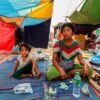
Airstrikes in Myanmar Continue To Spread Fear, Devastate Lives
In Myanmar, airstrikes occur almost daily. The phenomenon has become common since civil war broke out following the 2021 military coup that replaced the democratically elected National League for Democracy (NLD) with the Tatmadaw, Myanmar’s military. Several human rights organizations report that these airstrikes are disproportionately targeting civilians and harming lives.
Two-State Solution Conference Presents an “Exceptional Moment” for International Community – The Elders
Dignitaries across the international community have convened in New York to promote the two-State Solution - the coexistence of Israel and Palestine as sovereign states - as the only path forward to shared sustainable peace in the Middle East. Former and current leaders from 145 countries and independent groups will speak at the United Nations to demonstrate their ‘near-universal support’ and discuss the steps that need to be taken to achieve it.
Forests, Fossil Fuels, and the Fight for the Future: DRC’s Oil Expansion Sparks Global Alarm
The Democratic Republic of Congo (DRC) stands on the precipice of a profound environmental and social crisis, as the government prepares to auction 55 new oil blocks that cover more than half the country’s landmass.
Mining on the Rise as Clean Energy Demands Shifts Global Commodity Exports
Two-thirds of the developing world, or ninety-five out of 143 economies, are dependent on commodities for export value, making up 60 percent of their merchandise exports. For the least developed world, this number rises to 80 percent, leaving entire nation's revenue vulnerable to price swings, fiscal shocks, and evolving trade compositions. Hidden behind the numbers lies a deeper transformation, one disrupting fossil fuel trade, triggering a higher reliance on mineral exports, particularly on mining essential for green technologies.
How Clustering Multilateral Environmental Agreements Can Bring Multiple Benefits to the Environment
The UN80 Initiative, unveiled in March by Secretary-General António Guterres, is a system-wide effort to reaffirm the UN’s relevance for a rapidly changing world.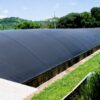
Biogas, a Solution to Poultry Pollution in El Salvador
Still in its early stages and with few players, the poultry sector in El Salvador is taking small steps toward environmentally sustainable production by using its biological waste to generate biogas and, in turn, electricity –an equation that benefits the natural environment, communities, and the farms themselves.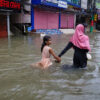
Climate Pressures are Redefining Macroeconomic Resilience in Asia & the Pacific
In the past year, Asia and the Pacific has faced intensifying climate pressures, from extreme heat in Bangladesh and India to devastating floods in northern Thailand and rising food insecurity across the Pacific.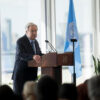
Clean Energy Sources Are Beginning to Overtake Fossil Fuels, But Is It Too Late?
As a result of the worsening climate crisis, extreme weather patterns have disrupted nearly all aspects of human life around the world. With the impacts of fossil fuel reliance being more pronounced than ever before, the United Nations (UN) has implored governments and industries to begin adopting more sustainable, renewable energy sources.
Climate Change An Existential Threat To Humanity, Urges Action – ICJ
The case was “unlike any that have previously come before the court,” President of the International Court of Justice Judge Yuji Iwasawa said while reading the court's unanimous advisory opinion outlining the legal obligations of United Nations member states with regard to climate change.
Global South calls for Strategic Energy Transition Amidst SDG Target Slowdowns
At the UN 2025 High Level Political Forum last week, global energy leaders warned that without urgent action in expanding access to clean energy, hundreds of millions will remain vulnerable, and the world will risk falling short of its 2030 SDG deadline.
Advancing Circular Solutions for EV Battery Waste in Asia and the Pacific
The Asia-Pacific region is becoming a showcase for regional solutions. As electric vehicles (EVs) rapidly gain traction, the region must confront a dual challenge: managing the environmental and health risks of end-of-life EV batteries, while actively pursuing the economic and technological opportunities of a circular economy.
Protect Women’s Rights, Especially in a Time of Equality Backlash, Say Activists
Discriminatory laws and the absence of legal protections impact more than 2.5 billion women and girls worldwide in various ways. Legal reform is paramount to securing gender equality, and the world cannot afford to roll back on decades of progress in women’s rights.
Soaring Demand for Electric Vehicles, Lithium-Ion Batteries Creates Environmental Crisis in DRC
Electric vehicles contribute to an ongoing environmental and humanitarian crisis in the Democratic Republic of the Congo (DRC). Mining operations cause deforestation, pollution, food insecurity and exploitative labor practices.
The Gaza Conundrum: Multilateralism is failing. Here’s why.
“Multilateralism is not an option but a necessity as we build back a better world with more equality and resilience and a more sustainable world."
Humans Have Blown Past 6 of 9 ‘Planetary Boundaries’: Governments Alone Won’t Fix This
Nearly ten years after the Paris Agreement — a legally binding commitment to reduce greenhouse gas emissions — the gap between climate goals and government actions remains stubborn.
Price and Power of Freedom: Celebrating Nelson Mandela International Day
The United Nations celebrated Nelson Mandela International Day in honor of the activist and politician’s lifelong commitment to peace and democracy.« Previous Page — Next Page »





The Week with IPS

NEXT STOP - SDGs
Tracking global progress towards a sustainable world
Tracking global progress towards a sustainable world
