Languages
Monday, October 12, 2026



News and Views from the Global South
Sustainable Development Goals
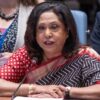
Sexual Violence Against Women, Children in War ‘Strategic’ and Growing
Sexual violence against women and children during wars should not be considered collateral damage. "It is strategy, it is systematic, and it is used more and more," Permanent Representative of Denmark to the United Nations (UN) Christina Markus Lassen said.
Government Constructions Hit Water Recharge Area in El Salvador
Two construction projects pushed by the government of El Salvador, in a water recharge area adjacent to the country's capital, on the slopes of the San Salvador volcano, threaten to make the area more vulnerable and increase the risk of flooding in the city's poor neighborhoods downstream.
Aid Funding Crisis Means Parliamentarians’ Visionary Leadership Even More Crucial
As funding for sexual and reproductive health rights was on a “cliff edge,” parliamentarians now needed to play a “visionary” leadership role because “financing strong, resilient health systems for all their people rests with governments,” said Dr. Alvaro Bermejo, Director General of the International Planned Parenthood Federation (IPPF).
Zanzibar’s Blue Economy Offers Hope Amid Rising Seas and Gender Inequity
At dawn on the white-sand shores of Jambiani, 45-year-old Saada Juma braces herself against the pull of the tide, wrangling ropes laced with seaweed. Her hands, hardened by decades of labor, move instinctively as she secures her aquatic crop.
Feminist Electrification: the Power Africa Needs
Chad is one of the most extreme examples of energy poverty, with just 10% of the population connected to electricity, a rural electrification rate below 2%, and a global per capita electricity consumption rate that’s just 18% of the global average. This hinders its economic development.
IPC Officially Declares Famine; More than Half a Million Starving in Gaza
The Integrated Food Security Phase Classification (IPC) has officially declared that there is famine in Gaza. The world’s biggest food monitoring system raised its classification to Phase 5, the highest level on its food insecurity scale.
Boosting Trade in the World’s Least Developed Countries – The Power of Technology
Artificial intelligence and the use of frontier technologies are already transforming trade and boosting prosperity, particularly for developed and some developing countries. This ranges from the digital exchange of documents, the digitalisation of trade processes and leveraging online platforms to fast-track cross-border trade.
Seeding Strength: Farmer Cooperatives and the Future of Food Systems
“The future of agriculture lies not in the hands of a few giants, but in the joint hands of many.” This quote captures the spirit of farmer cooperatives—values-driven, collectively run enterprises rooted in solidarity and self-help. As global food systems grow more fragile and inequitable, cooperatives offer a compelling model: putting people before profits, and communities before corporations, while advancing social equity, economic empowerment, and environmental sustainability.
Plastic Talks Held Hostage by Petrochemical Lobby
On August 7, a tar-like slurry glistened on the roads leading up to the gate of the Palais Des Nations in Geneva, Switzerland. For fear of sticky substances sticking to tires, no vehicles were allowed to go inside for a while, forcing officials arriving from different parts of the world to disembark and walk through a side entrance.
Climate Change Breaking the Journalists Who Tell its Story
My family lost six herds of cattle during the devastating El Niño-driven drought that swept Zimbabwe in 2024. The loss was as emotional as it was financial. Guilt gnawed at me.
Swept Away: Flash Floods, Failed Systems Bane of Pakistan’s North
Intense rainfall over small areas in Pakistan’s mountainous regions caused massive destruction, sweeping away entire villages. On August 15, the district of Buner in Khyber Pakhtunkhwa (KP) province experienced a weather anomaly in which glacier melt and intense monsoon rains caused floods that buried villages under mud and rock.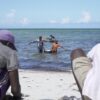
Environmentalists Confident Case Against US Funding of Mozambique LNG Project Will Succeed
Environmental campaign groups are confident that a suit filed in the United States, seeking to stop the country’s Export-Import Bank (EXIM) from the ‘unlawful’ lending of nearly USD 5 billion to the controversial Mozambique Liquefied Natural Gas (LNG) project, will succeed.
Green Jobs on the Rise in the Arab Region
In the Arab region, a thought-to-be oil oasis, green jobs constitute 29 percent of energy sector roles, and 23 percent of the oil and gas sector. These numbers signify a push towards sustainable business and practices, with the Arab region striving to get away from oil, in their advancement towards the completion of the SDGs on time for 2030.
UN Security Council Confronts South Sudan’s ‘Compounding Crises’
The UN Security Council convened today (August 18) to discuss South Sudan and the "interlinked challenges of climate change and conflict" affecting the region.
Sexual Health Rights: Contradictions in East African Laws, Policies
Sarah Namukisa nearly missed her final year exams earlier this year. She was subjected to a mandatory pregnancy test—the 25-year-old student at the Medical Laboratory Training School in Jinja was then expelled because she was pregnant.
Plastics Treaty Talks End in ‘Abject Failure’ as US, Other Big Oil Allies Sabotage Progress
Negotiators in Geneva adjourned what was expected to be the final round of plastics treaty negotiations on Friday without reaching an agreement, a failure that environmentalists blamed on the Trump-led United States, Saudi Arabia, and other powerful nations that opposed any effort to curb plastic production—the primary driver of a worsening global pollution crisis.
Visualizing a Sustainable Future: The Intersection of Art and Climate Justice
In the 1900s, global discussions around climate change and fossil fuel usage reached new heights, leading to the emergence of climate change art. Since then, it has remained a key theme in contemporary art, with artists and corporations alike continuing to push messages of climate reform to instill a sense of urgency, fear, and shared responsibility in viewers.
World Leaders Take a Stand as Outrage Against Israel Increases
The world is becoming increasingly outraged at Israel for its actions in the ongoing war against Hamas, particularly amid the recent killings of Palestinian journalists and Israel’s announcement of its plan to seize complete military control of the Gaza Strip.
The Hidden Backbone of Maternal Health: Asia’s Midwifery Gap
Asia-Pacific’s midwives are a healthcare lifeline capable of delivering nearly 90 percent of essential maternal and newborn services. Yet the region grapples with severe shortages, underinvestment, and systemic neglect.
Southern Voices: Grief, Resilience, and Daily Life in Jnoub
"Special, targeted operations in southern Lebanon," a phrase that has echoed repeatedly over the past two years in Israeli Defence Force (IDF) statements. But behind these clinical military terms lies a human cost that statistics cannot capture.
Four Years Later, Still No Clarity: WHO Report Highlights Gaps in Global Cooperation
More than four years since Covid-19 upended the world, the question of how it began remains unanswered. Did SARS-CoV-2 originate from animals to humans naturally, or did it accidentally escape from a laboratory? The World Health Organization’s latest report offers little new clarity and raises serious concerns about international cooperation and scientific transparency.« Previous Page — Next Page »





The Week with IPS

NEXT STOP - SDGs
Tracking global progress towards a sustainable world
Tracking global progress towards a sustainable world
