Languages
Wednesday, October 14, 2026



News and Views from the Global South
Natural Resources
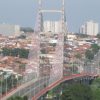
Hortolandia Emerges as an Energy and Environmental City in Brazil
Almost everything seems new or under construction in the southern Brazilian city of Hortolandia, from its wide avenues and cable-stayed bridge to its large buildings and riverside parks.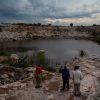
Life-Changing Quarry Mining Shatters Lives in Zimbabwe
On Christmas Day in 2022, 27-year-old Thabani Dlodlo’s eight-year-old son drowned in a flooded pit dug up by quarry miners in the vicinity of Pumula North, a high-density suburb in Bulawayo, Zimbabwe’s second-largest city. As if that was not enough, just a week after New Year’s Day the following year, Dlodlo’s neighbor, 36-year-old Sethule Hlengiwe, also lost her six-year-old daughter after she drowned in another pit flooded with rainwater near her home in Bulawayo.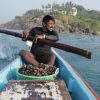
Mussel Divers in Kerala Face Livelihood Loss, with Species Habitat Under Threat
Ibrahim Basheer plunges into the sea and disappears. He remains gone for a couple of minutes before resurfacing for a deep breath of air, repeating this for the next half an hour. When he finally climbs aboard his boat, the net sack around his neck is filled with mussels—his catch for that diving trip. He rests for a short while before diving into the sea again—needing one more such trip to fill the basket he has brought along.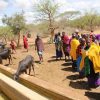
How Tanzania’s Farmers, Pastoralists Paid the Price for a World Bank Project
A hush had fallen over Mbarali District, but it was not the quiet of peace—it was the silence of uncertainty. Just months ago, the rolling plains were gripped by fear as government-backed rangers, dressed in olive green fatigues, roamed through villages, seizing cattle, torching homes, and forcing entire communities to the wobbly edge of survival. The REGROW project, a USD 150 million initiative funded by the World Bank to expand Ruaha National Park (RUNAPA), had promised tourism growth and environmental conservation. What it delivered was a brutal campaign of state-sanctioned land grabbing under the guise of protecting nature.
Race Against Time as Hunger, Poverty Rise Amid Growing Global Uncertainties
Nearly one in 11 people in the world and one in five people in Africa go hungry every day, a crisis primarily driven by chronic inequality, climate change, conflict and economic instability. At the current pace, hunger and extreme poverty rates show little sign of drastically receding by 2030.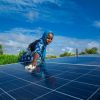
Decoding Africa’s Energy Journey: Three Key Numbers
At night, when the world lights up, large swathes of Africa remain cloaked in darkness—a stark reminder of the continent’s lack of reliable access to electricity.
WFP, FAO Warn of the Severity of the Climate Crisis and Food Insecurity
Over the past few years, climate shocks have become more frequent and have devastated economies and agriculture systems, exacerbating widespread malnutrition and hunger. It has become increasingly apparent that the utilization of sustainable agriculture practices and disaster risk management systems are crucial to fulfill growing needs as natural resources continue to dwindle.
Mexico’s New Economic Plan Lacks Energy
This January, Mexico has embarked on a new industrial path for the next six years, where the viability of its energy component faces fundamental challenges that put it at risk.
Explainer: Why Glaciers Are Alive, Life-Giving and Worth Preserving
The United Nations declared 2025 as the International Year of Glaciers’ Preservation to promote awareness about the role of glaciers, snow and ice. The climate system and global hydrological cycle are dependent on accumulated water in solid form as glaciers, snow and ice. Because of the global temperature rise and its impact on the Earth’s cryosphere, socio-economic and environmental effects are being observed.
Cooking up Success: Solar Kitchen Initiative Aims to Expand Access to Clean Energy in Angola
Access to energy is essential for sustainable development, but for many rural communities, it’s still out of reach. In Angola, according to the 2019-2020 agricultural census, most rural villages lack access to electricity.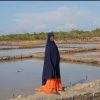
Pemba’s Woman Salt Farmers Forge Livelihoods Amid Climate Woes
As the cool morning breeze sweeps across the Indian Ocean beach in Tanzania’s Pemba archipelago, Salma Mahmoud Ali begins her day. With her brightly coloured Kikoi cinched tightly around her waist and a dark blue scarf framing her face, she walks barefoot toward her salt ponds. The humid air hangs, but Ali wades through ankle-deep water with courage.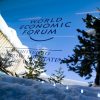
The Davos Disconnect
"It was the best of times; it was the worst of times." Charles Dickens is more relevant today than ever. The wealthy and powerful are meeting again this year in glamorous Davos, at an invitation-only event. They arrive in chartered aircraft and private jets to speak about our warming climate, among other global concerns.
Nature Goes to Court
Nature is taking the stand as courtrooms worldwide become battlegrounds for Earth’s rights. The rise in climate litigation shows how the environment can take centre stage as a plaintiff, demanding justice and accountability, benefiting us all.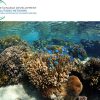
Our Health is at Stake: The Solutions SIDS Need to Fight Climate Change
Climate change is one of the most serious global threats to the future of the world’s population. Its impact extends far and wide, from the economy to governance to the very health and well-being of society.
A Renewed Vision for Prosperity for Landlocked Developing Countries
Over 570 million people live in the world’s 32 Landlocked Developing Countries (LLDCs), spanning across Africa, Asia, Europe, and Latin America. These nations face unique and complex development challenges. Their lack of direct access to the sea, geographical isolation, limited infrastructure, and difficulty integrating into global trade and value chains hinder sustainable development and progress.
Innovative Financing to Unlock Africa’s Blue Economy
Securing new financing for global good has become more challenging than ever. Negotiations at the recently-concluded COP16 on Nature and Biodiversity failed to reach an agreement on establishing a fund to support the implementation of the Framework for Nature agreed in 2022 under the Montreal-Kunming agreement.
Targeting Transformative Disaster Risk Reduction in Asia-Pacific Subregions
In December 2024, Vanuatu experienced yet another harrowing reminder of its vulnerability to disasters—a powerful 7.4 magnitude earthquake struck the Pacific nation’s capital, Port Vila, leaving 14 dead, over 200 injured, and thousands more affected.
Transformative Change Will Save a Planet in Peril—IPBES
Nature is at a tipping point. With human activity having pushed up to 1 million plant and animal species close to extinction, securing sustainable development and halting global biodiversity collapse is no longer just an option but a requisite for human wellbeing.
Interlinked Solutions Key to Tackling Biodiversity, Water, Food, Health and Climate Change, says IPBES
Biological diversity is on the decline worldwide, and current approaches to address its loss have been piecemeal and ineffective in tackling the crisis facing nature—this is despite estimates that over half of global GDP (USD 58 trillion of economic activity in 2023) is generated in sectors that are moderately to highly dependent on nature, a new report by the Intergovernmental Platform on Biodiversity and Ecosystem Services (IPBES) finds.
How an African Bioeconomy Can Strengthen Agrifood Systems in the Context of a Changing Climate
From increased pests and diseases to lower crop yields and extreme weather events, the adverse impacts of climate change on agriculture in Africa cannot be overstated.
‘We Will Not Go Quietly Into the Rising Sea,’ Tuvalu Tells International Court of Justice
Rising sea level caused by greenhouse gas emission-fueled climate change is threatening existence in coastal communities and island nations. At the International Court of Justice (ICJ), on Thursday, December 12, 2024, small island states, including Tuvalu and a Pacific-based fisheries agency detailed their ongoing existential threats caused by the climate change-induced sea level rise and impacts on fishery-based livelihood.« Previous Page — Next Page »





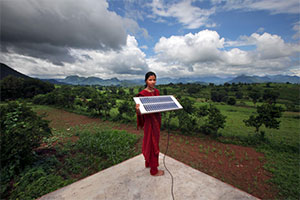 Bringing clean energy to rural India. Credit: Abbie Trayler-Smith / Panos Pictures / Department for International Development
Large reserves of oil, gas and minerals in developing countries generate opulent revenues. They could be used to stimulate economic growth and reduce poverty, but often result in environmental destruction and conflict, benefiting large companies and corrupt governments. Furthermore, competition over natural resources often manifests through geopolitical conflict. For example, before the US-Iraq war, Iraq’s domestic oil industry was nationalized. With US aggression came weakened Iraqi institutions and foreign intervention, thus eventually leading to the privatization of Iraqi oil, leaving the industry now largely dominated by Western companies. As another example, China’s rising investments within the lithium sector in South America are increasing the US-China rivalry across the Western Hemisphere. Notably, Bolivia has the largest reserves of lithium in the world, and the nation’s state-owned lithium extraction firm recently signed a contract with China’s CBC Consortium, while rejecting the entry of Western firms into the nation. In Bolivia’s case, rising Chinese investment in the nation’s lithium sector also raises concerns about environmental sustainability and the sociopolitical rights of Indigenous communities. More broadly, Sub-Saharan Africa holds nearly 30% of global reserves of critical minerals required for low-carbon technologies. Despite this, the region attracts less than 10% of global exploration investment, depicting a critical barrier to both the clean energy transitions and Sub-Saharan Africa’s economic development. Furthermore, resource wealth continues to fuel conflict like Sudan’s civil war, which has led to 9.1 million internally displaced people and is intensely connected to competition over gold, water, and agricultural land. IPS covers news about major oil, gas, and mining projects, their effects on the environment and local communities, and the ideas and actions of the interest groups involved.

The Week with IPS

NEXT STOP - SDGs
Tracking global progress towards a sustainable world
Tracking global progress towards a sustainable world
