Languages
Wednesday, November 18, 2026



News and Views from the Global South
Economy & Trade
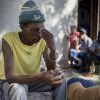
Farm Workers Paying the Price for Cheap South African Wine
Systembolaget, the Swedish government-owned alcohol monopoly, promises fair conditions – but it also uses its purchasing power to put a downward pressure on prices. At the major South African wine producer Leeuwenkuil, workers suffer as the company tries to cut costs. So far, none of the South African suppliers have been stopped due to violations against Systembolaget’s code of conduct.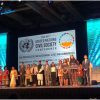
Civil Society Urges Inclusive, Resilient & Sustainable Urban Areas of the Future
The United Nations held its first major international conference in one of America’s mountain states, bringing scores of civil society organizations (CSOs) to discuss ways on making “cities and human settlements inclusive, safe, resilient and sustainable by 2030.”
The Business of Social Enterprise
Organisations supporting people affected by Hansen’s disease (leprosy) have social rather than capitalist aims, but they need to take a business-minded approach to their work if they wish to be sustainable, experts at a global conference in Manila, Philippines said.
Exclusive: Winnie Byanyima Speaks about Inequality in Africa and Next Steps at UNAIDS
 While the 28th World Economic Forum (WEF) on Africa is being held in Cape Town, South Africa this week, the international aid and development charity Oxfam released its latest report: A tale of two continents: fighting inequality in Africa.
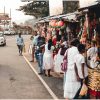
Sri Lanka Faces Major Challenges on UN’s 2030 Development Agenda
On the road to sustainable development, Sri Lanka provides an interesting case study. Having overcome a three-decade domestic conflict, Sri Lanka has begun its transformation towards a sustainable and resilient society. The extreme poverty rate ($1.90 a day) dropped to 0.8 per cent in 2016. The unemployment rate is below 5 per cent since 2010.
Ensuring Fairer International Corporate Taxation
Large transnational corporations (TNCs) are widely believed to be paying little tax. The ease with which they avoid tax and the declining corporate tax rates over the decades have deprived developing countries of much needed revenues besides undermining public faith in the tax system.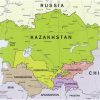
Central Asia Has Always Been Important for Europe
The EU has presented a new strategy for Central Asia. The first one has been adopted in 2007 and revised in 2015. Where do you see improvements?
Eastern Caribbean Embarks on Strategy Towards a Blue-Green Economy
Micro, small and medium enterprises as well as niche markets and experiences such as bee tourism may well hold the key for the Organisation of Eastern Caribbean States as countries of that sub-region, known as the OECS, ramp up efforts to build economies that are resilient to the impacts of climate change. 
Is the UN’s High Seas Treaty Heading Towards Troubled Waters?
The world’s high seas, which extend beyond 200 nautical miles, are deemed “international waters” to be shared globally-- but they remain largely ungoverned.
Ugandan Students Turn Waste to Wealth
Namugongo is a lush, forested community in central Uganda where tall trees are home to colourful birds and noisy monkeys. The community has a tragic place in history: on 3 June 1886, 22 Ugandan Christian converts were publicly executed, on the orders of King Mwanga II of the Buganda Kingdom, in an attempt to ward off the influence of colonial powers with whom the Christians were associated.
How the African Development Bank Plans to Mobilise Funds for Climate Adaptation
IPS Correspondent Isaiah Esipisu reports from the Climate Change and Development in Africa Conference taking place at the African Union headquarters in Addis Ababa, Ethiopia. 
The Arctic: Earth´s Last Frontier
The last frontier for utilizing and maybe even exhausting Earth´s natural resources is opening up in the Arctic and some of the world´s wealthiest nations are trying to secure their piece of the cake. Some act openly, others are more secretive – recently one of the competitors entered the game in a remarkably unwieldy manner.
Our Food Systems Need Transformation
The right to food is a universal human right. Yet, over 820 million people are going hungry, according the latest edition of the State of Food Security and Nutrition in the World (SOFI 2019). In addition, 2 billion people in the world are food insecure with great risk of malnutrition and poor health” 1.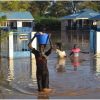
Let’s Walk the Talk to Defeat Climate Change – African Leaders Told
African leaders have been asked to walk the talk, and lead from the front, in order to build resilience and adaptation to the adverse impacts of climate change on the continent.
Disaster Risk Resilience: Key to Protecting Vulnerable Communities
The past five years have been the hottest on record in Asia and the Pacific. Unprecedented heatwaves have swept across our region, cascading into slow onset disasters such as drought. Yet heat is only part of the picture. Tropical cyclones have struck new, unprepared parts of our region and devastatingly frequent floods have ensued. In Iran, these affected 10 million people this year and displaced 500,000 of which half were children. Bangladesh is experiencing its fourth wave of flooding in 2019. Last year, the state of Kerala in India faced the worst floods in a century.
Kenya: The troubles of a science PhD from the West
Graduate students of the London School of Economics and Political Science gathered at Kenya’s coast in September 2018, where the Secretary-General of the United Nations Conference on Trade and Development (UNCTAD) Dr Mukhisa Kituyi told them: “With your international credibility, it is easier and tempting to leave and take out of the continent the little intellectual resource that could solve problems their countries face.”
Pushing For a Green Economy & Clean Energy
Africa is grappling with myriad environmental and climate challenges, from drought to loss of biodiversity, cyclones and plastics pollution.
Trade, Currency War Weapons Double-Edged
The US-China trade war has flared up again less than two weeks after US President Donald Trump delayed new tariffs of US$160 billion on Chinese imports until December, purportedly to avoid harming the holiday shopping season.
What Would It Really Take to Plant a Trillion Trees?
Tree planting is capturing the minds of those who look for fast climate action. Earlier this month, the Ethiopian Government announced a new world record: thousands of volunteers planted 353 million trees in one single day. This came shortly after a team of scientists identified suitable places in the world where up to 1 trillion new trees could be planted. Such a massive effort could absorb about 20 years’ worth of global greenhouse gas emissions. And on 8 August 2019, the Intergovernmental Panel on Climate Change launched a Special Report on the importance of land use for the climate. About 23 per cent of all emissions come from the agriculture, land use and forest sector. The Intergovernmental Panel on Climate Change outlines land management opportunities with benefits for food security, biodiversity, and the climate, such as agroforestry.
How to Bring the Indus Delta Back to Life – Give it Water
Gulab Shah, 45, is having sleepless nights. He and his family are worried about their imminent migration from their village in Jhaloo to a major city in Pakistan, thanks to the continued ingress of sea water inland.
Southern African Development Community Loses Billions in Illicit Outflows
The Southern African Development Community (SADC), which comprise 16 member states, loses about 8.8 billion dollars in trade-related illicit outflows and about 21.1 billion dollars in external government debt payments annually, according to a new report released here.« Previous Page — Next Page »


 UN Commission on International Trade Law Holds Colloquium on Harmonizing Law in Age of Digital Trade and Finance. Credit: UN Photo/Manuel Elías
Trade has historically been a geopolitical tool that can both be used to propel development as well as entrench inequalities. In various nations in East Asia and Latin America, increased trade, as often seen in export booms, has allowed them to achieve influential standings within the global economy. On the other hand, many low-income countries in Sub-Saharan Africa, Asia, and Latin America struggle to maintain a robust trade performance, and oftentimes are subjugated to exploitative trade dynamics through intense extraction of their natural resources. In recent decades, international trade has reached a new era as emerging economies across the world are rising in economic preeminence. Stable international trade is crucial to world peace as global interconnectedness facilitates reliable diplomacy. Nevertheless, significant challenges are on the rise. Notably, a major wave of United States tariff escalations in January 2025 lifted US import taxes to their highest level since the 1930s, changing market dynamics and forcing renegotiations with global trading partners.These articles are aimed at informing readers about the complexities of trade and its varying effects on development, with a special focus on the consequences of the global economic crisis, the potential of fair trade and the gender implications of trade policies.
Updated by Yilan Batista and Shuli Wong August 2026

The Week with IPS

NEXT STOP - SDGs
Tracking global progress towards a sustainable world
Tracking global progress towards a sustainable world
