Languages
Wednesday, November 18, 2026



News and Views from the Global South
Economy & Trade
Africa’s Industrial Development: Turning Challenges into Opportunities
When world leaders gathered in New York for the 70th session of the General Assembly back in 2016, and proclaimed the period 2016-2025 as the Third Industrial Development Decade for Africa (IDDA III), it reaffirmed the importance of industrialization in supporting Africa’s own efforts towards sustained, inclusive and sustainable economic growth and accelerated development.
The Social Impact of Economic Inequality
Increasing economic inequality is a defining challenge of our time. In recent years, it has triggered analysis and reflection by many scholars, politicians and others on its causes and consequences on economic growth and efficiency, politics and democracy, human rights, individual behaviors, access to health, social cohesion and environmental degradation. The perception that the top 1% of income earners are gaining at the expense of the other 99% has resulted in widespread public debates in many countries on the social and political repercussions of inequality.
In Southern Brazil, Need Becomes an Environmental Virtue
The state of Santa Catarina in southern Brazil is the largest national producer and exporter of pork and this year it also leads in exports of chicken, of which it is the second-biggest producer in the country.
World’s Hard Fought Battle Against Climate Change
UN Secretary-General Antonio Guterres describes the ongoing crisis as a “climate emergency”-- as the world continues its hard fought battle against devastating droughts, floods, hurricanes and rising sea levels that threaten the very existence of small island developing states located in low-lying areas.
Confronting the New Climate Reality in Asia and the Pacific
In less than ten days world leaders will be gathering at the United Nations in New York for the Climate Action Summit. Their goal is simple; to increase ambition and accelerate action in the face of a mounting climate emergency. For many this means ambition and action that enables countries to decarbonize their economies by the middle of the century. But that is only half the equation. Equally ambitious plans are also needed to build the resilience of vulnerable sectors and communities being battered by climate related disasters of increasing frequency, intensity and unpredictability.
Hiring for Inclusion
As companies begin to focus on hiring people with disabilities, we need to shape how they think and act on this interest.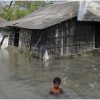
Rural Bangladesh Families Spend 2.0 Billion Dollars on Climate Change ― Dwarfing Government & International Finance
In an alarming imbalance struggling families in rural Bangladesh spend almost US$2 billion a year on preventing climate-related disasters or repairing damage caused by climate change ― far more than either the Bangladesh government or international bodies.
Biogas Makes Pig Farming More Sustainable in Southern Brazil
 Biogas has the potential to provide 36 percent of the electricity consumed in Brazil or replace 70 percent of diesel if purified as biomethane, according to the Brazilian Association of Biogas and Biomethane (Abiogas).

Do Women Suffer Greater Loss of Employment than Men in Morbidity?
In a life peppered with tragedy, Mary Shelley wrote in 1818, “Have I not suffered enough, that you seek to increase my misery?” That this accurately sums up the fate of many women in South Asia who suffer a major health shock such as a serious illness or a disability or both, is hard to dispute.
Key Changes in International Agriculture and Rural Development Issues: Three Priority Areas in the Context of the 2030 Development Agenda
Transformations in international agricultural and rural development issues Some major changes in international agricultural and rural development over the last 30-40 years need to be taken into account in efforts to promote sustainable development and an inclusive rural transformation (IFAD 2016) as we approach the third decade of the millennium. This opinion piece, drawing on a longer article published in Agriculture for Development Journal (Summer 2019 Issue), seeks to stimulate reflection and debate on how work to support agricultural and rural development can evolve to address key challenges and opportunities related to migration, sustainable urbanization and youth in a changing global policy context.
How a Bangladesh Non Profit for Leprosy Made its Members Completely Self-Sufficient
 The 20th International Leprosy Congress just wrapped up in Manila, Philippines last week. Alongside policy makers, diplomats, medical researchers, doctors, donors and academics, several Hansen's disease-affected people’s organisations also participated in the 3-day congress that was co-sponsored by The Nippon Foundation (TNF) and Sasakawa Health Foundation (SHF).

Developing Economies’ Subordinate Financialization
Rapid financial globalization is due not only to financial innovations, but also to choices made by national policymakers, often with naïve expectations, trusting promoters’ promises of steady net inflows of financial resources.
African Development Bank Plans for a Self-sufficient, Integrated and Industrialised Continent
Arama Sire Camara, a fruit and vegetable seller in the province of Kindia, some 135 km from the Guinean capital of Conakry, feels safer trading well into the night thanks to the Rural Electrification Project, financed by 21-million-dollar investment by the African Development Bank. “With lighting on the road at night and illuminating our goods, it means we are safer, especially with all the cars on the road. You can work for longer after nightfall, and so we can make more of our products,” she says.
World’s Whale Population Struggles to Recover from Carnage Amid Serious Concerns
Sri Lanka is endowed with an impressive and large concentration of whales off its shores and it is believed they are not a population that migrates seasonally. 26 species have been spotted in Sri Lankan waters, including the massive blue whales.
Multidisciplinarity of Data: Time to Put Data at the Heart of UN’s 2030 Agenda
The 2030 Agenda for Sustainable Development was adopted in 2015. At its core are 17 Sustainable Development Goals and 169 targets, all meant to guide efforts by all countries towards a more sustainable, prosperous and equal future.
Translating Ambition to Action: High Hopes for United Nations Action Week
In less than 10 days, countries from around the planet will come together in New York for the United Nations Secretary General’s Climate Action Summit. I look forward to representing the Pacific Community (SPC) at this important event, and throughout “Action Week” during the upcoming UN General Assembly.
A New World? Are the Americas Returning to Old Problems?
When I in 1980 first arrived in America it was a new world to me. I went from New York to Puerto Rico and the Dominican Republic and like so many visitors and migrants before me I was overwhelmed by both familiar and strange impressions. Familiar due to books I had read and movies I had seen, strange since I encountered unexpected things and new because both I and several of those I met compared themselves to the “old world”, i.e. Euroasia and parts of Africa.
The Push for Peace-From the Global Village to the Global Neighborhood
From the ashes of a tragedy that wiped out almost 90% of the city of Hiroshima on 6 August 1945, an institute called the Hiroshima Peacebuilders Center (HPC) rose like a phoenix of hope that is pioneering the creation of a global pool of peacebuilders. It is driven by the 2030 Agenda for Sustainable Development declaration that "there can be no sustainable development without peace and no peace without sustainable development.”
Let’s Get Climate Action into Traction with Gender Equality
Climate change is already altering the face of our planet. Research shows that we need to put all our efforts over the coming decade to limit warming to 1.5°C and mitigate the catastrophic risks posed by increased droughts, floods, and extreme weather events.
Dumping Fossil Fuels to Drive Green Development
Disinvestments in fossil fuels amounting to 11 trillion dollars – eight times the global GDP – have been recorded in the last six months of this year, according to a new report.
India Promotes South-South Cooperation, but Key Questions Unaddressed
At his speech at the United Nations Convention to Combat Desertification (UNCCD) summit in Delhi, Prime Minister Narendra Modi emphasised South-South cooperation and technology solutions, but issues of land ownership dog the ongoing negotiations. As the second week of the UNCCD Conference of Parties (COP) kicked off in Delhi, Indian Prime Minister Narendra Modi highlighted South-South cooperation and issues of land degradation.« Previous Page — Next Page »


 UN Commission on International Trade Law Holds Colloquium on Harmonizing Law in Age of Digital Trade and Finance. Credit: UN Photo/Manuel Elías
Trade has historically been a geopolitical tool that can both be used to propel development as well as entrench inequalities. In various nations in East Asia and Latin America, increased trade, as often seen in export booms, has allowed them to achieve influential standings within the global economy. On the other hand, many low-income countries in Sub-Saharan Africa, Asia, and Latin America struggle to maintain a robust trade performance, and oftentimes are subjugated to exploitative trade dynamics through intense extraction of their natural resources. In recent decades, international trade has reached a new era as emerging economies across the world are rising in economic preeminence. Stable international trade is crucial to world peace as global interconnectedness facilitates reliable diplomacy. Nevertheless, significant challenges are on the rise. Notably, a major wave of United States tariff escalations in January 2025 lifted US import taxes to their highest level since the 1930s, changing market dynamics and forcing renegotiations with global trading partners.These articles are aimed at informing readers about the complexities of trade and its varying effects on development, with a special focus on the consequences of the global economic crisis, the potential of fair trade and the gender implications of trade policies.
Updated by Yilan Batista and Shuli Wong August 2026

The Week with IPS

NEXT STOP - SDGs
Tracking global progress towards a sustainable world
Tracking global progress towards a sustainable world
