Languages
Wednesday, November 18, 2026



News and Views from the Global South
Economy & Trade

South Must Also Set International Tax Rules
Recently, Christine Lagarde, outgoing Managing Director of the International Monetary Fund (IMF), argued that developing ‘countries need a seat at the table’ to design rules governing international corporate taxation. This acknowledges recent IMF findings that developing countries lose approximately USD200 billion in potential tax revenue yearly, about 1.3 per cent of their GDP, due to companies shifting profits to low-tax locations. Oxfam estimated in 2018 that extreme poverty could be eradicated for USD107 billion annually, i.e., about half the lost revenue.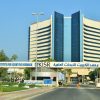
Establishing a Science & Technology Park is No Walk in the Park
The success of Silicon Valley has been inspirational for many countries worldwide wishing to establish science and technology parks. In Asia, successful science and technology parks can be found in many economies, including China, Japan and Thailand.

Producing Energy from Pig and Poultry Waste in Brazil
Romário Schaefer is fattening up 3,300 pigs that he receives when they weigh around 22 kg and returns when they reach 130 to 160 kg - a huge increase in meat and profits for their owner, a local meat-processing plant in this city in Brazil.
Are Jair Messias Bolsonaro and Donald John Trump a Menace to the Planet?
We live in different worlds. The ones of friends, family and work colleagues. Worlds which are overshadowed by other, much bigger ones. Global spheres of international finance, politics, climate change, etc., contexts that might threaten our smaller circle of relationships; our family, our income, our general wellbeing, in short – our entire existence. However, even at those levels there exist small circles of acquaintances and associates able to make decisions that affect the entire humankind. Let me take one example – the regimes of U.S. President Donald J. Trump and Brazilian President Jair Messias Bolsonaro, which are menacing our global natural habitat.
The Missing Women in Finance
Women comprise a very small proportion of the financial industry workforce, and this has implications on the way female clients use and benefit from financial services.
Towards a Sustainable Future: Case of China’s Economic Transformation
The Asia-Pacific region is at a crossroads. The traditional export-oriented, manufacturing-driven growth is facing headwinds from sluggish external demand and rising protectionist trade measures.
‘Beggar Thy Neighbour’ Policy Advice
The harmful effects of falling corporate tax rates have been acknowledged in a recent International Monetary Fund (IMF) research paper. This trend, since the early 1980s, has been especially detrimental for developing countries, which rely on direct taxation much more than developed economies.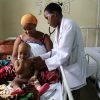
To Uplift a Woman is to Uplift a Village
Khadija Zuberi, 23, from Ruaha Mbuyuni village in Tanzania’s central highlands, is a single mother to her four-year-old son, Hashim.
How India’s Indigenous Female Forest Dwellers Feel about Owning Their Own Land
 Kumaribai Jamkatan, 51, has been fighting for women’s land rights since 1987.
Though the constitution of India grants equal rights to men and women, women first started to stake their claim for formal ownership of land only after 2005–the year the government accorded legal rights to daughters to be co-owners of family-owned land.
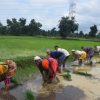
In the Midst of Conflict, India’s Indigenous Female Forest Dwellers Own their Land
Jam Bai, an Indigenous farmer from Korchi village in western India, is a woman in hurry. After two months of waiting, the rains have finally come and the rice saplings for her paddy fields must be sown this week while the land is still soft.
The World Bank Needs to Understand Poverty and What it Actually Costs a Family to Live on
The World Bank claims poverty is decreasing around the world but UN research shows it depends on what you measure. If we are serious about reducing poverty, we need to start by properly identifying it.
Burning Forests for Rain, and Other Climate Catastrophes
The villagers living on the foothills of Mount Kenya have a belief: If they burn the forest, the rains will come.
The Nairobi Summit – Towards a Watershed Moment
In 2019 a female scientist created an algorithm that gave the world the first ever images of a black hole. Working with a team of astronomers, physicists, mathematicians and engineers, a young woman led the development of a computer program that in her own words enabled them to “achieve something once thought impossible.”
The Moral Responsibility for Arms Trade
“I don’t want to see a single war millionaire created in the United States as a result of this world disaster.” 1 These were the words of US President Franklin D. Roosevelt on 22 May 1940 when he learned of individuals profiting because of the booming arms trade industry during the Second World War. Seven decades down the line, President Roosevelt’s warning against the rise of the military-industrial complex and war profiteers is more relevant than ever and a telling testimony that for many in safe places war means profit. But, should the pursuit of economic profit be allowed to supplant ethical considerations, especially when weapons often end up in the hands of terrorists, human rights violators and criminal governments?
Extreme Floods, the Key to Climate Change Adaptation in Africa’s Drylands
Extreme rainfall and heavy flooding, often amplified by climate change, causes devastation among communities. But new research published on Aug. 7 in the scientific journal Nature reveals that these dangerous events are extremely significant in recharging groundwater aquifers in drylands across sub-Saharan Africa, making them important for climate change adaptation.
Bretton Woods Institutions: Enforcers, Not Saviours?
According to their own internal evaluations, both the World Bank (WB) and the International Monetary Fund (IMF) have huge credibility deficits due to the policy conditionalities and advice they have dispensed to developing countries in recent decades.
What a Little Pigeon Could Teach Our World
Over 100 years ago a little brown passenger pigeon named Martha died in the Cincinnati Zoo. She was the last of her breed. Just like that, in an instant, a bird species that had once numbered in the billions was wiped out forever.
Producing Clean Energy from Pigsties in Brazil
Pigs, already the main source of income in this small municipality in southwestern Brazil, now have even more value as a source of electricity.
A Call for Healthy, Blue Oceans in Asia and the Pacific
Leaders at the Group of 20 summit last month agreed on the “Osaka Blue Ocean Vision,” which aims to reduce additional pollution by marine plastic litter to zero by 2050. The UN Economic and Social Commission for Asia and the Pacific (ESCAP) stands ready to support Japan and other countries in the region to ensure healthy and sustainable oceans.
Boom or Bust -Education Will Determine Africa’s Transformation
August 12, marks International Youth Day, and the theme for this year is ‘making education more relevant, equitable and inclusive’, is particularly apt for Africa. Consider this. Every 24 hours around 35,000 African youth are looking for work.
Europeans Mobilising for New IMF Head
In the grand European political reshuffle of 2019, it turned out that Christine Lagarde was the answer to the conundrum of who should replace Mario Draghi at the European Central Bank. But her move opens another question. Who succeeds Lagarde at the International Monetary Fund?« Previous Page — Next Page »


 UN Commission on International Trade Law Holds Colloquium on Harmonizing Law in Age of Digital Trade and Finance. Credit: UN Photo/Manuel Elías
Trade has historically been a geopolitical tool that can both be used to propel development as well as entrench inequalities. In various nations in East Asia and Latin America, increased trade, as often seen in export booms, has allowed them to achieve influential standings within the global economy. On the other hand, many low-income countries in Sub-Saharan Africa, Asia, and Latin America struggle to maintain a robust trade performance, and oftentimes are subjugated to exploitative trade dynamics through intense extraction of their natural resources. In recent decades, international trade has reached a new era as emerging economies across the world are rising in economic preeminence. Stable international trade is crucial to world peace as global interconnectedness facilitates reliable diplomacy. Nevertheless, significant challenges are on the rise. Notably, a major wave of United States tariff escalations in January 2025 lifted US import taxes to their highest level since the 1930s, changing market dynamics and forcing renegotiations with global trading partners.These articles are aimed at informing readers about the complexities of trade and its varying effects on development, with a special focus on the consequences of the global economic crisis, the potential of fair trade and the gender implications of trade policies.
Updated by Yilan Batista and Shuli Wong August 2026

The Week with IPS

NEXT STOP - SDGs
Tracking global progress towards a sustainable world
Tracking global progress towards a sustainable world


