Languages
Wednesday, November 18, 2026



News and Views from the Global South
Economy & Trade
Migration and Human Solidarity
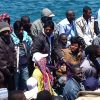
The migrant and refugee crisis has become a serious test for the unity of Europe as a political project. The inflow of destitute migrants and refugees has tested Europe’s political unity to an unprecedented extent. With a long-term solution to the migrant and refugee crisis nowhere in sight, the adverse impact of the current situation has the potential to unfold further and to give rise to a broader crisis with long-term implications, affecting Europe and the MENA region alike.
Free Speech and the Hong Kong Protests
Sometime in the summer of 1974, I was leaning against the gunwale of the ferry between Calais and Dover, watching the moonlight streaming dark waters. When I turned to the left I found that a Chinese lady also looked out over the calm sea. What she told me changed my world view.
Businesses Crucial to the Success of SDGs
We all know that the UN Sustainable Development Goals are ambitious and will take huge collaborative and international effort to achieve. Government action alone is not enough. So how can the private sector actively contribute – and what can be done to ramp up the participation of businesses around the world?
Bretton Woods Institutions: From Solution to Problem
July 2019 saw the 75th anniversary of the historic conference of 44 countries held at the Bretton Woods (BW) resort in New Hampshire during July 1-22, 1944. Conference At BW, John Maynard Keynes, representing the UK, and Harry Dexter White, for the USA, both sought a new international monetary system following the Great Depression, which many attributed to the functioning of the gold standard before World War II.
The Age of Digital Geopolitics & Proxy War Between US and China
The geopolitical significance of key digital technologies now takes centre stage in a new global conflict between the US and China. The dispute over the Chinese technology group Huawei exemplifies this situation.
Using Renewable Energy and the Circular Economy to Fight Poverty in Argentina
On the outer edges of Buenos Aires proper, where the paved streets end and the narrow alleyways of one of Argentina’s largest shantytowns begin, visitors can find the En Haccore soup kitchen.
Money Grows on Trees–Don’t Uproot Them
Jennifer Handondo, a small scale farmer of Choma district in southern Zambia, plants food crops such as maize mostly for her family’s needs. Because of uncharacteristically high temperatures and low rainfall during the rainy season in March, the divorced mother who single-handedly supports her three children, has not been able to harvest as much as she usually does. So she has diversified into selling seedlings of neem, Moringa and other medicinal trees.
Nigeria Finally Throws its Weight Behind African Continental Free Trade Area
On 7 July 2019, Nigeria finally threw its weight behind the African Continental Free Trade Area (AfCFTA) when President Muhammadu Buhari signed the treaty at a summit of African heads of state in Niamey. In normal circumstances, that shouldn’t have been big news.
Human Rights Watch Disappoints on Human Rights
On 22 July 2019, Kenneth Roth published an article in Publico, Lisbon, entitled: “UN Chief Guterres has disappointed on Human Rights”.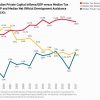
Foreign Private Investment in Low-Income Countries: More Important Than You Think
In a world of stagnating public aid, limited fiscal space, and rising public debt in low-income countries (LICs), can they realistically expect to rely more on private finance from foreigners? What does the evidence suggest?
Privatization Increases Corruption
International financial institutions (IFIs) have typically imposed wide-ranging policy reforms – called ‘conditionalities’ – in exchange for country governments to secure access to financial assistance. While IFIs may demand anti-corruption policies, other IFI policy conditionalities, such as the privatization of state-owned enterprises (SOEs), can create new rentier opportunities, undermining government will and capacity to curb corruption.
How China’s Africa Alliance is Shifting World Order
When the United Nations General Assembly met in 2007 to vote on North Korea’s human rights record, only 10 of the 56 African countries voted with the U.S.-led western coalition.
UN Report Shows Mixed Results in Meeting SDGs
The United Nations launched its 2019 report on Sustainable Development Goals (SDGs), showing inadequate progress in the fourth year into the sustainable development agenda and highlighting the need for imminent global action.
The Geneva Centre issues publication on enhancing access to justice for workers in the United Arab Emirates (UAE)
A new publication entitled “Improving access to justice for workers: The case of the UAE” has been published by the Geneva Centre for Human Rights Advancement and Global Dialogue. The publication is an outcome of a panel discussion held on 20 March 2018 at Palais des Nations in Geneva addressing the same subject. The debate was jointly organized by the Geneva Centre, the European Public Law Organization (EPLO) and the Permanent Mission of the United Arab Emirates to the United Nations Office in Geneva (UNOG).
Growing African Agriculture One Byte at a Time
Ella Mazani is a mobile phone farmer. “My mobile phone is part of my farming. It supports my farming and my family’s welfare through the services I get via the phone,” the smallholder maize farmer from Shurugwi in central Zimbabwe quips.
Facebook and Friends Threaten to Libralize the World
On 17 June, a Facebook white paper proposed a new global digital currency it plans to launch in the first half of 2020. The Libra will be managed by a ‘not for profit’ Swiss-based Facebook-led consortium of ‘for profit corporations’, with Uber, eBay, Lyft, Mastercard and PayPal among its founding members.
Rwanda Prepares the Foundations for Climate-Resilient Cities
How do you plan a resilient city? A city that can withstand climate change impacts, and the natural disasters that it produces at increased frequencies. And how do you protect the city, its individuals and communities, its business and institutions from either the increased flooding or prolonged droughts that result? It’s a complex question with an even more complex solution, but one that the central African nation of Rwanda is looking to answer.
Rwanda: Open for Business
Claire Akamanzi spends her days working on innovative ways to bring more business to her country. As CEO of the Rwanda Development Board (RDB), a multiagency governmental department billed as a “one-stop shop” for investors, Akamanzi has seen the country earn accolades for its business-friendly environment, recently winning the #2 spot regionally in the World Bank’s ease of doing business rankings.
Community Action Is a Critical Weapon in the War on Terror
During the egregious Dusit attack, Kenya demonstrated remarkable, resilience, solidarity and stood firm against the terrorists.
Today’s Menu: Pesticide Salad, Leaded Fish with Plastic, Chemical Fruit
In case you were not aware or just do not remember: all you eat, drink, breathe, wear, take as a medicine, the cosmetics you use, the walls of your house, among others, is full of chemicals. And all is really ALL.
Industrial Policy Finally Legitimate?
For decades, the two Bretton Woods institutions have rejected the contribution of industrial policy (IP), or government investment and technology promotion efforts, in accelerating and sustaining growth, industrialization and structural transformation. Finally, two International Monetary Fund (IMF) staff members, Reda Cherif and Fuad Hasanov, have broken the taboo. They embrace industrial policy, arguing against the current conventional wisdom that East Asian industrial policies cannot be successfully emulated by other developing countries.« Previous Page — Next Page »


 UN Commission on International Trade Law Holds Colloquium on Harmonizing Law in Age of Digital Trade and Finance. Credit: UN Photo/Manuel Elías
Trade has historically been a geopolitical tool that can both be used to propel development as well as entrench inequalities. In various nations in East Asia and Latin America, increased trade, as often seen in export booms, has allowed them to achieve influential standings within the global economy. On the other hand, many low-income countries in Sub-Saharan Africa, Asia, and Latin America struggle to maintain a robust trade performance, and oftentimes are subjugated to exploitative trade dynamics through intense extraction of their natural resources. In recent decades, international trade has reached a new era as emerging economies across the world are rising in economic preeminence. Stable international trade is crucial to world peace as global interconnectedness facilitates reliable diplomacy. Nevertheless, significant challenges are on the rise. Notably, a major wave of United States tariff escalations in January 2025 lifted US import taxes to their highest level since the 1930s, changing market dynamics and forcing renegotiations with global trading partners.These articles are aimed at informing readers about the complexities of trade and its varying effects on development, with a special focus on the consequences of the global economic crisis, the potential of fair trade and the gender implications of trade policies.
Updated by Yilan Batista and Shuli Wong August 2026

The Week with IPS

NEXT STOP - SDGs
Tracking global progress towards a sustainable world
Tracking global progress towards a sustainable world
