Languages
Saturday, November 28, 2026



News and Views from the Global South
Economy & Trade
China Ponders This Royal Business
The glamour of the UK royal wedding is slowly disappearing from China's photo spreads, but it seems to have opened the door to a debate on the allure of old Britain's soft power and what makes an aspiring China lacking of it.U.N. to Launch International Year of Cooperatives
When the United Nations commemorates the International Year of Cooperatives (IYC) in 2012, the world body will recognise the contributions made by cooperatives to socioeconomic development, including poverty reduction, employment generation and social integration.ARGENTINA: Small Loans, Big Solutions
Avoiding the costs of traditional microcredit models, remote communities in the La Puna high plateau region in northwest Argentina have launched a successful loan programme that enables them to meet extraordinary expenses such as weaving material, school supplies or medicine.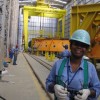
BRAZIL: Women Break Down Barriers in Heavy Construction
They represent just seven percent of the workers building the Santo Antonio hydroelectric dam on the Madeira River, which cuts across the Amazon jungle in northwest Brazil. But the women workers total 1,200, and many of them have had to break down barriers to jobs seen as the preserve of men.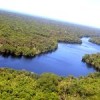
Guatemalan Beaches Threatened by Iron and Gas Operations
"If they come here to extract iron from the beach, it will mean the destruction of our natural wealth and the end of tourism," warned Leonel Palma, a hotel employee in Puerto de San José on Guatemala’s Pacific coast, where the government has granted mineral exploration licenses.
Pension Fund Investors May be to Blame for Escalating Food Prices
Long-term investors like pension funds are probably the reason why the prices of commodities, including crops, have been driven to a higher level than in 2008 when food riots erupted in 30 countries, according to the British nongovernmental organisation Christian Aid.
DEVELOPMENT: Women Leading Bangladesh Away from the LDC Tag
Women entrepreneurs and workers will soon help Bangladesh shake off the Least Developed Country (LDC) label, business leaders say.
DOMINICAN REPUBLIC: Model Factory Enshrines Workers’ Rights
Two years ago, Knights Apparel, based in the U.S. state of South Carolina, decided to lead the race to the top by opening a factory that not only paid its employees a living wage but guaranteed their rights to a union.
DEVELOPMENT: Chinese Step In, Efficiently
For Jany Chen from Shanghai, concern often-raised in Europe and North America about the Chinese invasion of Africa is a lot of wasteful talk that deserves to be flushed down the toilet. Efficiently.Caribbean Struggles to Make Complex Trade Deal with EU a Reality
When Caribbean journalists met in Antigua in late March to discuss the Economic Partnership Agreement (EPA) that was signed between the European Union and the Caribbean Forum (CARIFORUM) countries in 2008, they were told that the absence of tax treaties, foreign exchange controls and language barriers were among the factors preventing the full implementation of the accord.KENYA: Legal Lacuna While Biotechnology Is Sneaked in
Farming with genetically modified organisms (GMOs) is becoming more widespread in Kenya due the promotion of biotechnology through clever schemes, exacerbated by the lack of a legal framework for the commercialisation of these controversial products.GREECE: Athens Plunges Deeper Into Crisis
The murder of Manolis Kantaris, 44, last week has initiated a vicious circle of violence in the Greek capital that deepens the existing wounds of the country and makes many wonder what the future holds for Athenians.DEVELOPMENT: New Action Programme, and New Name for the Poorest
A new 10-year blueprint for assisting the poorest countries on the planet to join the league of the more fortunate ones was approved Friday at the closing of the Fourth U.N. Conference on the Least Developed Countries (LDC-IV) held May 9- 13 here.
DEVELOPMENT: Programme of Action Adopted for World’s Poorest Nations
"The future for least developed countries lies in trade, productive capacity and governance more than in aid," said Cheick Sidi Diarra, United Nations High representative for the Least Developed Countries, responding to criticism of the plan of action put forward as the U.N. conference on the world's poorest nations drew to a close in Istanbul.
DEVELOPMENT: South-South Axis Strengthens
The glass isn’t exactly half-full, but it certainly is not entirely empty either. Within the broad failure of the weeklong Fourth U.N. Conference on the Least Developed Countries (LDC-IV) in Istanbul that concluded Friday, many delegates are taking heart in a strengthening South-South front that has emerged.Black Market in Arms Flourishing as Arab Spring Continues
As the Syrian uprisings escalate in violence, Lebanon’s black market in arms is flourishing, with prices of light and medium weapons driven higher by Lebanese and Syrian demand.Humanity Hitting the Resource Ceiling
Better living through using far fewer material resources is the only possible future, experts agree. Humanity is pressing up against the limits of a finite planet to provide resources like water, oil, metals and food, according to a new report released Thursday.
DEVELOPMENT: Market Forces Rise Above Declarations
Upstairs in halls where the conference of the Least Developed Countries (LDCs) is being held, all the right things were being said about the misery of poverty and the virtue of opportunity and development. Several floors below, what are called ‘market forces’ were at work.
SIERRA LEONE: First Fruit Juice Company Adding Value to Farming
Crate loads of lush ripe mangos are stacked up, a sweet fragrance filling the air. Factory workers wait for their instructions, decked out in protective coats, rubber boots and hairnets. As they see each other kitted out for the first time, they break into giggles. This is a big week for Sierra Leone as its first fruit- processing plant goes into production.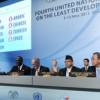
DEVELOPMENT: Civil Society Rejects ‘Toothless’ Istanbul Plan of Action
Civil society groups have vowed to mobilise citizens of the world’s poorest nations to take to the streets, rejecting the Istanbul Programme of Action agreed today by the Fourth U.N. Conference on the Least Developed Countries.
SOUTH AMERICA: Curbing Land Purchases by Foreign Investors
The governments of Argentina, Brazil and Uruguay are drafting laws to curb acquisition by foreigners of extensive tracts of their fertile agricultural land.« Previous Page — Next Page »


 UN Commission on International Trade Law Holds Colloquium on Harmonizing Law in Age of Digital Trade and Finance. Credit: UN Photo/Manuel Elías
Trade has historically been a geopolitical tool that can both be used to propel development as well as entrench inequalities. In various nations in East Asia and Latin America, increased trade, as often seen in export booms, has allowed them to achieve influential standings within the global economy. On the other hand, many low-income countries in Sub-Saharan Africa, Asia, and Latin America struggle to maintain a robust trade performance, and oftentimes are subjugated to exploitative trade dynamics through intense extraction of their natural resources. In recent decades, international trade has reached a new era as emerging economies across the world are rising in economic preeminence. Stable international trade is crucial to world peace as global interconnectedness facilitates reliable diplomacy. Nevertheless, significant challenges are on the rise. Notably, a major wave of United States tariff escalations in January 2025 lifted US import taxes to their highest level since the 1930s, changing market dynamics and forcing renegotiations with global trading partners.These articles are aimed at informing readers about the complexities of trade and its varying effects on development, with a special focus on the consequences of the global economic crisis, the potential of fair trade and the gender implications of trade policies.
Updated by Yilan Batista and Shuli Wong August 2026

The Week with IPS

NEXT STOP - SDGs
Tracking global progress towards a sustainable world
