Languages
Saturday, November 28, 2026



News and Views from the Global South
Economy & Trade
WORLD SOCIAL FORUM: A Time of More Complex Global Crises
Neoliberalism and the attendant financial globalisation were a common enemy that unified and mobilised activists of the most diverse tendencies who founded, ten years ago in Porto Alegre in southern Brazil, the World Social Forum (WSF) as a space to meet, reflect and debate, under the slogan "Another World Is Possible".Q&A: Hunger, Food Shortages Fuel Uprisings
The rise in food prices and growing hunger, one of the causes of the popular uprisings in Tunisia, Egypt and other countries in the Arab world, is due to financial speculation and not a lack of arable land, says Janaina Stronzake, a leader of Brazil's Landless Workers Movement (MST).
WORLD SOCIAL FORUM: Poverty without Borders
It's the land of freedom, of bright lights and burgers, where daring entrepreneurs arrive from across the planet in search of fame and fortune. The United States of America - the world's melting pot - has been a symbol of hope for centuries, but behind this vision of wealth and wonder is a tale often untold.Bankers Bash on, Regardless
The World Economic Forum became a platform this year for bankers to seek to re-assert their traditional power. And once again, it became a forum - in contrast and even opposition to the World Social Forum due to begin in Senegalese capital Dakar next week – where the damaging effects of globalisation and the environmental consequences of unrestrained growth were pushed aside.Report Confirms Gang Rapes at Canadian-Controlled PNG Mine
One of the world's largest mining organisations, Barrick Gold, is in damage control this week following the release of a Human Rights Watch (HRW) report outlining longstanding incidents of sexual and physical violence at the company's Porgera Joint Venture (PJV) mine in Papua New Guinea.
Questions About China’s “Win-Win” Relationship With Angola
Crouched on their haunches on the edge of a crumbling pavement, a group of Chinese construction workers are eating noodles from tin bowls, wearing floppy straw hats under their green safety helmets to protect them from the aggressive midday sun.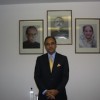
TRADE: Doha Round Tariff Cuts “Will Still Hit” Poor Countries
To allow least developed countries (LDCs) to protect nascent industries, they are not required to cut tariffs for industrial goods and fisheries in the Doha Development Round. However, tariffs cuts will affect them if they are members of customs unions where some of their neighbours are larger developing countries without LDC status.HEALTH-PERU: Cost of Medicines Out of Control
When the price of medicines for treating cancer soared by up to 64 percent in 2010, the Peruvian government set up a watchdog commission that will also monitor prices of drugs for diabetes and HIV/AIDS.
DEVELOPMENT: African LDCs Won’t Benefit Much from BRICS Arrival
South Africa landed a coveted membership with the Brazil, Russia, India and China bloc (BRIC) by marketing itself as a gateway to Africa but analysts doubt whether this development holds real benefits for poor countries on the rest of the continent.Serbs Turn Back to Arms for Money
A long-running joke in Serbia goes that the country’s most successful export products are berries, grains, maize, and world-renowned tennis players like Novak Djokovic and Jelena Jankovic.
ZAMBIA: Unsolved Riddle of Sustaining Water Utilities
Sebastian Chilekwa’s job title at the Luapula Water and Sewerage Company is "Managing Director of Dilemma". Or it should be.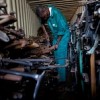
AFRICA: Arms Treaty to Rein in Trigger-Happy Rogue Regimes
A half a century after U.S. president Dwight Eisenhower named and denounced the military-industrial complex’s ever-increasing influence on world affairs, the arms trade thrives more than ever, with African states frequently being the destination.U.S.: Spate of Trade Deals Move Toward Passage
On the heels of U.S. President Barack Obama's State of the Union address Tuesday in which he focused squarely on resuscitating the economy, pressure is mounting in the nation's capital to move forward with free trade agreements (FTAs) whose passage would promote exports and create jobs.US: Lethal Drug Shortage Creates Ethical Quagmire
As the domestic and overseas sources that U.S. states relied upon for sodium thiopental (ST), a key drug used in lethal injections, have stopped producing or exporting the drug, state governments are scrambling to find another way to carry out planned executions.Arms Treaty Campaigners Seize on “Merchant of Death” Case
When Andrew Niccol wrote and directed the feature film "Lord of War", the story was partly inspired by the life of Viktor Bout, a Russian businessman suspected of using his air cargo company as a cover for arms dealing.
DEVELOPMENT-UGANDA: Fair Trade Gives Coffee Farming a Lift
The cultivation of coffee beans for fair trade has turned the fortunes of this historical cash crop around in some poor rural areas on the slopes of Mount Elgon in eastern Uganda.Rampant Speculation Inflated Food Price Bubble
Billions of dollars are being made by investors in a speculative "food bubble" that's created record food prices, starving millions and destabilising countries, experts now conclude.AFRICA: France Plays Suspicious Role in Countries in Crisis
The three African states in which political crises have recently erupted – Côte d’Ivoire, Niger and Tunisia – all feature a strong French economic presence as well as close military and political ties to the former European colonial power, with France at times playing a protective role towards elites accused of abuses.COLOMBIA: Food Prices Rise after Record Rains
Food prices are set to rise in Colombia, due to the combined effects of soaring international prices and local crop losses after nine months of devastating rains. The government expects food prices to rise three percent in February, while independent analysts forecast an increase twice as high.U.S.: Republican “Budget Hawks” Zero in on Foreign Aid
With the U.S. national debt standing at 14 trillion dollars, the Barack Obama administration pledging to tackle the monstrous deficit and a Republican-led House of Representatives pushing for a "Cut-and-Grow" Congress, budget hawks are zeroing in on international affairs spending - from diplomacy to development.ECUADOR: Seven Foreign Oil Companies to Pull Out
Seven of the 16 foreign oil companies operating in Ecuador have decided to pull out of the country in disagreement with a reformed oil law that turned the firms into providers of services to which the government will pay a fixed tariff for operating the fields.« Previous Page — Next Page »


 UN Commission on International Trade Law Holds Colloquium on Harmonizing Law in Age of Digital Trade and Finance. Credit: UN Photo/Manuel Elías
Trade has historically been a geopolitical tool that can both be used to propel development as well as entrench inequalities. In various nations in East Asia and Latin America, increased trade, as often seen in export booms, has allowed them to achieve influential standings within the global economy. On the other hand, many low-income countries in Sub-Saharan Africa, Asia, and Latin America struggle to maintain a robust trade performance, and oftentimes are subjugated to exploitative trade dynamics through intense extraction of their natural resources. In recent decades, international trade has reached a new era as emerging economies across the world are rising in economic preeminence. Stable international trade is crucial to world peace as global interconnectedness facilitates reliable diplomacy. Nevertheless, significant challenges are on the rise. Notably, a major wave of United States tariff escalations in January 2025 lifted US import taxes to their highest level since the 1930s, changing market dynamics and forcing renegotiations with global trading partners.These articles are aimed at informing readers about the complexities of trade and its varying effects on development, with a special focus on the consequences of the global economic crisis, the potential of fair trade and the gender implications of trade policies.
Updated by Yilan Batista and Shuli Wong August 2026

The Week with IPS

NEXT STOP - SDGs
Tracking global progress towards a sustainable world
