Languages
Sunday, November 29, 2026



News and Views from the Global South
Economy & Trade

SOUTH SUDAN: Tension Builds as Peace Agreement Marks Anniversary
Sudan is at a crossroads. Its future looks grim. "Only a miracle can save it from disintegrating. The signs are already on the wall," says Khamis Lako, a petty trader in Juba, the capital of South Sudan.EGYPT: Economists Blame ‘Neo-liberalism’ for Region’s Woes
Egypt embarked on "neo-liberal" economics more than three decades ago reorienting its socialist-oriented policies towards those of the "free market." Now, however, many critics call the strategy a failure and blame it for the country's rampant poverty and unemployment.
Q&A: "Intellectual Property Rights Do Not Assure Quality"
Kenya and Tanzania have recently passed anti-counterfeit laws and regulations that risk blocking legitimate generic medicines instead of fake products, which is the purported purpose of these laws. Uganda is now considering a similar bill.INDIA: Hill Women Form Cooperative, Turn Entrepreneurs
Women in Uttarkashi district of the hill state of Uttarakhand in India, traditionally sidelined from the developmental processes, are forming their own cooperative and producing processed food items, giving big multinational brands a run for their money in local markets.MALAYSIA: Sarawak Dams: Boon or Bane of Development?
"I don’t know what's going to happen to our people ... what our future will be?"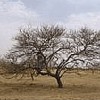
MALI: Small Farmers in the Carbon Market
Mohamed Abd Khibé is a caretaker at the acacia nursery in Dialoubé village, part of a project to sequester carbon in trees while simultaneously improving farmers' livelihoods.WORLD SOCIAL FORUM: New and Old, US Groups Forge Broad Alliances
With civil society gearing up for the 2010 World Social Forum, and later this summer, the 2010 U.S. Social Forum in Detroit, Michigan, activists here say new alliances created at the first USSF in 2007 are going strong.MIDEAST: Turkey Going Its Own Way
The recent diplomatic crisis between Turkey and Israel has raised questions about the future of relations between the two closest allies of the United States in the region and the direction of the markedly independent foreign policy agenda that Turkey has pursued in recent years.ECONOMY: Neoliberalism Ailing but Alive
The global financial crisis led many European economists and civil society activists to believe that the neo-liberal paradigm in social and economic policies across the industrialised world and many developing countries had passed away, victim of its own flaws.
U.S.: Obama Urged to Grant Haitians “Protected Status”
As U.S. and international relief efforts chugged toward Haiti Thursday, U.S. President Barack Obama announced an immediate investment of 100 million dollars in the relief efforts underway following Tuesday's devastating earthquake.
HAITI: Agencies Scramble to Avert Worse Humanitarian Disaster
The enormous relief effort being mounted in Haiti since a 7.0-magnitude earthquake leveled most of Port-au-Prince is facing a host of difficulties, including bottlenecks at the main airport and lack of heavy equipment to clear debris from streets and roads, aid officials say.INDIA: Protests Overshadow Communist State’s Chemical Hub Plans
An ambitious plan to establish a chemical industry complex in an ecologically fragile coastal zone of India’s eastern state, West Bengal, has snowballed into a debate, with the ruling communists facing resistance from environmental groups and political rivals over the project.DEVELOPMENT: India Holds Public Meetings on GM Food Crop
As India's central government begins a series of public meetings across the country this month on the commercial release of genetically modified (GM) brinjal – or eggplant - in this country, activists and farmers’ groups are mobilising to oppose such a plan.DEVELOPMENT: China’s ‘Ant Tribe’: Between Dreams and Reality
Every day Yang Hongwei takes the bus home from work, staring silently at the European-style villas, luxury sedans and twinkling lights from the plazas that he sees through the window.ECONOMY: Dubai Debts Prompt Review of Islamic Finance
'The World’, a manmade archipelago off the coast of Dubai, developed by the Nakheel real estate company - which partly relied on the issuance of Islamic bonds, or sukuk, to finance the ambitious project - has come to symbolise for many the vulnerability of the Islamic financial market.ENVIRONMENT: Seeking a Consumer Culture Revolution
The last 50 years have seen an unprecedented and unsustainable spike in consumption, driven by a culture of consumerism that has emerged over that period, says a report released Tuesday by the Worldwatch Institute.ECONOMY-VENEZUELA: Buying Frenzy Follows Devaluation
Tens of thousands of shoppers in Venezuela practically stormed businesses selling home appliances and other consumer products after the government cut the exchange rate of the bolivar against the dollar by half.
Q&A: Sweden Vows to Sustain Aid Levels to Poorer Nations
Sweden has pledged to maintain its current level of development aid to the world's poorer nations - roughly at about one percent of gross national product (GNP) - despite the global financial crisis.RIGHTS-PAKISTAN: Not Quite a Happy Ending for Freed Fishermen
Tears streaming down his face, Abdul Karim, 40, stepped onto Pakistan soil for the first time in almost two years. He has just been released from prison for the crime of encroaching on India’s waters.SRI LANKA: ‘Job Losses Could Have Been Worse’ – Industry Sources
When the global financial crisis struck in 2008, expectations were high that the Sri Lankan economy would be severely affected. But as it turned out, the number of job losses was not as bad as anticipated.BALKANS: ‘Econoslavia’ Makes Sense If Yugoslavia Does Not
Politicians from the former Yugoslavia often speak about integration with the European Union (EU) as their major goal in this decade and possible salvation from the economic hardships the region faces.« Previous Page — Next Page »


 UN Commission on International Trade Law Holds Colloquium on Harmonizing Law in Age of Digital Trade and Finance. Credit: UN Photo/Manuel Elías
Trade has historically been a geopolitical tool that can both be used to propel development as well as entrench inequalities. In various nations in East Asia and Latin America, increased trade, as often seen in export booms, has allowed them to achieve influential standings within the global economy. On the other hand, many low-income countries in Sub-Saharan Africa, Asia, and Latin America struggle to maintain a robust trade performance, and oftentimes are subjugated to exploitative trade dynamics through intense extraction of their natural resources. In recent decades, international trade has reached a new era as emerging economies across the world are rising in economic preeminence. Stable international trade is crucial to world peace as global interconnectedness facilitates reliable diplomacy. Nevertheless, significant challenges are on the rise. Notably, a major wave of United States tariff escalations in January 2025 lifted US import taxes to their highest level since the 1930s, changing market dynamics and forcing renegotiations with global trading partners.These articles are aimed at informing readers about the complexities of trade and its varying effects on development, with a special focus on the consequences of the global economic crisis, the potential of fair trade and the gender implications of trade policies.
Updated by Yilan Batista and Shuli Wong August 2026

The Week with IPS

NEXT STOP - SDGs
Tracking global progress towards a sustainable world
