Languages
Friday, September 25, 2026



News and Views from the Global South
Editors' Choice
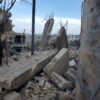
Southern Voices: Grief, Resilience, and Daily Life in Jnoub
"Special, targeted operations in southern Lebanon," a phrase that has echoed repeatedly over the past two years in Israeli Defence Force (IDF) statements. But behind these clinical military terms lies a human cost that statistics cannot capture.
Fiji’s Truth and Reconciliation Commission Aims To Restore Trust and Peace After Decades of Political Crises
Fiji, a nation located west of Tonga in the central Pacific, is renowned for its natural beauty and beach resorts. But for 38 years it has endured a political rollercoaster of instability with four armed coups that overturned democratically elected governments and eroded human rights.
Bending the Curve: Overhaul Global Food Systems to Avert Worsening Land Crisis
Current rates of land degradation pose a major environmental and socioeconomic threat, driving climate change, biodiversity loss, and social crises. Food production to feed more than 8 billion people is the dominant land use on Earth. Yet, this industrial-scale enterprise comes with a heavy environmental toll.
Are Negotiators Turning the Plastics Treaty into a Death Treaty?
The future plastics treaty is being sold as potentially an environmental breakthrough. But in its current form during this week’s negotiations, it contains a dangerous flaw that must be addressed before the final text is agreed — or it could undercut the world’s most widely ratified health treaty, the WHO Framework Convention on Tobacco Control (FCTC), and hand the tobacco industry the tools to expand its market under the banner of environmental action.
UN Staffers, Threatened with Lay-Offs, are Offered Early Retirement
The United Nations, facing a liquidity crisis, has been threatening to lay-off about 20 percent of its estimated 37,000 employees world-wide: a proposed move that has triggered widespread protests from staff unions both in New York and Geneva.
Solar-Powered Fish Farming Feeds Indigenous Communities in the Peruvian Amazon
"Our organization is showing that it is indeed possible to move toward energy transition and not depend on oil," said Elaina Shajian, president of the Regional Coordinator of Indigenous Peoples of San Lorenzo (Corpi-SL), in the Peruvian Amazon.
Landlocked Developing Countries to Start ‘New Decade of Delivery’
As the Third United Nations Conference on Landlocked Developing Countries (LLDC3) concludes today (Friday, August 8) in Awaza, Turkmenistan, with the adoption of the Awaza Political Declaration and the formal endorsement of the Awaza Programme of Action (2024–2034), there is optimism that LLDCs are finally at the dawn of a new era.
Africa’s ‘Land-Linked’ Nations Chart a New Trade Route to Prosperity
Once relegated to the periphery of Africa’s economic map due to their lack of coastline, the continent’s landlocked developing countries (LLDCs) are now reframing their geographic constraints as gateways to opportunity.
Latin America’s Electric Mobility on China’s Path
Residents near the port of Itajaí in southern Brazil celebrated the arrival of 7,292 electric and hybrid vehicles from China aboard the ship BYD Shenzhen on May 28 as a "historic event," with unloading taking four days.
Landlocked Nations Form New Bloc to Confront Climate Crisis and Inequity
“The term ‘negotiation' must be understood in ethical context… When an arsonist comes and burns down my house and then asks me to negotiate so I can rebuild my house, that becomes the paradox.”
Landlocked Developing Countries’ Group to Negotiate Way Out of Agricultural Catastrophe
Agriculture is a critical sector in landlocked developing countries, as more than half (55 percent) of the population is employed in the agriculture sector – significantly higher than the global average of 25 per cent. As such, the deterioration of food security in landlocked developing countries (LLDCs) is an unfolding catastrophe.
Roma’s Long Standing Exclusion Compounded As Ukraine War Continues
As Russian forces continue to lay waste to civilian areas of towns and cities across Ukraine, Roma in the country are struggling to access compensation to help them rebuild their damaged homes.
How One Caribbean Country Is Changing the Face of Debt
The beauty of the majestic Piton mountains, vibrant culture, dazzling beaches and lush landscapes of Saint Lucia are invaluable assets. The country also takes pride in having two Nobel laureates, which is remarkable for a nation with a population of over 180,000.
Equal Footing: Building Pathways for Landlocked Developing Countries to Participate in Global Economy
Heads of State, ministers, investors and grassroots leaders are gathered in Awaza on Turkmenistan’s Caspian coast for a once-in-a-decade UN conference aimed at rewiring the global system in support of 32 landlocked developing countries whose economies are often ‘locked out’ of opportunity due to their lack of access to the sea.
Spotlight on Landlocked Developing Countries Ahead of Third UN Conference
Landlocked developing countries face a unique set of challenges. Without coastal ports, they rely on transit nations, causing higher trade costs and delays.
Four Times Rejected: Stateless Lotshampa Refugees Appeal to Nepal’s Supreme Court
Four Bhutanese Lotshampa refugees—Aasis Subedi, Santosh Darji, Roshan Tamang, and Ashok Gurung—filed an appeal in Nepal’s Supreme Court on July 27, challenging a government order that would deport them from Nepal.
As Gaza Enters ‘Worst-Case Scenario of Famine,’ States Call for Palestinian Self-Determination at General Assembly
As the starvation crisis in Gaza deepens into what aid organizations describe as a “worst-case scenario,” a growing coalition of nations is shifting its rhetoric and policy toward supporting Palestinian statehood. At the United Nations General Assembly this week, the humanitarian emergency has reignited global calls for a two-state solution and reignited scrutiny of the Israeli government’s blockade of aid.
ICJ Ruling Is a Pivotal Moment for Climate and Health Justice, Experts Say
Legal minds in international law are trying to interpret the scope and impact of the landmark advisory opinion on climate change by the International Court of Justice (ICJ), where it said that states have a duty to prevent significant harm to the environment.
Marital Rape: Confronting Religious Misinterpretations, Social Stigma, Despite Legal Clarity
“The last thing she asked for was a sip of water,” recalled Najma Maheshwari, referring to 19-year-old Shanti, a newlywed who died last week after brutal sexual violence allegedly inflicted by her husband, who is now in custody.
Airstrikes in Myanmar Continue To Spread Fear, Devastate Lives
In Myanmar, airstrikes occur almost daily. The phenomenon has become common since civil war broke out following the 2021 military coup that replaced the democratically elected National League for Democracy (NLD) with the Tatmadaw, Myanmar’s military. Several human rights organizations report that these airstrikes are disproportionately targeting civilians and harming lives.
Two-State Solution Conference Presents an “Exceptional Moment” for International Community – The Elders
Dignitaries across the international community have convened in New York to promote the two-State Solution - the coexistence of Israel and Palestine as sovereign states - as the only path forward to shared sustainable peace in the Middle East. Former and current leaders from 145 countries and independent groups will speak at the United Nations to demonstrate their ‘near-universal support’ and discuss the steps that need to be taken to achieve it.« Previous Page — Next Page »


The Week with IPS

NEXT STOP - SDGs
Tracking global progress towards a sustainable world
Tracking global progress towards a sustainable world
