Languages
Saturday, September 26, 2026



News and Views from the Global South
Editors' Choice
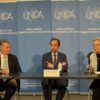
Two-State Solution Conference Presents an “Exceptional Moment” for International Community – The Elders
Dignitaries across the international community have convened in New York to promote the two-State Solution - the coexistence of Israel and Palestine as sovereign states - as the only path forward to shared sustainable peace in the Middle East. Former and current leaders from 145 countries and independent groups will speak at the United Nations to demonstrate their ‘near-universal support’ and discuss the steps that need to be taken to achieve it.
A High-Level Panel of Scientists to Review Deadly Threats from Nuclear Weapons
The rising nuclear threats over Europe and East Asia are increasingly ominous—particularly in the ongoing Russian-Ukraine military conflict and in the North- South political confrontation in the Korean Peninsula. The appointment last week of a 21-member Panel of scientists, following a General Assembly resolution, has been described as “a response to a global environment in which the risk of nuclear war is higher than at any point since the depths of the Cold War”.
Biogas, a Solution to Poultry Pollution in El Salvador
Still in its early stages and with few players, the poultry sector in El Salvador is taking small steps toward environmentally sustainable production by using its biological waste to generate biogas and, in turn, electricity –an equation that benefits the natural environment, communities, and the farms themselves.
Climate Change An Existential Threat To Humanity, Urges Action – ICJ
The case was “unlike any that have previously come before the court,” President of the International Court of Justice Judge Yuji Iwasawa said while reading the court's unanimous advisory opinion outlining the legal obligations of United Nations member states with regard to climate change.
Kenyan Biochar Project Becomes First in Africa Validated Under European Carbon Standard
In June 2025, Kenyan climate-tech firm Tera became the first African project developer to have its carbon removal initiative independently validated and registered under Riverse, a European standard for engineered climate solutions.
Soaring Demand for Electric Vehicles, Lithium-Ion Batteries Creates Environmental Crisis in DRC
Electric vehicles contribute to an ongoing environmental and humanitarian crisis in the Democratic Republic of the Congo (DRC). Mining operations cause deforestation, pollution, food insecurity and exploitative labor practices.
Price and Power of Freedom: Celebrating Nelson Mandela International Day
The United Nations celebrated Nelson Mandela International Day in honor of the activist and politician’s lifelong commitment to peace and democracy.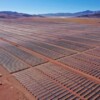
China is the Driving Force Behind More, Newer Renewable Energies in Latin America
China, with its investments, products, technology, and innovation focused on solar and wind farms in Latin America and the Caribbean, as well as on electricity networks and services, stands out as a driving force for the region's shift toward energy less reliant on fossil fuels and increasingly cleaner and greener.
From Drylands to Dignity: How Solar Energy and Climate-Smart Farming Are Empowering Communities in Burkina Faso
In the heart of Burkina Faso’s drylands, in the village of Zoungou, a quiet transformation is underway. Alhaji Birba Issa, a smallholder onion farmer, bends over neat rows of lush green crops, the hum of solar-powered pumps audible in the background.
A Fractured World Needs Peace, not more Conflicts, for Human Progress
Who in Asia would ask for an Asian NATO? Past attempts to develop Asian security compacts under US leadership have not been glittering successes. The two treaty organisations that the US set up in the 50s to counter the Communist tide, the CENTO and the SEATO, have long dissipated.
High Stakes: Mountain Tourism in a Warming World
“It started with a thunderous roar in the distance, followed by the clatter of rocks grinding together,” said Mohammad Hussain, 26, a student, who witnessed the flash flood that hit the lakeside of Attabad on June 25, around 12:30 pm, in the mountainous Hunza Valley, a popular tourist spot in the northern part of Pakistan’s Gilgit-Baltistan (G-B).
US Signs Strategic Civil Nuclear Agreement with Malaysia– while Planning a Security Alliance in the Asia-Pacific Region
The US is apparently contemplating the possible creation—either a formal or an informal-- security alliance in the Asia-Pacific region on the lines of the longstanding collective defense pact, the 32-member North Atlantic Treaty Organization (NATO).
Faith on the Frontlines: New Military Chaplain Programme Reaches Soldiers in Africa
It is a cold morning in eastern Zimbabwe as Lieutenant Colonel Reverend Doctor Samba Mosweu celebrates a glorious moment he has been waiting for all his life.
Sweet Hope to End Bitter Pills for Multidrug-Resistant Tuberculosis
Every day, Yondela Kolweni has to hold down her son, who screams and fights when it is time for his daily life-saving TB tablets—a painful reminder of her battle with the world’s top infectious killer disease. “It is a fight I win feeling awful about what I have to do,” says Kolweni (30), a Cape Town resident and a TB survivor. “The tablets are bitter, and he spits them out most of the time, and that reminds me of the time I had to take the same pills.”
WHO, UNICEF Find the World Is Off Track To Meet Childhood Immunization Goals
The latest data highlights that the world is off track to meet the targets set by the Immunization Agenda 2030 (IA2030) to achieve 90 percent global immunization coverage for essential childhood vaccines and halve the number of unvaccinated children by 2030.
Man, Sea, Algae: HOMO SARGASSUM’s Stirring Critique of Human Culpability in the Caribbean
The United Nations’ HOMO SARGASSUM exhibition served as a public immersion into the marine world and called upon viewers to take action in the face of the climate crisis, specifically regarding invasive species and water pollution.
Can the Cali Fund Deliver on Its Billion-Dollar Biodiversity Pledge?
When the Cali Fund was unveiled in February on the sidelines of COP16.2 in Rome, the announcement sent ripples through the global conservation community. For the first time ever, companies that profit from digital sequence information (DSI)—the digitized genetic material of plants, animals, and microorganisms—will be expected to pay into a multilateral fund to protect the very biodiversity they benefit from.
Conflict, Climate Change Push Migrants in Yemen to Return to Their Home Countries
Yemen's humanitarian crisis, driven by conflict, economic collapse and climate shocks, leaves migrants desperate to return to their home countries.
WFP Deputy Chief Describes Unprecedented Humanitarian Crisis in Gaza
Carl Skau, Deputy Executive Director of the World Food Programme (WFP), described the dire humanitarian situation in Gaza following his recent visit, speaking at a press briefing at the UN Headquarters on July 11.
HIV/AIDS Funding Crisis Risks Reversing Decades of Global Progress
UNAIDS called the funding crisis a ticking time bomb, saying the impact of the US cuts to the President’s Emergency Plan for AIDS Relief (PEPFAR) could result in 4 million unnecessary AIDS-related deaths by 2029.
For the Aged, Their Sunset Years Will Be Bedeviled by Lethal Heatwaves
The global population is aging at a time when heat exposure is rising due to climate change. Extreme heat can be deadly for older populations given their reduced ability to regulate body temperature. Already there has been an 85 percent increase since 1990 in annual heat-related deaths of adults aged above 65, driven by both warming trends and fast-growing older populations.« Previous Page — Next Page »


The Week with IPS

NEXT STOP - SDGs
Tracking global progress towards a sustainable world
Tracking global progress towards a sustainable world
