Languages
Tuesday, October 13, 2026



News and Views from the Global South
Editors' Choice

International Women’s Day, 2025
New Report Finds Sexist Laws Persist Worldwide
A new global report analyzing sex discrimination in laws reveals that while some commendable gains have been achieved in strengthening legal protections for women and girls over the past five years, progress remains slow, uneven, and increasingly under threat from a growing backlash against women’s rights.
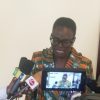
Tanzanian Speaker Calls for Urgent Investment in Youth to Harness Demographic Dividend
Speaker of the Tanzanian Parliament and President of the Inter-Parliamentary Union (IPU), Tulia Akson, has called for bold and immediate investments in young people to unlock the demographic dividend and accelerate sustainable development across Africa and Asia.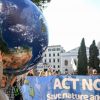
COP 16 Conference made Key Steps Towards a More Just Transition for Indigenous Peoples & Peasant Communities
With global temperatures continuing to break records and every global indicator of the health of the natural world showing decline, the need to quickly move away from fossil fuels and environmentally destructive practices has never been more apparent. But as has often been pointed out, how this ‘green transition’ is achieved matters.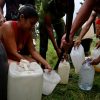
Water Supply Issues Keep Flowing in Cuba
Problems such as hydraulic network breakdowns, water lost through leaks, power outages, and even fuel shortages are making access to water supply services difficult for the population in Cuba
COP16 Agrees to Raise Funds to Protect Biodiversity
The second round of the UN Biodiversity Conference, COP16, concluded in the early hours of Friday, February 28 in Rome, with an agreement to raise the funds needed to protect biodiversity.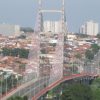
Hortolandia Emerges as an Energy and Environmental City in Brazil
Almost everything seems new or under construction in the southern Brazilian city of Hortolandia, from its wide avenues and cable-stayed bridge to its large buildings and riverside parks.
Mexican Electric Vehicles Struggle to Accelerate
Mexico has seen several attempts at assembling electric vehicles (EVs), powered by rechargeable batteries, which have faced challenges related to industrial scale, supply chains, and competitiveness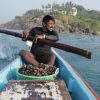
Mussel Divers in Kerala Face Livelihood Loss, with Species Habitat Under Threat
Ibrahim Basheer plunges into the sea and disappears. He remains gone for a couple of minutes before resurfacing for a deep breath of air, repeating this for the next half an hour. When he finally climbs aboard his boat, the net sack around his neck is filled with mussels—his catch for that diving trip. He rests for a short while before diving into the sea again—needing one more such trip to fill the basket he has brought along.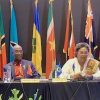
CARICOM Leaders Take Steps to Tackle Crime, Climate, Trade and Food Crises
CARICOM leaders wrapped up a crucial meeting on February 21, reaffirming their commitment to tackling pressing regional challenges with unity and resolve. From crime and security to education, trade and climate change, the leaders highlighted the need for decisive action amid global uncertainties.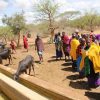
How Tanzania’s Farmers, Pastoralists Paid the Price for a World Bank Project
A hush had fallen over Mbarali District, but it was not the quiet of peace—it was the silence of uncertainty. Just months ago, the rolling plains were gripped by fear as government-backed rangers, dressed in olive green fatigues, roamed through villages, seizing cattle, torching homes, and forcing entire communities to the wobbly edge of survival. The REGROW project, a USD 150 million initiative funded by the World Bank to expand Ruaha National Park (RUNAPA), had promised tourism growth and environmental conservation. What it delivered was a brutal campaign of state-sanctioned land grabbing under the guise of protecting nature.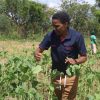
Blamed for ‘Causing’ Droughts: Zimbabwe’s LGBTQI Community Faces Climate Crisis Head-on
Takudzwa Saruwaka is hoeing weeds in a cowpea field in eastern Zimbabwe one morning in February, trying to beat torrential rains threatening from the gray clouds above.
Food, Water, Crime, Climate Change: CARICOM Leaders Begin 48th Conference with Commitment to Joint Action on Critical, Common Concerns
Leaders of the Caribbean Community (CARICOM) are meeting in Bridgetown from Feb. 19-21, as the world grapples with multiple crises, including escalating geopolitical conflicts, climate change and rising food insecurity.
World’s Largest Religious Gathering Becomes Trans-Inclusive Despite Controversies
Despite a blazing sun and growing heat, Pavitra Nandagiri sits on a cot smiling. Clad in a saffron robe and headgear with her forehead painted with turmeric and vermillion, Nandagiri is a Mahamandaleshwar—one of the highest-ranking monks of the Kinnar Akhada (Transgender Arena) at the Maha Kumbh, the world’s largest religious gathering currently underway in northern India.
Human Rights, Healthcare Disrupted in Eastern Europe With USAID Funding Freeze
As the full effects of the US decision to freeze foreign aid funding begin to be felt across the world, organizations in Eastern Europe and Central Asia (EECA) are warning years of work in everything from delivering life-saving healthcare to defending human rights and strengthening democracy could be undone.
Bangladesh: UN Human Rights Denounces Former Government’s Violations Against Protestors
A new report from the UN Human Rights Office confirms that Bangladesh’s former government coordinated and committed human rights violations against its civilians to suppress the protest movement in July last year, with the high commissioner calling for justice and serious reform to end the cycle of violence and retribution.
Race Against Time as Hunger, Poverty Rise Amid Growing Global Uncertainties
Nearly one in 11 people in the world and one in five people in Africa go hungry every day, a crisis primarily driven by chronic inequality, climate change, conflict and economic instability. At the current pace, hunger and extreme poverty rates show little sign of drastically receding by 2030.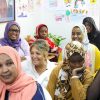
Gender Inequality in Science Limits Progress Towards Solving Complex Global Challenges
Today is the International Day of Women and Girls in Science and a time to take stock of progress, successes, and setbacks towards open and gender-inclusive science. Gender equality remains elusive in science, as only one in three scientists is a woman. Not only do these inequalities hold women back, but they also limit scientific progress.
Climatic Change Pushes Pakistan’s Promising Trout Fish Farming Towards Brink of Collapse
Pakistan’s once-thriving trout fish farming industry, a vital source of livelihood for communities in the country’s mountainous northern region, is now on the verge of collapse due to the devastating impacts of climate change.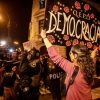
What is Not Good for Democracy in Peru is Not Good for Women
"We are facing a deeply conservative government that is opening the doors to all kinds of setbacks. We have a failed state with a democracy that is no longer a democracy," said Gina Vargas, a Peruvian feminist internationally recognized for her contributions to women's rights.
Belarus: Brutal Repression Continues Post Presidential Election, Say Human Rights Groups
In the months leading up to presidential elections at the end of January, Belarus’s authoritarian leader Alexander Lukashenko ordered the release of hundreds of political prisoners. Some observers saw this as a sign that the man who had led the former Soviet state for the last three decades could be planning a relaxation of his regime’s brutal repressions in return for a lessening of Western sanctions.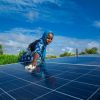
Decoding Africa’s Energy Journey: Three Key Numbers
At night, when the world lights up, large swathes of Africa remain cloaked in darkness—a stark reminder of the continent’s lack of reliable access to electricity.« Previous Page — Next Page »





The Week with IPS

NEXT STOP - SDGs
Tracking global progress towards a sustainable world
Tracking global progress towards a sustainable world
