
Sunday, September 27, 2026



News and Views from the Global South
Biodiversity

Protecting Plants Will Protect People and the Planet
Back-to-back droughts followed by plagues of locusts have pushed over a million people in southern Madagascar to the brink of starvation in recent months. In the worst famine in half a century, villagers have sold their possessions and are eating the locusts, raw cactus fruits, and wild leaves to survive.
Cleantech Entrepreneurs Driving a Green Recovery in Barbados
Prior to the COVID-19 pandemic, the Eastern Caribbean island nation, famed for its beautiful landscapes, pristine white-sand beaches and temperate climate, attracted around a million tourists each year.
The Future of Food is in Our Hands
With its political and economic clout, the G20 should lead in delivering sustainable food systems as the world grapples with rising hunger, malnutrition and inequality.New Global Framework for Managing Nature Through 2030: 1st Detailed Draft Agreement Debuts
The UN Convention on Biological Diversity (CBD) Secretariat today released the first official draft of a new Global Biodiversity Framework to guide actions worldwide through 2030 to preserve and protect Nature and its essential services to people.
“The Critical Importance of Ecosystem Restoration”
June 2021 marked the launch of UN Decade on Ecosystem restoration. This effort aims at reversing the damage that us humans have caused and are still causing to Nature. It is clear that we have to reverse course and spare no effort into making this ‘Decade on Ecosystem Restoration’ a success. Preserving Nature and maintaining its services are critical for our survival on this planet and for our livelihoods.
Calls to Halt Construction of Massive Oilfield in One of Africa’s last Wildernesses
Wildlife and environmental campaigners have called for international action as concerns grow over a project to create a massive oilfield in one of Africa’s last wildernesses.
With a Little Help, Local Communities Rack up Record Success with Heritage Rice Grains
Madhuri Roy left the famous Kamakhya temple in Guwahati, Assam. She had sought the goddess’s blessings for the safe delivery of her youngest daughter's baby, which was due in a few weeks. Shanty shops lined the temple outside and Roy’s eyes fell on a stack of black rice packets. All through her daughter’s pregnancy she had craved her childhood favourite black rice pudding. But during the country’s COVID-19 lockdown Roy could not procure it even though Meghalaya, her Himalayan home state, grew it.
The Last Coral Reef Wilderness: the Chagos Archipelago
On the Global Reef Expedition—the largest coral reef survey and mapping expedition in history—scientists from the Khaled bin Sultan Living Oceans Foundation traveled to the Chagos Archipelago to study some of the most remote coral reefs on Earth.
Soil for Survival: Countries Commit to Halt Land Degradation
India’s Prime Minister Narendra Modi has told the first United Nations General Assembly meeting on desertification and drought in a decade, that his country’s report card will show it is well on track to meet its land restoration commitments.

UN Scientists: Climate Change and Biodiversity Loss. Two Parts. One Problem.
Earth is in the throes of multiple environmental crises, with climate change and the loss of biodiversity the most pressing. The urgency to confront the two challenges has been marked by policies that tackle the issues separately. Now, a report by a team of scientists has warned that success on either front is hinged on a combined approach to the dual crises.
Preventing Hunger While Building Peace
Acute hunger is expected to soar in over 20 countries in the next few months, warns a recent report on global “hunger hotspots” from the UN’s Food and Agriculture Organization (FAO) and the World Food Programme (WFP). An estimated 34 million people are “one step away from starvation”, pushed to the brink by climate shocks, conflict, and the Covid-19 pandemic.
Protecting the Nile Delta
Children run after each other with kites flying along Egypt’s Nile Delta. Families and friends enjoy the scenery as they enjoy an afternoon picnic. Just a few miles away, farmers work in their fields of green. These diverse crops will feed millions of Egyptians. Throughout the region, cities buzz with people coming and going from factories and offices, playing football with their families, and building the economic engine that will support the nations’ goals for low-carbon climate-resilient development.
Damage to Coral Reefs Hurts Fishing Communities in Central America
As fisherman Luis Morán walked towards his small boat, which was floating in the water a few meters from the Salvadoran coast, he asked "How can the coral reefs not be damaged with such a warm sea?”
Time to End Generational Injustice with a ‘Global Blue New Deal’ to Protect Oceans
Increasingly, youth are rising up to declare that they've had enough of the cyclical exploitation of the environment that jeopardizes their own future.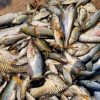
The Ocean’s Silent Killer: Breaking Down Overfishing
You don’t have to look too hard to find some news network or media outlet talking about water pollution, plastic waste, CO2 emissions, and climate change.
The Pandemic Should Not Leave Developing Countries Without a Voice (or a Vote)
Requiring in-person voting to elect the governing bodies of UN agencies may exclude the countries most affected by travel restrictions derived from the pandemic
On World Environment Day — Pakistan Showcases Ecosystem Restoration
Pakistan's Prime Minister Imran Khan has been making sure that all foreign dignitaries visiting the country get their hands dirty. With a shovel and a watering can, they are invited to plant a tree for one of the largest reforestation initiatives in the world — the Ten Billion Tree Tsunami Programme or TBTTP.
UN Urges Intense Restoration of Nature to Address Climate and Biodiversity Crises
Facing the triple threat of climate change, loss of nature and pollution, the world must deliver on its commitment to restore at least one billion degraded hectares of land in the next decade - an area about the size of China. Countries also need to add similar commitments for oceans, according to a new report by the UN Environment Programme (UNEP) and the Food and Agriculture Organization of the UN (FAO), launched as the UN Decade on Ecosystem Restoration 2021-2030 gets underway.
Life Below Water – the UN Calls for Action on Ocean Protection
President of the United Nations General Assembly Volkan Bozkir has told a high-level debate on oceans that the world cannot afford to delay action on ocean protection. “There is simply no scenario wherein we live on a planet without an ocean,” he said.
Is Sharing More than Water the Key to Transboundary Governance in the Meghna River Basin?
Kajol Miah is a rice farmer from the Bangladesh side of the Meghna River Basin. And in towns on the Indian side of the river basin, Bangladeshi rice is in great demand.
– Why Experts are Saying It’s a ‘Make or Break’ Moment for Forests –
On the occasion of World Environment Day, 5 June 2021, drawing from IPS’s bank of features and opinion editorials published this year, we are re-publishing one article a day, for the next two weeks. The original article was published on April 28 2021
« Previous Page — Next Page »


The world's diverse flora and fauna are facing urgent threats due to pollution, climate change, commercialization of nature and other forms of harmful human intervention. The widespread loss of biodiversity is worrying not simply because of the disappearance of exotic species which deserve saving, but because tampering with nature's equilibrium means that the loss of one form of life is a threat to another. IPS taps into its own diverse network of correspondents around the world to report on continuing and emerging dangers to nature's riches - and the struggle to protect them.

The Week with IPS

Tracking global progress towards a sustainable world
