
Wednesday, September 30, 2026



News and Views from the Global South
Biodiversity

A Growing Shift in the Narrative about Climate Action
A keen awareness about the intersection of our ecosystem and the “accelerating destabilisation of the climate” is helping shift the narrative for climate action and can help us transition from being polluters to becoming protectors of the climate, said Marco Lambertini, Director General at the World Wide Fund for Nature.
The Global Insecurity of Climate Change
For Sudanese youth, climate change is synonymous with insecurity. “We are living in a continuous insecurity due to many factors that puts Sudan on top of the list when it comes to climate vulnerability,” said Nisreen Elsaim, Sudanese climate activist and chair of United Nations Secretary General's Youth Advisory Group on Climate Change.
Mexico to Ban Glyphosate, GM Corn
Presidential Decree Comes Despite Intense Pressure from Industry, U.S. Authorities
Mexican president Andrés Manuel López Obrador quietly rocked the agribusiness world with his New Year’s Eve decree to phase out use of the herbicide glyphosate and the cultivation of genetically modified corn. His administration sent an even stronger aftershock two weeks later, clarifying that the government would also phase out GM corn imports in three years and the ban would include not just corn for human consumption but yellow corn destined primarily for livestock. Under NAFTA, the United States has seen a 400% increase in corn exports to Mexico, the vast majority genetically modified yellow dent corn.

Q&A: UN Environment Assembly Kicks Off With a Call to Make Peace with Nature
Its time for the world to radically change our ways if we are to make peace with the planet and create the environmental conditions so that all of humanity can thrive, delegates attending the Fifth Session of the United Nations Environment Assembly (UNEA-5) heard this morning.
In Argentina’s Chaco Region, the Forest Is Also a Source of Electricity
The forest is the main resource in the Chaco, a vast plain shared by Argentina, Bolivia and Paraguay. And how to use it sustainably is the most difficult question. Two recently inaugurated power plants fired by forest biomass provide a possible answer, although they are not free of controversy.
UN Blueprint that Could Urgently Solve Earth’s Triple Climate Emergencies
“Our war on nature has left the planet broken. This is senseless and suicidal. The consequences of our recklessness are already apparent in human suffering, towering economic losses and the accelerating erosion of life on Earth,” António Guterres Secretary-General of the United Nations said.
UN Calls for an ‘Ocean Science Revolution’
The United Nations Secretary-General has urged nations to rise to the ‘defining challenge’ of restoring the ocean’s power to support humanity and regulate the climate. António Guterres addressed the “Brave New Ocean” high level event on Feb. 3. The virtual gathering of world leaders, scientists, philanthropists and ocean advocates marked the start of the UN Decade on Ocean Science for Sustainable Development.
Measuring the Impact of COVID-19 on the World’s Forests
The COVID-19 Pandemic has affected every sector of society and a global assessment by the United Nations Forum on Forests (UNFF) confirms that its shocks have extended to forests on every region on earth.

Facing their Failure to meet 2020 Biodiversity Targets, World Leaders Pledge Action & Funds
French President Emmanuel Macron convened the 4th edition of the One Planet Summit for Biodiversity with a concession – that after a decade, the world has failed to take the action needed to stem global biodiversity loss. The Jan. 10 event, hosted virtually by France, the United Nations and the World Bank, focused on four areas for urgent action; protecting land and maritime species, promoting agroecology, mobilising finance for biodiversity and protecting tropical forests, species and human health.
Indigenous Leaders want Traditional Knowledge to be Centrepiece of New Global Biodiversity Framework
The picturesque Mahuat River in Dominica is one of 8 communities that make up the Kalinago Territory – a 3,700-acre area on the Caribbean island’s east coast that is home to the Kalinago people, the largest indigenous group in the Eastern Caribbean. It is where 19-year-old Whitney Melinard calls home. Melinard is among a rising group of Dominica’s Kalinago youth, using their voices and platforms to speak out on issues affecting their people.
Can Conservation and Development Be Balanced in Sri Lanka?
The Sri Lankan government recently cancelled three circulars that protected 700,000 hectares of forests, labelled Other State Forests (OSFs), which are not classified as protected areas but account for five percent of the island nation’s remaining 16.5 percent of forest cover.
Climate Action for Human Rights
Climate change and human rights are two key issues in international development and their interaction is increasingly in need of focus at national, regional and international levels. In the Pacific, where the 22 Pacific Island countries and territories are on the front line of both climate ambition and the ongoing effects of the climate crisis, climate change is recognised as the region’s single greatest threat. Urgent climate action is consistently called upon to protect the interests of youth and the most vulnerable populations, together with preserving the ‘shared needs and interests, potential and survival of our Blue Pacific and this great Blue Planet’.
Could the Finance Sector Hold the Key to Ending Deforestation?
At the beginning of 2020, there were hopes that this would be a ’super year for nature’. It has not turned out that way. Tropical forests, so crucial for biodiversity, the climate and the indigenous communities who live in them, have continued to be destroyed at alarming rates. In fact, despite the shutdown of large parts of the global economy, rates of deforestation globally have increased since last year.
Farmers Will (Again) Feed the World
Wealthier countries struggling to contain the widening COVID-19 pandemic amid protests over lockdowns and restrictions risk ignoring an even greater danger out there – a looming global food emergency.
Vietnam and Cambodia: Leveraging Support to Enhance Climate Ambition
The COVID-19 pandemic has disrupted nearly every facet of our lives and delayed what was slated to be a landmark Conference of the Parties (COP26). This pivotal year marks the first due date for countries to submit revised national climate plans per the five-year cycle required by the Paris Agreement. Remarkably, countries are still moving forward with renewed urgency. And many countries are integrating green recovery into their COVID-19 responses, further contributing to climate action. While many countries have positive stories to tell, both of our nations, Vietnam and Cambodia, are sterling examples of nations taking strong, decisive action, particularly with support through the NDC Partnership. Just last month, the people of Vietnam submitted their updated national climate plan and, in short order, the people of Cambodia will do likewise.
Q&A: How Desert Dust Storms Supply Vital Nutrients to the Oceans
When sand and dust storms (SDS) rage in the Sahara Desert, more than 10,000 km away in the Caribbean Sea the very same storms have a range of effects on the 1,360 species of shorefish that populate the waters there.
Escaping the ‘Era of Pandemics’: experts warn worse crises to come; offer options to reduce risk
Future pandemics will emerge more often, spread more rapidly, do more damage to the world economy and kill more people than COVID-19 unless there is a transformative change in the global approach to dealing with infectious diseases, warns a major new report on biodiversity and pandemics by 22 leading experts from around the world.
Can Agroecology Feed the World?
Producing food and ensuring nutrition security, protecting the environment and restoring biodiversity, building sustainable and fair food systems: That’s the promise of agroecology.
Questions Remain over Botswana’s Mass Elephant Deaths
When hundreds of elephants died in the space of a few months in Botswana earlier this year, conservationists were shocked. Wildlife experts said it was one of the largest elephant mortality events in history.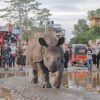
Climate Change: New Threat to Nepal’s Rhinos
Nepal’s population of one-horned rhinoceros that survived hunting, a shrinking habitat and wildlife trafficking are now faced with a new threat: changes in their living environment due to a rapidly-warming atmosphere.
NESFAS Partner Communities Celebrate World Food Day
World Food Day, a day dedicated to tackle world hunger, is annually celebrated on October 16, 2020 globally. To commemorate this day, the North East Slow Food and Agrobiodiversity Society (NESFAS) along with its partner organisations — Society for Urban and Rural Empowerment (SURE) and North East Network (NEN), Nagaland — hosted several programmes across 27 communities in Meghalaya and Nagaland. It may be mentioned here that all government SOPs and measures were followed during the events.« Previous Page — Next Page »


The world's diverse flora and fauna are facing urgent threats due to pollution, climate change, commercialization of nature and other forms of harmful human intervention. The widespread loss of biodiversity is worrying not simply because of the disappearance of exotic species which deserve saving, but because tampering with nature's equilibrium means that the loss of one form of life is a threat to another. IPS taps into its own diverse network of correspondents around the world to report on continuing and emerging dangers to nature's riches - and the struggle to protect them.

The Week with IPS

Tracking global progress towards a sustainable world
