Languages
Friday, November 6, 2026



News and Views from the Global South
Biodiversity

Ensuring Biodiversity Now will Prevent Pandemics Later
A future repetition of the current COVID-19 pandemic is preventable with massive cooperation on international and local levels and by ensuring biological diversity preservation around the world, experts recently said.
Unite Behind Environmental Science: Transforming Values and Behaviour is as Important as Restoring Global Ecosystems
Restoring damaged ecosystems is vital to avoid the collapse of nature’s most valuable contributions to people, but International Day for Biological Diversity 2020 should also be a wake-up call about the importance of addressing our social, economic and systemic values, because it is these that are driving the destruction of nature.
Biological Diversity is Fundamental to Human Health
 This year’s International Day of Biological Diversity falls amid the coronavirus pandemic and the slow easing, in some nations, of a global lockdown. While the lockdown has forced most people to stay at home, there have been reports of more wildlife being spotted - even in once-busy city centres.

To Restore Forests, First Start With a Seed
In 2011, when Rwanda committed to restoring 2 million hectares of land in a global effort to restore 150 million hectares of degraded and deforested areas by 2020 — it seemed like a big ask.
COVID-19 Stimulus Measures Must Save Lives, Protect Livelihoods, and Safeguard Nature to Reduce the Risk of Future Pandemics
There is a single species that is responsible for the COVID-19 pandemic - us. As with the climate and biodiversity crises, recent pandemics are a direct consequence of human activity – particularly our global financial and economic systems, based on a limited paradigm that prizes economic growth at any cost. We have a small window of opportunity, in overcoming the challenges of the current crisis, to avoid sowing the seeds of future ones.
The Boardwalk For Birds: Protecting Lake Victoria’s Dunga Beach Wetland
At around 11am on a Saturday, Luke Okomo arrives at Dunga Beach, on the outskirts of Kenya’s Kisumu City, and heads straight to what is known as the ‘Dunga Papyrus Boardwalk’.
GEF Project to be Game-changer for Trinidad Quarries
 A Trinidad and Tobago parliamentary report in 2018 made two disturbing observations about that country’s quarry sector:
- Of the 67 mining operators on record, only 6 were operating with current licenses;
- The State loses large sums in the form of unpaid/uncollected royalties from quarry companies.

Harness Youth to Change World’s Future
Vanessa Nakate of Uganda may have been cropped out of a photograph taken at the World Economic Forum, but she along with Swedish activist Greta Thunberg have made the climate crisis centre stage.
Trinidad and Tobago Struggles to Meet its Biodiversity Targets
Trinidad and Tobago, like many other signatories to the United Nations Convention on Biological Diversity, had made commitments in 2010, to achieve several biological diversity targets during the decade 2011 to 2020, commonly referred to as the Aichi targets. However, achieving most of those targets continues to be a work in progress. 
Preserving World’s Biodiversity: Negotiations Convene at FAO Headquarters
“The world out there is watching and waiting for results,” Elizabeth Maruma Mrema warns while talking to IPS regarding the preservation of biodiversity of our planet.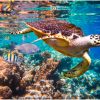
A Post-2020 Global Biodiversity Framework Aims at Reinforcing Efforts to Save World’s Ecosystem
The UN’s highly-touted socio-economic agenda, which lays out an ambitious global plan for “people, planet and prosperity”, has been dominated by “goals, targets and deadlines.”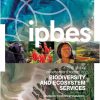
As Planet Burns, One Million Species in World’s Eco-System in Danger of Extinction
When UN Secretary-General Antonio Guterres addressed the 193-member General Assembly last December, he focused on the smoldering climate crisis-- pointing out that the last five years have been the hottest ever recorded.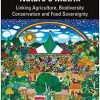
Biodiversity & Agriculture: Nature’s Matrix & Future of Conservation
When we were children, a long auto trip would require a stop every hour or so to clean the windshield of the insects that had been intercepted.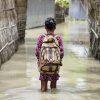
Tackling Climate Change and Preserving the Water Body: A Bangladeshi Perspective
For any riverine country, the state of the water body around big cities and conditions of major rivers hold a leadership position in the overall climate effects and how the water body is protected and preserved impacts the entire economy and living standards of that country. Bangladesh is renowned for the geomorphic features that include massive rivers flowing throughout the country. Within the border of Bangladesh lie the bottom reaches of the Himalayan Range water sources that flow into the Bay of Bengal totaling the number of rivers by a count of 700. The length of river bodies is about 24,140 km. There are predominantly four major river systems: the Brahmaputra-Jamuna, the Ganges-Padma, the Surma-Meghna, and the Chittagong Region river system. The Brahmaputra is the 22nd longest (2,850 km) and the Ganges is the 30th longest (2,510 km) river in the world. (1) The river system works as a backbone for agriculture, communication, drinking water source, energy source, fishing and as the principal arteries of commercial transportation in Bangladesh. During the annual monsoon period between June and October, the rivers flow about 140,000 cubic meters per second and during the dry period, the numbers come down to 7000 cubic meters per second.
How Encroachments, Willows and Silt Ate up Half of Kashmir’s Own Sea
Warming himself with a kangri (a firepot) kept under his pheran (a long winter cloak worn by Kashmiris), 66-year-old Mohammad Subhan Dar sat chatting with a bunch of his fellow villagers on a January afternoon on the edge of the road overlooking Wular Lake in Saderkote-Bandipora, northern India.
Coping with Australia’s Surfeit of Natural Disasters & Lessons to be Learned
I love visiting Canberra in the summer. The air is clean. The water in lake Burley Griffin is crystal clear and the "go boats" merrily bob up and down with their wine sipping occupants while black swans frolic in peace.
India’s Unique Water Purification Wetland Could Soon Become Extinct
Ramkumar Mondal’s farm is awash in a brilliant yellow mustard bloom. A flock of grey cranes peck for food amidst the shallow watergrass. But Mondal’s fishpond digs in there like a do-or-die last sentinel as nearby high-rise buildings, a symbol of development and encroachment, menacingly tower over the fishpond, permanently blocking the eastern sun so essential for the pondwater to convert sewage into fish-feed.
‘Organic is the Future’
Vandana Shiva, a pioneer of organic farming in India, is incensed by the 2019 draft law to compulsorily register all seeds used by farmers. On a wintry afternoon, at her farm Navdanya in the Himalayan foothills, the noted ecologist spoke on the future of the organic farming movement in India. Excerpts:
Biofortified Crops Improve Farmers’ Livelihoods in Zimbabwe
Steven Seremwe, who is 57 years old, was retrenched from his job as an administrator at Lake Shore Missions in 2012. He decided to focus on farming, and he started growing various crops—white maize, sugar beans, and sweet potatoes, among others—for consumption and sale.
Nature Losses Threaten Emerging Economies
More than half of worldwide GDP is moderately or highly dependent on nature, putting biodiversity loss among the top five risks to the global economy, according to a report presented at the World Economic Forum (WEF) in Davos, Switzerland.
Blue Innovation in the Commonwealth
With 95 per cent of the ocean still unexplored by humans, we are only just beginning to understand its profound influence on life on earth, including its effect on global climate and ecosystems.« Previous Page — Next Page »





The world's diverse flora and fauna are facing urgent threats due to pollution, climate change, commercialization of nature and other forms of harmful human intervention. The widespread loss of biodiversity is worrying not simply because of the disappearance of exotic species which deserve saving, but because tampering with nature's equilibrium means that the loss of one form of life is a threat to another. IPS taps into its own diverse network of correspondents around the world to report on continuing and emerging dangers to nature's riches - and the struggle to protect them.

The Week with IPS

NEXT STOP - SDGs
Tracking global progress towards a sustainable world
Tracking global progress towards a sustainable world
