Languages
Sunday, November 8, 2026



News and Views from the Global South
Biodiversity
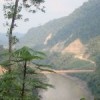
Brazilian Dam Would Put Peruvian Jungle Under Water
Seen from up high, the route to Puente Inambari looks like a green serpent -- long, robust and sinuous. The Amazon jungle that dominates this landscape will be underwater if one of the largest hydroelectric dams in Peru (and all Latin America) is built.Gulf of Mexico Oil Spill’s 30-Year Legacy
A surprisingly small number of scientists have studied the impacts of the oil spill resulting from the 1979 blowout at the Ixtoc I oil rig in the Gulf of Mexico. Wes Tunnell, who first studied the spill’s effects in July and August of 1980 and has returned many times since, is one of the few exceptions.
CHINA: Bigger Bite Needed into Appetite for Shark Fin Soup
Campaigns featuring some of China’s biggest celebrities, including basketball star Yao Ming and actor Jackie Chan, have persuaded some Chinese to think twice about eating shark fin soup. But changing attitudes about the centuries-old delicacy, a large contributor to decimated shark populations, continues to be a challenge.
EAST AFRICA: Protecting Lake Victoria’s Top Predator
Coordinated conservation measures to arrest the steep decline of stocks of Nile perch in Lake Victoria are showing encouraging results - for fish, if not for fishing communities around the lake.
AFRICA: Outrage Over Claim that Anti-GM Campaign “Causes Hunger”
Civil society organisations have reacted with outrage to claims that the international campaign against genetically modified (GM) crops is partly responsible for food shortages and food insecurity in Africa.
Fish Kills Worry Gulf Scientists, Fishers, Environmentalists
Another massive fish kill, this time in Louisiana, has alarmed scientists, fishers and environmentalists who believe they are caused by oil and dispersants.The Mystery of the Vanishing Squid in South Atlantic
Environmental factors, lack of cooperation and overfishing have caused a sharp fall in catches of squid in the southwestern Atlantic ocean, the most important fishery in the world for this species.US: Govt Claims Slammed as “Final Kill” Looms for Gulf Oil Leak
Between April and August this year, 4.9 million barrels of oil were spilled into the Gulf of Mexico. How much remains today is not yet clear and is a hot topic of debate among academic and government scientists.
Mississippi Shrimpers Refuse to Trawl, Fearing Oil, Dispersants
The U.S. state of Mississippi recently reopened all of its fishing areas. The problem is that commercial shrimpers refuse to trawl because they fear the toxicity of the waters and marine life due to the BP oil disaster.
ENVIRONMENT: Uruguay Tries to Solve Its Forestry Puzzle
"A Uruguayan consumes 40 kilos of paper per year, compared to 400 kilos consumed by someone in Finland. We produce wood pulp to feed foreign consumption," says sociologist María Selva Ortiz, representative of the environmental group Redes-Friends of the Earth Uruguay.
U.N. Decade Hopes to Push Back Encroaching Deserts
Desertification has long been recognised as a major environmental, economic and social problem for countries the world over. But despite major efforts, which started with the United Nations Conference on Desertification (UNOCD) in 1977, the process of land degradation is intensifying.
CHILE: Salmon Industry Won’t Give Up
The once booming salmon industry in Chile is trying to get back on its feet after the devastating health crisis that cut production in half. But its long-term viability has been called into question.
BIODIVERSITY: An Ocean of Crustaceans
What lives in the world's oceans? Crabs mostly, according to the Census of Marine Life, a 10-year research effort.US: Gulf Health Problems Blamed on Dispersed Oil
BP says it is no longer using toxic dispersants to break up the Gulf of Mexico oil spill. Gulf Coast residents claim otherwise, and say they have the sicknesses to prove it.
PAKISTAN: Endangered Snow Leopard Clawing Its Way Back
For more than 10 years, Shafqat Hussain has been on the trail of the endangered snow leopard. He has heard the beast’s growl, and has seen its pugmarks against a snowy track. But his dream, of coming eye-to-eye with the elusive nocturnal feline, remains unfulfilled. "If you’ve seen the cat, you’ve seen the Holy Grail," says Hussain.
MEXICO: Conservation Gaining Ground on Private Lands
The Mexican government is promoting the notion of private lands dedicated to sustainable use, a tool created in 1997 in this country with great biodiversity, but experts say there are still many shortcomings in the plan.
SRI LANKA: No Peace in Sight in Human-vs-Elephant War
Dusk creeps over Konweva like a black shroud slowly draping over the village. The edges of its paddy fields, where the agricultural plains meet the surrounding thick shrubs, are first to be blanketed in the darkness. Already, there are signs that the night will not be peaceful.
Scientists Deeply Concerned About BP Disaster’s Long-Term Impact
Contrary to recent media reports of a quick recovery in the Gulf of Mexico, scientists and biologists are "deeply concerned" about impacts that will likely span "several decades".Ocean Losing Its Green
The oceans are the lifeblood of our planet and plankton its red blood cells. Those vital "red blood cells" have declined more than 40 percent since 1950 and the rate of decline is increasing due to climate change, scientists reported this week.
CUBA: Village with English Past, Ecological Present
Only hurricanes disrupt the tranquility of Cocodrilo, a Cuban coastal village founded by immigrants from the Cayman Islands in the early 20th century.Slack Oversight of Peru’s Amazon Rainforest
Fifty-three percent of Peru is covered with native rainforest, but the agencies in charge of protecting and monitoring this vast area are toothless and have neither the staff nor the resources to cope with the job, according to a report from the Defensoría del Pueblo (Ombudsperson's Office).« Previous Page — Next Page »





The world's diverse flora and fauna are facing urgent threats due to pollution, climate change, commercialization of nature and other forms of harmful human intervention. The widespread loss of biodiversity is worrying not simply because of the disappearance of exotic species which deserve saving, but because tampering with nature's equilibrium means that the loss of one form of life is a threat to another. IPS taps into its own diverse network of correspondents around the world to report on continuing and emerging dangers to nature's riches - and the struggle to protect them.

The Week with IPS

NEXT STOP - SDGs
Tracking global progress towards a sustainable world
Tracking global progress towards a sustainable world
