Languages
Monday, November 9, 2026



News and Views from the Global South
Biodiversity

ENVIRONMENT: Conservation as Artists' Muse
Pulled-together socialites and not-so-sloppy artists recently gathered for an atypical art exhibition in San Diego that combines art with wilderness conservation, using contemporary art to investigate vanishing worlds and the people that inhabit them.
Q&A: “Amazonas State Is in the Environmental Vanguard”
The Brazilian state of Amazonas is "a quarry of ideas and creativity" and is in the vanguard for having preserved 98 percent of its native forests, paying for environmental services, and enacting the pioneering Climate Change Act, says Nadia D'Ávila Ferreira, the state's secretary for the environment and sustainable development.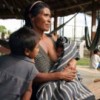
BRAZIL: Setting an Important Precedent for Indigenous Lands
An imminent decision by Brazil’s Supreme Court on the demarcation of the Raposa Serra do Sol indigenous reservation in the Amazon jungle region has the country’s native communities on edge, because of the precedent it will set.
BOLIVIA: Businesses Take On the Green Challenge
What do Bolivia's largest textile mill, an organic cacao cooperative and an indigenous-run tourist hostel in the Amazon have in common? The answer lies in the path, shaky but inspiring, that they are all taking towards sustainable production.ENVIRONMENT-GERMANY: Fleeing Famine, Bees Seek Asylum in Cities
For German bees, the countryside is no longer what it used to be. They are fleeing insecticides and genetically modified crops to take refuge in cities.
Q&A: "Cancun’s White Sands Wouldn’t Exist Without Coral"
"There would be no white sands on the beaches of Cancún without the Mesoamerican reef," Professor Roberto Iglesias-Prieto, a marine ecophysiologist working at the Institute of Marine Sciences and Limnology of the National Autonomous University of Mexico, told Tierramérica.
LATIN AMERICA: Ingenuity at the Service of Sustainable Business
A company will extract silver from the same contaminants it proposes to clean up; a cooperative of the formerly unemployed will export designer clothing; some small farmers are planting new varieties of manioc that double the yield with fewer agro-toxins; others are linking agriculture in the Amazon with protection of the forest.
CHILE: Declaring War on Pigeons
The cities of the world are ideal habitat for the proliferation of the pigeon, or rock dove, a picturesque species that actually poses health and environmental risks.MEXICO: Putting a Price Tag on Destruction of Mangroves
The destruction of the rich mangroves along the coasts of northwestern Mexico has had a heavy impact on fisheries in that area, according to a new study that attempts to put a price tag on these fragile ecosystems.
AGRICULTURE-SOUTH AFRICA: Small Farmers Pushed to Plant GM Seed
Baphethile Mntambo has been farming organically for the past five years because she knows that avoiding chemicals will in the long-term benefit her yield. She decided not to plant genetically modified seeds because she has heard that they cannot be saved for the next season and will eventually deplete her soil. But she is not entirely sure how and why.CLIMATE CHANGE: Wetlands Loss Fuelling CO2 Feedback Loop
Wetlands are dangerous, scientists say, in the sense that they are ticking carbon bombs best left alone. To help stave off extreme climate change, existing wetlands should be enhanced and new wetlands created so they could capture more carbon.
INDIA: Media Lessons From Rural Women
"We don’t know how to read or write, but we make our own films,’’ is how Narsamma, 42, a farmer from Pastapur village in Hyderabad, introduces herself and her colleagues.ENVIRONMENT-AUSTRALIA: New Plan to Undermine Japanese Whaling
Australia is hopeful that its proposal for a new multi-national whale research program - in which whales are not killed - announced at the recent International Whaling Commission meeting in Chile will place considerable pressure on Japan’s controversial whaling programme.
ENVIRONMENT: Afro-Brazilian Communities Recover Jucara Palm
The juçara, a palm tree in danger of becoming extinct due to over-exploitation of its edible heart, is beginning to recover thanks to sustainable management by the Afro-Brazilian communities of the Atlantic tropical forest, Brazil's most deforested biome.ENVIRONMENT: Cutting CO2 Could Save Dying Corals
The rapid decline of coral reefs around the world offers a potent warning that entire ecosystems can collapse due to human activities, although there is hope for reefs if immediate action is taken, coral experts agreed at the conclusion of a five-day international meeting Friday.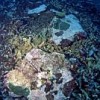
BIODIVERSITY: A Third of Corals Face Extinction
One third of reef-building corals already face extinction because of climate change, the first-ever global assessment has found.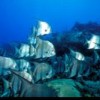
ENVIRONMENT: Global Fish Catches Vastly Underestimated
Fisheries catches in tropical island nations may be as much as 17 times higher than officially reported, according to a new study released Tuesday.
CLIMATE CHANGE: Corals Collapsing in More Acid Oceans
Coral reefs need to be put on "life support" if they are to survive climate change, but their ultimate survival is dependant on major reductions in fossil fuel emissions, say experts.
ENVIRONMENT: Profit in Watching – Not Hunting – Whales
Eighteen Latin American countries are currently involved in whale and dolphin watching tourism, which brings in about 278 million dollars a year. But experts say there is a lack of standards, research and education to ensure that it is a sustainable activity.
INDIA: Sansar Chand Acquitted Again
Notorious wildlife trader Sansar Chand - who according to official investigations was responsible for the death of at least 10 tigers in the Sariska Tiger Reserve in 2005 - has been acquitted by a court of law in two cases related to wildlife crime for want of evidence by the prosecution. "It seems that there are no charges from the wildlife department, who was the prosecution in charge of the case," said Alok Kumar Aggarwal, additional chief metropolitan magistrate (ACMM) in New Delhi, "I am of the opinion to discharge him in this specific case, but the trial would go on in other wildlife cases, as per law."
ENVIRONMENT-EUROPE: Mobile Phones Change Birds’ Tune
Many wild birds are able to imitate the simple ringtones of mobile telephones, German ornithologists report, underscoring the influence of humans on the evolution of birds.« Previous Page — Next Page »





The world's diverse flora and fauna are facing urgent threats due to pollution, climate change, commercialization of nature and other forms of harmful human intervention. The widespread loss of biodiversity is worrying not simply because of the disappearance of exotic species which deserve saving, but because tampering with nature's equilibrium means that the loss of one form of life is a threat to another. IPS taps into its own diverse network of correspondents around the world to report on continuing and emerging dangers to nature's riches - and the struggle to protect them.

The Week with IPS

NEXT STOP - SDGs
Tracking global progress towards a sustainable world
Tracking global progress towards a sustainable world
