Languages
Monday, November 9, 2026



News and Views from the Global South
Biodiversity
CHILE: Maize Contaminated with Transgenics
The Institute of Nutrition and Food Technology (INTA) at the University of Chile has detected genetically modified organisms in four samples of conventional maize grown near fields where transgenic maize seeds are being produced for export.ENVIRONMENT: Europe Casts a Net for Dying Fish
The European Union has resisted calls for a ban on fishing for bluefin tuna in the Mediterranean despite warning signs that the species is being exploited towards extinction.
ARGENTINA: Caution and Enthusiasm for Fish Farming
Fish farming is expanding in Latin America, fuelled by the demands of a global market that is facing the stagnation of commercial fishing. But some people are warning about the limits of industrial production of fish and the environmental and social risks.
KENYA: Biofuels Boom and Bust
The Kenyan government has hailed bio-diesel as an innovation that combines green politics with poverty reduction. But recent drops in biofuel prices have caused concern about the sustainability of alternative fuel production.
ENVIRONMENT: Global Financial Crisis a Bad Sign for Andean Biodiversity
The crisis affecting the financial sector and stock markets around the world could fuel the expansion of extractive industries in South America's Andean region, warn experts.ENVIRONMENT: Going Beyond Climate Change
While the financial mayhem continues to draw the headlines, the cost of persistent biodiversity loss has yet to be established. But it is believed to be bigger than that of the meltdown, and in many cases also irreparable.
ENVIRONMENT-INDIA: Illegal Trade Decimating Wildlife
A great variety of endangered wildlife species end up feeding the illegal market for Traditional Chinese Medicine (TCM) thanks to poor enforcement in stopping the trade, say experts and activists.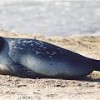
BIODIVERSITY: Mammals Face Extinction Crisis
One in four mammals on Earth is at risk of disappearing forever, according to the new "Red List of Threatened Species" released by the Geneva-based International Union for Conservation of Nature (IUCN) on Monday.ENVIRONMENT: Twisted As Unnaturally as the Banks
The financial meltdown in most of the industrialised world presents an opportunity for a new economic model that would end short-sighted search for high returns, according to leading economists attending the IUCN World Conservation Congress here.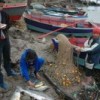
ARGENTINA: Guardians of the River
"There is no water...there are no fish," says Olga Ledesma, her skin weathered from 40 years of small-scale fishing, as the boat slowly winds its way along a branch of the Paraná river, South America’s second-longest river.
ENVIRONMENT-AUSTRALIA: Discoveries Highlight Danger to Reefs
Efforts to create an inventory of life on Australia’s major coral reefs - to be used as part of a baseline to determine the impacts of global warming and overfishing upon reefs - have turned up hundreds of previously unknown and rare species.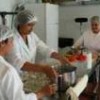
ARGENTINA: Women Create Food and Jobs in Wetlands
Wearing a cap and a white apron, Melina Lucero cuts the heads and tails off fish caught in the Paraná River, before skilfully filleting them. Her co-workers will process and package the fish to sell as traditional, small-scale fish preserves at food fairs along the banks of the river in Argentina.
Q&A: 'Oil Prices Have Revived Interest in Dams'
Concerns over the future of fisheries in the Mekong River floated to the surface at the first round of discussions held here late this month to shape a blueprint to build a series of mega dams across South-east Asia’s largest body of water.VIETNAM: Heeding Climate Change Warnings
With a predicted sea level rise of one metre by 2100, Vietnam may end up being one of the nations worst hit by climate change. Such a rise would affect five percent of the land area, 11 percent of the population and seven percent of the agriculture.ASIA: Calamities, Climate Change – Reprieve for Mangroves
Lack of access to military-ruled Burma has not stopped a global environmental body from setting its sights on the country’s Irrawaddy Delta, which was devastated by a powerful cyclone in early May. Rehabilitating mangroves is the draw.ENVIRONMENT-SOUTH AFRICA: Pioneering Conservation Project At Risk
An innovative South African nature conservation project that combines protecting biodiversity and poverty alleviation faces resistance from residents of adjacent properties who are worried about rate increases and land development rights.EUROPE: Transgenic Crops’ Days May Be Numbered
Pressure from the president of the European Commission has not succeeded in advancing the cause of transgenic crops. In spite of the power wielded by the executive organ of the European Union, the bloc’s member countries are gradually discontinuing the use of genetically modified seeds.
BRAZIL: Courts – the Battleground for Fight Against Paper Mills
The battle against the wood pulp ndustry has intensified in the Brazilian courts, especially in those states where eucalyptus plantations have expanded the most: Bahia and Espírito Santo in the east and Rio Grande do Sul in the south.
ENVIRONMENT-BRAZIL: Click Here to Plant a Tree
It has become fashionable in Latin America to pursue initiatives towards "zero carbon", neutralising the climate-changing greenhouse gases produced by industry, commercial aviation and even the football World Cup - and along with it, atoning for the environmental sins of polluters.VIETNAM: Paying for Ecosystems
Payment for Ecosystem Services (PES), an environmental scheme now being trialled in this South-east Asian country, may serve as a model for the region, if found successful.
ENVIRONMENT: Amazon Increasingly Oily
More than 180 oil and natural gas fields extend across the western Amazon, shared by five South American countries and threatening biodiversity and indigenous lands, warns a study by U.S.-based organisations.« Previous Page — Next Page »





The world's diverse flora and fauna are facing urgent threats due to pollution, climate change, commercialization of nature and other forms of harmful human intervention. The widespread loss of biodiversity is worrying not simply because of the disappearance of exotic species which deserve saving, but because tampering with nature's equilibrium means that the loss of one form of life is a threat to another. IPS taps into its own diverse network of correspondents around the world to report on continuing and emerging dangers to nature's riches - and the struggle to protect them.

The Week with IPS

NEXT STOP - SDGs
Tracking global progress towards a sustainable world
Tracking global progress towards a sustainable world
