Languages
Monday, October 26, 2026



News and Views from the Global South
Climate Action

UN Secretary General Warns of ‘Brutal’ Impacts of Climate Change for Pacific Islands
UN General Secretary General António Guterres warned of the wide-ranging impacts of climate change on a visit to the Pacific islands of Samoa and Tonga. "(Climate change) spells disaster: wide-ranging and brutal impacts, coming far thicker and faster than we can adapt to them—destroying entire coastal communities,” said Guterres, speaking at a meeting of Pacific Island leaders in Tonga.
Climate Activists Target Culture Greenwashing
Civil society is working on all fronts to tackle the climate crisis. Activists are protesting in numbers to pressure governments and corporations to cut greenhouse gas emissions. They’re using non-violent direct action and high-profile stunts, paying a heavy price as numerous states criminalise climate protest.
Tackling the World’s Planetary Emergency
The world is facing a triple planetary crisis of climate change, pollution, and biodiversity loss. Climate change continues to pose an existential threat to humanity, with recent science estimating that we have possibly less than six years left to change course and rapidly reduce greenhouse gas emissions to have a chance of avoiding the worst of the climate crisis.
In Samoa, Protecting the Ocean is Our Way of Life
In Samoa, we use a simple phrase to capture our way of life: Fa’asamoa. At the core of this concept is respect for others, devotion to family and a deep appreciation for the preservation of our natural resources. Importantly, Fa'asamoa has enabled us to sustainably fish our vibrant coral reefs for millennia, in a way that provides good health and prosperity for everyone in our communities.
UK: ‘Many in the Climate Justice Movement Are Finding Creative and Imaginative Ways to Protest’
CIVICUS speaks with Chris Garrard, co-founder and co-director of Culture Unstained, about the campaign to end fossil fuel sponsorship of cultural institutions, which oil companies use to try to present a positive public image.

Micro-Dams, a Solution to Water Shortages in Rural Brazil
Water shortage is over, springs have emerged or become perennial, small ponds with fish have formed and pastures have become greener and more permanent, all thanks to the ‘barraginhas’, the Portuguese name given in Brazil to micro-dams that retain rainwater and infiltrate it into the soil.
Gender Equality Has Everything To Do with Climate Change
After years of reporting on the frontlines of climate change, I have witnessed the devastating impact extreme weather events have on women and girls. In Kenya’s pastoralist communities in far-flung areas of Northern Kenya, West Pokot, Samburu and Narok counties, droughts mean a resurgence in harmful cultural practices such as outlawed female genital mutilation (FGM), beading and child marriages.
Empowering Women for a Green Future: AFPPD Conference Tackles Climate Change and Gender Equality
Robust data collection, integrated policies, and an accelerated push towards a green economy with a gender focus topped the agenda at a conference in Islamabad, Pakistan, that brought together policymakers, experts, and advocates from across the Asia-Pacific region.
Digital Trade & the Sustainable Development Goals: A Dynamic Agenda
The rapid growth of digitalization has fundamentally altered commerce, impacting production and facilitating the movement of goods. The 2023 Asia-Pacific Trade and Investment Report (APTIR), has pointed out that although digital trade revenues of Asia and the Pacific account for a significant share of global trade, this growth is uneven, with trade concentrated in a few areas, leading to disparities across the region.
Hydrogen from Renewables or Fossil Fuels? The Panamanian Question
In 2021, the Panama Canal welcomed a French experimental ship on a world tour, the Energy Observer, the first electric vessel powered by a combination of renewable energies and a hydrogen production system based on seawater.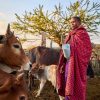
Indigenous Peoples — An Antidote in a World of Crisis
This year’s Equator Prize winners are the antidote we need in a world of crisis. Earlier this year, the World Economic Forum released its annual Risk Report. The key findings highlighted the inescapable trend over the past decade that we are facing a global polycrisis, in which problems of biodiversity loss, climate change, inequality, water scarcity and conflict are increasingly indivisible, simultaneous, and systemic.
ECUADOR: ‘We demand that the violation of the rights of nature be recognised and reversed’
CIVICUS speaks with Darío Iza Pilaquinga, president of the Kitu Kara People of the Kichwa nationality of Ecuador, about a historic court ruling that applied a constitutional provision recognising the rights of nature.
Pivotal Shift at Seabed Authority: Nations Rally for Deep-Sea Mining Moratorium
The International Seabed Authority (ISA) Assembly meeting concluded last week with no mining authorized, an unprecedented number of States calling for a moratorium or precautionary pause and a new Secretary-General elected.
Partnering for Progress: Maldives’ Sustainable Ocean Initiatives
The ocean is our lifeline, covering 70 percent of the earth’s surface, it is the source of half of the oxygen we breathe, and it absorbs 26 percent of the carbon dioxide we produce. It is home to millions of marine species, contains 97 percent of all of the water on our planet and offers humankind immense resources.
Sportwashing Allegations at Africa’s Top Football Tournament
Following the recent Africa Cup of Nations (AFCON) tournament in Ivory Coast, a continent-wide campaign has emerged on social media challenging the tournament's main sponsor, TotalEnergies, over its involvement in the East African Crude Oil Pipeline (EACOP).
Warming Asian Glaciers: Regional Strategy for Riskscape
Scientific assessments reveal that the Third Pole (TP), encompassing the vast glaciated mountain systems of Asia, is warming at an alarming rate of over 0.3 ºC per decade, surpassing the global average.
A Warming Planet is Global, Adaptation is Local & Resilience People-Specific
The summer of 2024 has shattered heat records, starkly illustrating the harsh realities of our warming planet. In India alone, the heatwave has claimed over 100 lives and caused more than 40,000 cases of heatstroke in recent months, according to data from India’s Health Ministry. This extreme weather event has further burdened the poor and vulnerable, exacerbating the social and economic toll of disasters.
UNICEF Director of Global Communication and Advocacy Naysán Sahba visits Zambia

In Zambia, over 6.5 million people need humanitarian assistance because of the drought. 3.5 million of them are children.

UN Climate Talks: Setting Sail to Plunder the Ocean
Despite the evident and increasing urgency of the climate crisis, the June intersessional meeting of the UNFCCC closed with little to show for two full weeks of negotiation.
Women Warriors Winning Fight to Bring Back Indigenous Food Traditions
As the school lunch bell goes off, 40 eager little bodies—41 if you count the school dog—burst out onto the veranda. Awaiting them are a stack of steel platters, into which will be ladled a nutritious and delicious lunch, all of it indigenous cuisine.
Peoples’ Climate Vote Shows Global Support for Stronger Climate Action
The global public opinion research on climate change reveals that 80 percent, or four out of five, of people globally want their governments to take stronger action to tackle the climate crisis.« Previous Page — Next Page »





The Week with IPS

NEXT STOP - SDGs
Tracking global progress towards a sustainable world
Tracking global progress towards a sustainable world
