Languages
Monday, October 26, 2026



News and Views from the Global South
Climate Action

Fake Climate Solutions Spread Across Latin America
Government and private initiatives and programmes to address the climate crisis in Latin America and the Caribbean are in fact a vast array of fake solutions, according to a new regional map made by environmental organisations in several of its countries.
Climate Finance: The Planet is Speaking, Listen and Respond with Justice
As the planet groans under record-breaking temperatures and extreme weather events, Africa, which is responsible for only two to three percent of global emissions, stands out disproportionately as the most vulnerable region in the world. António Guterres, the United Nations Secretary-General’s special address on climate action titled ‘A Moment of Truth’ said 2024 was the hottest May in recorded history, and that this marks twelve straight months of the hottest months ever. For the past year, every turn of the calendar has turned up the heat.
Lawmakers Deliberate on ICPD30, Water Security at Tajikistan Conference
It's been 30 years since the International Conference on Population and Development Programme of Action (ICPD30) was adopted in Cairo, transforming policy and thinking on population and development issues.
Quiet Revolution Underway as IFAD’s Innovative Solutions Rise to Global Rural Challenges
Technology and innovation are at the center of the International Fund for Agricultural Development’s strategy to fulfill its global mission to eradicate poverty and hunger in the developing world, IFAD’s President Alvaro Lario told IPS in an exclusive interview.
World Environment Day: UN Secretary-General Reckons with ‘A Moment of Truth’ on Climate Action
Coming at a time of record-breaking global temperatures over the last twelve months, the UN chief calls on world leaders, including the G20 and G7 members, to commit to their climate action goals as laid out in the Paris Agreement. Experts across multiple industries are also encouraged to do their part to mitigate the impact of the climate crisis.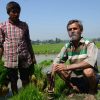
Explainer: How India’s Political Parties Neglect Climate Change
As India's 968.8 million voters were gripped by election fever, the worst-ever heat wave held the country in its clutches.
Plastic Soup, Plastic Islands: How Small Island Developing States can end Plastic Pollution
Scattered over the vast area of our oceans, Small Island Developing States (SIDS) are often pictured as blue, serene and beautiful paradises. However, we are risk losing the beauty of these islands, due to the triple threats of climate change, loss of biodiversity, and pollution, especially marine plastic debris.
Explainer: Why Is It Important for Venezuela to Adopt Escazú Agreement in the Coming Year?
Venezuela is one of the few countries outside the Escazú Agreement, a treaty in Latin America and the Caribbean ratified by 16 member countries that guarantees access to environmental information, public participation in environmental decisions, and environmental justice.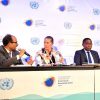
Uniting for Climate Action: UN, World Bank and UNDRR Leaders Push for Climate Finance, Justice and Nature-Based Solutions for SIDS
As leaders of Small Island Developing States (SIDS) meet for the 4th International Conference on SIDS in Antigua this week, top United Nations and World Bank officials are calling for urgent action to help SIDS tackle their unique challenges and plan for the next decade.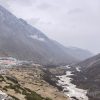
Explainer: Why GLOFs Are Growing Concern in the Himalaya
Phu Chhettar Sherpa, who worked as an icefall doctor (a Sherpa who fixes ropes for climbers) for seven years from 2015 to 2021 on Mt. Everest, vividly recalls his fear of possible flash floods after the huge earthquake in Nepal in 2015.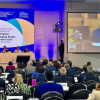
Small Island Nations Demand Urgent Global Action at SIDS4 Conference
“This year has been the hottest in history in practically every corner of the globe, foretelling severe impacts on our ecosystems and starkly underscoring the urgency of our predicament. We are gathered here not merely to reiterate our challenges, but to demand and enact solutions,” declared Antigua and Barbuda Prime Minister Gaston Brown at the opening of the Fourth International Conference on Small Island Developing States on May 27.
Malawi Moves To Regulate Carbon Trading Amid Transparency Concerns in Global Market
Malawi is increasingly pitching carbon trading as a source of revenue it needs to bolster the economy, which is suffering from foreign exchange shortages caused by a large trade imbalance and being buffeted by several shocks, including the climate crisis.
Countdown to Critical Conference for Small Island Developing States
Delegates from small island developing states (SIDS) worldwide are meeting in Antigua and Barbuda to strategize for the next decade.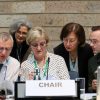
Biodiversity Meet Suggests New Guidelines on Synthetic Biology Amid Persisting Questions
After a week-long discussion by delegates from 196 countries, the 26th meeting of the Subsidiary Body of Scientific, Technical, and Technological Advisors (SBSTTA) of UN Biodiversity has concluded with a set of recommendations on several issues, including living modified organisms (LMOs) and synthetic biology. All nations must consider the recommendations, discuss them, and possibly adopt them at the Biodiversity COP in October. However, many questions remain unanswered and unclear.
International Diplomat Erik Solheim on Politics, Climate Change, Much-Needed UN Reform and Trump
Erik Solheim, a senior internationally renowned politician and diplomat, has long been an advocate for combining development assistance with private investment and better taxation systems in recipient countries.
Women Organize to Fight Coastal Erosion in Southeastern Brazil
Coastal erosion has been aggravated by climate change and has already destroyed more than 500 houses in the town of Atafona in southeastern Brazil. Movements led largely by women are working to combat the advance of the sea and generate economic alternatives.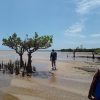
Ocean Action on Global Agenda as Negotiations to Save Biodiversity Deepen
The oceans are as fascinating as they are mysterious. Home to the largest animals to ever live on Earth and billions of the tiniest, the top 100 meters of the open oceans host the majority of sea life, such as fish, turtles, and marine mammals. But there is another world far below the surface. In the belly of the ocean, there are seamounts—underwater mountains that rise 1,000 meters or more from the seafloor.
Biodiversity Masterplan: Negotiations on Crucial Science, Technology for Implementation Underway
The triple planetary crises of climate change, biodiversity loss, pollution, and waste are escalating. At the current pace, the world is on track to lose one quarter of all plant and animal species by 2030, with one species already dying out every 10 minutes. One million species face extinction. Human activity has already altered three-quarters of the land on Earth and two-thirds of the ocean.
Choose Hope: Standing at the Crossroads of the Future
We are at the tipping point in human history, facing major existential crises. The conflict between Russia and Ukraine has heightened the risk of a nuclear weapon being used since the Cold War. Furthermore, the climate crisis is accelerating. In these crises, the most affected are those in vulnerable situations.
We Should Aim to be at Peace with Nature, Says David Cooper of UN Convention on Biological Diversity
In a world faced with habitat loss and species extinction, climate change, and pollution, it’s crucial that countries develop their national action plans and create a society that lives in harmony with nature, says David Cooper, Acting Executive Secretary of the UN Convention on Biological Diversity (CBD), in an exclusive interview with IPS.
Using Industrial Waste to Fight Pollution in Brazil
Biogas sounds like redemption, the conversion of the sinner. Its production involves extracting energy from filth, from the most disgusting environmental pollution, and at the same time avoiding the worsening of the global climate crisis.« Previous Page — Next Page »





The Week with IPS

NEXT STOP - SDGs
Tracking global progress towards a sustainable world
Tracking global progress towards a sustainable world
