
Wednesday, October 21, 2026



News and Views from the Global South
Climate Change

Explainer: Halfway Through COP30, Sticking Points Emerge Across Key Areas
COP30 negotiations are midway. So far, talks about historic agreements are moving forward, backward, or stalling, depending on who you ask. The most pressing issues on the table are finances, adaptation, fossil fuel phase-outs, and climate justice.
‘No Land Rights, No Climate Justice,’ Say Activists at Peoples’ Summit
Brazilian Indigenous leader and environmentalist Cacique Raoni Metuktire appealed for support for Indigenous peoples and their land. From the podium of the Peoples’ Summit, Cacique Raoni warned negotiators at the UN climate conference in Belém that without recognizing Indigenous peoples’ land rights, there will be no climate justice.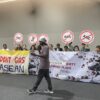
Africa Wants Health to Be at the Center of Adaptation Finance
With the COP30 Presidency prioritizing health at the United Nations climate summit in Belém, African leaders are calling for finance to be channeled towards improving the health systems of developing countries.
Kashmir’s Small Farmers Endless Wait for Climate Justice
In the fertile fields of Jammu's R.S. Pura, rice farmer Mohd Yaseen Khan stares at a cracked irrigation canal, battered by erratic rainfall. “One day heavy rain, next week a dry spell,” he says, dusting his palms. “Our crop suffers. Our costs rise.”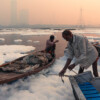
Snatching Victory From Jaws of Defeat Through Belém’s Mutirão Approach
Mutirão first entered the global climate discourse in Ambassador André Corrêa do Lago’s first letter to the world, which was sent in March 2025 as part of his COP30 presidency.
Innovative Approaches to Climate, Peace and Security: Opportunities for India–Germany–Australia Collaboration
Emerging research on the nexus between climate, peace and security (CPS) supports the integration of climate adaptation and mitigation methods to advance sustainable peace. While climate change itself may not be the direct cause of conflict, its cascading effects such as resource scarcity, displacement, and economic stress could become focal points of tension. Although these links remain debated, meaningful responses could have delayed stabilizing effects. Locally driven responses become essential in addressing climate change as a security concern, to mitigate future cycles of conflict. A nuanced CPS framing can support smarter climate action while enhancing security at multiple levels. India’s scalable local models, Germany’s technical expertise, and Australia’s Pacific engagement pose an opportunity for the three countries to collaborate on advancing integrated CPS approaches.

Rising Heat, Rising Risk: Regional Policy Actions
The year 2024 was the hottest on record globally. In Asia and the Pacific, Bangladesh was the worst-hit country, with about 33 million people affected by lower crop yields that destabilized food systems, along with extensive school closures and many cases of heatstroke and related diseases. Children, the elderly and outdoor low-wage earners in poor and densely populated urban areas suffered the most, as they generally had less access to cooling systems or to water supplies and adequate healthcare. India, too, was badly affected, with around 700 heat-related deaths mostly in informal settlements.
‘This People’s March for Climate is For My Son’s Future’
In the scorching heat and humidity, Canru Pataxo marched with his one-year-old son firmly held in his arms.
Shepherded by Anxious Security in Humidity-fueled Heat, Activists Plead for Climate Justice
Farmer and climate activist from Nigeria, Melody Areola, is beating the heat in Belém and voicing farmers’ rights in climate discussions. As the UN Climate Conference, COP30, in Brazil approaches the end of its first week, activists like Melody are making their voices louder.
‘Just Transition Must Make Climate Work for People Living its Consequences’
An open letter by more than 1,000 organizations from 106 countries, including trade unions, Indigenous leaders, feminist and youth movements, Afro-descendants, peasant groups, environmental advocates, disability networks and community organizations, to all States Parties to the United Nations Framework Convention on Climate Change is calling for a people-centered Just Transition.
Belém’s Hunger, Poverty Declaration Places World’s Most Vulnerable Populations at Centre of Global Climate Policy
A young woman at COP30 speaks about retracing her father’s footsteps. At only 16, her father and her grandfather were among the first families displaced by an unfolding climatic crisis of erratic weather and worsening climate conditions that goes on to date from their ancestral village in Sundarbans. Nearly 60 years later, she is on a mission to reclaim her ancestral lands.
As COP30 Takes Place, Can Africa Draw Lessons from Brazil on How It Develops Its Livestock Sector?
As the world gathers in Brazil for the UN climate talks, the country’s livestock sector - one of the largest in the world - is understandably in the spotlight.
Latin America: a Test Case for Aligning Climate Action, Food Security and Social Sustainability
The urgency of linking climate action with social and wider environmental priorities is clear. Climate change, environmental degradation and violent conflict are often deeply connected and even mutually reinforcing. At the same time, climate action can either support or undermine efforts to improve social justice and halt environmental degradation.
We’re All in the Same Storm, Different Boats, Says Young Activist With Disability
At the UN Climate Conference venue in Belém, young activist João Victor da Costa da Silva is trying to make his case heard by negotiators. The 16-year-old Da Silva has a specific request for the parties: the needs of young people with disabilities should be addressed through the lens of climate justice.
Brazil is Breathing Life into Climate Commitments—Human Rights Lawyer
Binaifer Nowrojee, a human rights lawyer and the president of the Open Society Foundations (OSF), has lauded the Brazilian government “for significant steps taken to breathe life into the climate commitments.”
Poor Countries Welcome Loss and Damage Fund’s Call for Requests, Warn It Falls Short of Needs
Least Developed Countries have hailed the debut call for proposals for the Loss and Damage Fund, which was launched on 11 November at the United Nations climate summit known as COP30 in Belem, Brazil.
Demonstrators Face-Off With Security as COP30 Activism Intensifies
In a departure from the past three COPs, in Egypt, Dubai and Azerbaijan, there have been increasingly intense demonstrations from activists at the COP30 venue in Belém, the capital of the northern Brazilian state of Pará.
Hollow Promises or Hope?
COP30 Brazil – Moment of Truth for the Planet
COP30 Brazil, though shadowed by the absence of many world leaders, remains a pivotal milestone in the global fight against climate change, tasked with building on the Paris Agreement’s momentum. Yet the glaring lack of commitment, coupled with withdrawals from the accord, casts a grim shadow over the future. The planet continues to warm, and scientists warn that current targets may not prevent a catastrophic temperature spike. While the summit’s focus on implementation not just new promises—is a welcome shift, it’s clear: words alone won’t cool the Earth.

Indigenous Knowledge Holders Want to Be Acknowledged
Generational lived experiences are key to confronting and living with a changing climate, say Indigenous knowledge holders and activists at the UN Climate Conference (COP30). As the first COP to be held in the Amazon region, in Belém, representatives of Indigenous communities reiterated the importance of generationally transferred knowledge and skills to adapt to and mitigate the threats posed by climate change.
A Tale of Two Cities – Belém, Nairobi and Why Global Tax Justice Must be at Center of Climate Crisis Response
The climate crisis is getting worse and requires fundamental changes to societies, economies, and our global financial architecture in response. While extreme economic inequality is on the rise – the world's billionaires now hold more wealth in the world than every country except the U.S. and China – the impacts of climate change are also unequally felt, with the poor in the Global South and North most at risk.
COP30’s Crossroads: To Accelerate Implementation or Make More Promises?
“Devastating climate damages are happening already, from Hurricane Melissa hitting the Caribbean, Super Typhoons smashing Vietnam and the Philippines to a tornado ripping through Southern Brazil,” said Simon Stiell, Executive Secretary of UN Climate Change, on the eve of COP30 in the Amazonian City of Belém. “This is why COP must achieve three things: It must send a clear signal: nations are fully on board for climate cooperation—that means agreeing to strong outcomes on all the key issues.”« Previous Page — Next Page »





As unsustainable human consumption and production systems are driving changes in average temperatures and weather patterns, "abnormal" is increasingly becoming the norm. So far, a lack of financing has been standing in the way of a comprehensive global plan for climate adaptation, and a global financial crisis has contributed to an increasing reliance on public-private partnerships. Our Climate Change page provides you with the latest news about international and local efforts to address what's frequently been called "the challenge of our time", the forces behind the climate change and the impact it has on the world's most vulnerable populations. Along the way, we bring you stories on growing citizen awareness, new scientific data, and emerging climate policies towards sustainable development.

The Week with IPS

Tracking global progress towards a sustainable world

