
Wednesday, October 21, 2026



News and Views from the Global South
Climate Change

Indigenous Knowledge Holders Want to Be Acknowledged
Generational lived experiences are key to confronting and living with a changing climate, say Indigenous knowledge holders and activists at the UN Climate Conference (COP30). As the first COP to be held in the Amazon region, in Belém, representatives of Indigenous communities reiterated the importance of generationally transferred knowledge and skills to adapt to and mitigate the threats posed by climate change.
A Tale of Two Cities – Belém, Nairobi and Why Global Tax Justice Must be at Center of Climate Crisis Response
The climate crisis is getting worse and requires fundamental changes to societies, economies, and our global financial architecture in response. While extreme economic inequality is on the rise – the world's billionaires now hold more wealth in the world than every country except the U.S. and China – the impacts of climate change are also unequally felt, with the poor in the Global South and North most at risk.
COP30’s Crossroads: To Accelerate Implementation or Make More Promises?
“Devastating climate damages are happening already, from Hurricane Melissa hitting the Caribbean, Super Typhoons smashing Vietnam and the Philippines to a tornado ripping through Southern Brazil,” said Simon Stiell, Executive Secretary of UN Climate Change, on the eve of COP30 in the Amazonian City of Belém. “This is why COP must achieve three things: It must send a clear signal: nations are fully on board for climate cooperation—that means agreeing to strong outcomes on all the key issues.”
The Top Climate Leaders Are Now in The Global South
When world leaders now gather in Belém, Brazil for the UN climate conference, expectations will be modest. Few believe the meeting will produce any breakthroughs. The United States is retreating from climate engagement. Europe is distracted. The UN is struggling to keep relevant in the 21st century.
‘We Want a Place at the Negotiation Table’ — Indigenous Leader
Indigenous leaders from across the Amazon region are calling on climate negotiators to base climate initiatives on the recognition of the land rights of affected Indigenous communities. From the COP30 venue in Belém, these leaders are demanding full participation in the design and implementation of proposed projects.
COP30: The Age of Irrationality in Climate Policy
I have been working on climate policy since the late 1990s. I was in the room when Europe’s early carbon market discussions were shaping the architecture that would eventually underpin the Kyoto Protocol.
In the Heart of the Amazon: COP 30 and the Fate of the Planet
My recent visit to Brazil coincided partly with the Conference of the Parties (COP) 30, the 30th United Nations Climate Conference in Belém. Although I did not attend COP 30, I was very fortunate to visit the Amazon.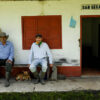
The Silent War Before COP30: How Corporations Are Weaponising the Law to Muzzle Climate Defenders
As the world prepares for the next COP30 summit, a quieter battle is raging in courtrooms. Strategic Lawsuits Against Public Participation (SLAPPs) are the fossil-fuel industry’s new favourite weapon, turning justice systems into instruments of intimidation.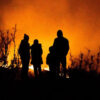
Brazil’s Biofuels Push Undermines Environmental Integrity at COP30
President Prabowo Subianto welcomed his counterpart Luiz Inacio Lula da Silva of Brazil to Jakarta recently to strengthen ties between the fast-growing economies.
US Skips High-Level Presence at COP30 Climate Summit
“Has the world given up fighting climate change?” was a rhetorical question posed recently by the New York Times, perhaps with a degree of sarcasm. It might look that way, says Christiana Figueres, a founding partner of the nongovernmental organization Global Optimism, “as US president Donald Trump blusters about fossil fuel, Bill Gates prioritizes children’s health over climate protection, and oil and gas companies plan decades of higher production.”
What’s Now Needed is Political Courage, Says UN SG Guterres at COP30
Political courage is the biggest obstacle to limiting the rise in global average temperature to no more than 1.5°C, said UN Secretary-General António Guterres.
Global Emissions Falling Too Slowly, Expert Urges Renewables Push, Fair Finance
A decade has passed since the adoption of the Paris Agreement, and a United Nations synthesis report released ahead of COP30 in Belém shows that "Parties are bending their combined emission curve further downwards, but still not quickly enough."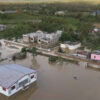
Hurricane Melissa Devastates The Caribbean As The UN Distributes Lifesaving Aid
In late October, Hurricane Melissa, a powerful Category 5 storm, made landfall in the Caribbean, causing catastrophic damage to civilian infrastructure and a devastating loss of life. Humanitarian agencies have mobilized on the ground to deliver urgent assistance to affected communities facing widespread destruction of homes, mass displacement, fatalities, and severe shortages of essential services, including food, water, medicine, shelter, and electricity.
The World’s Forests Cannot Wait: Why COP30 Must Center Indigenous Peoples’ and Local Communities’ Leadership
As world leaders prepare to gather in Brazil for COP30 next week, they will convene in the heart of the Amazon -- a fitting location for what must become a turning point in how the world addresses the intertwined crises of climate change and biodiversity loss.
Power-Sharing —Boomers and Gen Z Face Off at the ICSW
The message is clear: today’s youth are not “wishy-washy.” They are not just the future—they are the present, full partners in shaping it, and “power-sharing” is the new mantra. The veterans of activism are being reminded not merely to listen but to hear and to leave their egos at the door.
Deliver Emission Cuts, or Risk Locking the World Into ‘Catastrophic Warming’
The world is falling dangerously short of meeting the Paris Agreement goals, with global greenhouse gas emissions rising to record levels and current national pledges still far off the mark, the United Nations Environment Programme (UNEP) said in its Emissions Gap Report 2025: Off Target.
COP30: New Faces, Old Issues: What Must Change if Global Climate Talks Are to Deliver Justice for Africa
Three decades after the first Climate COP, the multilateral climate process – which was intended to serve as an instrument of justice and a guardian of the planet’s atmosphere – has fallen far short of its goals.
COP30: The Real Solution to Climate Change Could be Through International Law
At COP15, the developing countries were calling for the temperature to not rise above 1.5 degrees and they ignored the Copenhagen Accord which agreed to 2.0 degrees
COP30 Belém: Turning Promises into Action
 From the 10th to the 21st of November 2025, the 30th session of the Conference of the Parties (COP30) will be hosted in Belém, Brazil.
A Unified Oceanic Commitment to Tsunami Preparedness
On a quiet July morning in Severo-Kurilsk, a coastal town in the East of the Russian Federation, the sea began to retreat unnaturally fast. Within minutes, tsunami sirens blared and 2,700 residents evacuated to higher ground. Waves up to five meters inundated the port and fish factory, but no lives were lost. The town’s survival reflected years of investment in early warning systems, community drills, and resilient infrastructure. The 2025 Kamchatka tsunami demonstrated what preparedness can achieve when science, governance, and community action align.
As COP30 Nears, We Need All Effective Climate Solutions
A new global study has challenged a key assumption in climate planning: that the planet’s geological “carbon vault” is vast enough to hold all the carbon dioxide (CO₂) we might one day choose to bury underground after we remove it from the atmosphere. It isn’t.« Previous Page — Next Page »





As unsustainable human consumption and production systems are driving changes in average temperatures and weather patterns, "abnormal" is increasingly becoming the norm. So far, a lack of financing has been standing in the way of a comprehensive global plan for climate adaptation, and a global financial crisis has contributed to an increasing reliance on public-private partnerships. Our Climate Change page provides you with the latest news about international and local efforts to address what's frequently been called "the challenge of our time", the forces behind the climate change and the impact it has on the world's most vulnerable populations. Along the way, we bring you stories on growing citizen awareness, new scientific data, and emerging climate policies towards sustainable development.

The Week with IPS

Tracking global progress towards a sustainable world

