
Wednesday, November 18, 2026



News and Views from the Global South
Climate Change
Forest Summit Seeks “People-Friendly” Solutions
Earlier this month, on a hot and humid day in the Jambi province of Indonesia, a group of local farmers was critically injured after being shot as they attempted to harvest fruit on a contested palm plantation.SRI LANKA: East Reels Under Triple Whammy
The name Mawilaru will be indelibly linked to the history of over 25 years of civil strife in Sri Lanka, especially its bloody end. It was here that the final phase of the war was triggered in June 2006.Bird, Fish Kills Quite Common – and That’s the Problem
The New Year brought a spate of incidents across the United States and around the world in which large numbers of birds appeared to have fallen out of the sky, and thousands of fish were found floating dead in rivers.DEVELOPMENT: Now for ‘Millennium Consumption Goals’
A Sri Lankan scientist is calling for the drafting of "Millennium Consumption Goals" to force rich countries to curb their climate-damaging consumption habits, in the same way the poor have Millennium Development Goals to get them out of poverty.CLIMATE CHANGE: Driving Straight Into Catastrophe
Despite repeated warnings by environmental and climate experts that reduction of fossil fuel consumption and greenhouse gas emissions is fundamental to forestalling global warming, disaster appears imminent. According to the latest statistics, unprecedented climate change has Earth hurtling down a path of catastrophic proportions.Europe Begins to Run Short of Water
Half of the Czech Republic’s population could face water shortages because of climate change, a top climate change expert has warned.SRI LANKA: Extreme Weather Changes Could Follow Floods
Weather experts warned Sri Lankan to be prepared for extreme weather changes with hardly any notice following devastating floods here that have affected over one million people.Rainfall Patterns Can’t Be Ignored in Climate Change Debate
In discussions of human activities that affect the climate, there is relatively little talk about alterations in rainfall patterns, despite the enormous implications that such changes have on human survival.
ENVIRONMENT: Delhi Chokes on Winter Smog
Winter in the Indian capital is a season of mists, minus the mellow fruitfulness. The air becomes charged with toxic emissions and particles that cannot disperse due to a meteorological phenomenon called "atmospheric inversion".
PHILIPPINES: Designing Defence Against Climate Change
As the impact of climate change worsens around the globe, a disaster-resilient village is poised to be a solution for urban poor battling the constant floods and typhoons that hit the Philippines.CLIMATE CHANGE: ‘Water Towers of Asia’ Show Cracks
A concerted effort to formally document the magnitude and directions of climate trends in the Eastern Himalayas and thereby decide regional adaptation strategies is critical to ensure the region’s water security, according to water experts.
Climate Change Could Be Worsening Effects of El Niño, La Niña
The strongest La Niña weather system in 50 years has brought historic flooding to Australia and drought to Argentina, Brazil and Uruguay, driving up food prices.
BIODIVERSITY: Pharaonic Palm at Risk of Extinction, Again
Environmentalists have called for more efforts to protect the argun palm, a rare desert tree prized by the ancient Egyptians that is on the verge of extinction.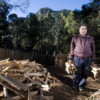
Mexico, the Leader in Community Forest Management
Thanks to its experience with community forestry projects, Mexico can provide tips on how to manage forests while fomenting the development of local economies in 2011, the International Year of Forests.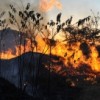
BRAZIL: Resilient Plants Could Hold Key to Adapting Agriculture
A vision of "the Apocalypse, everything burnt, turned black from ashes and smoke," was what photographer Mila Petrillo saw when she returned in October to what had been her Eden in the Brazilian municipality of Alto Paraiso, 230 km from Brasilia.
BRAZIL: Climate Change Means New Crop Health Concerns
Farming around the globe, already reeling from drought, heat waves and major storms, will have to prepare for the new challenges that global warming will bring, especially in the form of pests and disease.
Q&A: “This Time There Will Be No Noah’s Ark”
"The market is not going to resolve the environmental crisis," says theologian and environmentalist Leonardo Boff, professor at Brazil's State University of Rio de Janeiro. The solution, he says, lies in ethics and in changing our relationship with nature.
SOUTH AMERICA: Rain May Disappear from the World’s Breadbasket
South America still has vast extensions of land available for growing crops to help meet the global demand for food and biofuels. But the areas of greatest potential agricultural production -- central-southern Brazil, northern Argentina, and Paraguay -- could be left without the necessary rains.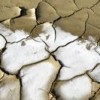
Dire Development Issues Converge in the Drylands
Few are aware that close to one billion people in over 100 different countries are suffering from or severely threatened by intense desertification. Yet awareness is crucial, for it is human behaviour that has led to the proliferation of hyper- arid, uncultivable drylands over the past few decades.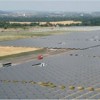
PORTUGAL: Economic Crisis Looms, But Clean Energy Shines On
While the shadow of a speculative assault looms over Portugal, similar to the economic crises that hit Greece and Ireland, this Iberian nation manages to hold up the beacon of renewable energy.
BIODIVERSITY: Dying Beneath the Calm Waters
At first glance, Lake Constance, trapped between Germany, Switzerland, and Austria, looks as peaceful as ever. But under the lake's apparently placid waters, a dramatic change is taking place - one that threatens to obliterate much of local biodiversity.« Previous Page — Next Page »


As unsustainable human consumption and production systems are driving changes in average temperatures and weather patterns, "abnormal" is increasingly becoming the norm. So far, a lack of financing has been standing in the way of a comprehensive global plan for climate adaptation, and a global financial crisis has contributed to an increasing reliance on public-private partnerships. Our Climate Change page provides you with the latest news about international and local efforts to address what's frequently been called "the challenge of our time", the forces behind the climate change and the impact it has on the world's most vulnerable populations. Along the way, we bring you stories on growing citizen awareness, new scientific data, and emerging climate policies towards sustainable development.

The Week with IPS

Tracking global progress towards a sustainable world

