
Thursday, November 19, 2026



News and Views from the Global South
Climate Change

CLIMATE CHANGE: “The Intelligence We Lacked”*
World leaders speaking in Copenhagen on Friday, the last day of negotiations for a deal on climate change, retreated into their national positions.
CLIMATE CHANGE: Norway Is Trying*
Norway is the world’s third largest donor in terms of development aid as a percentage of GDP. Norwegian Minister of Environment and International Development Erik Solheim spoke to TerraViva about the initiatives promoted by his country on environmental protection and its role during the Copenhagen negotiations.CLIMATE CHANGE: Copenhagen Talks Create Hardly a Ripple in Malaysia
Even if Prime Minister Najib Razak is in Copenhagen for the high-level segment of the U.N. conference on climate change, there has been precious little meaningful debate on the subject here in Malaysia.BANGLADESH: Food Security in Great Peril from Climate Change
Unless the world comes to its aid, Bangladesh says the vulnerability of its agriculture sector to climate change could spell severe consequences for its millions of people, who stand to lose their main source of livelihood.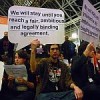
CLIMATE CHANGE: “Canada Is the Dinosaur”
Canada bears a large share of responsibility for any failure to make a breakthrough in reducing greenhouse gas emissions here in Copenhagen, say participants and civil society activists.SOUTH ASIA: Glacial Data Crucial to Combating Climate Change
People living in the Himalayan region are increasingly confronted by rising temperatures and glaciers melting at an unprecedented rate, threatening their very survival. This much the world already knows.CLIMATE CHANGE: Everything Left to Accomplish*
"It’s clear now – we’re not getting a binding deal at the end of tomorrow," said the president of Friends of the Earth-United States, Erich Pica.
CLIMATE CHANGE: No Water in Copenhagen Talks
In the last two years, the conclusion among decision-makers has been that the only way to solve the climate crisis is to turn carbon into a commodity and privatise the atmosphere.
CLIMATE CHANGE: Lawmakers Push for a Deal
With only one day to go to the end of the climate change talks and no agreement in sight, it looks like it will ultimately be up to national legislators to effectively implement whatever agreement is forged here in the Danish capital.
Q&A: Global Economic Apartheid Is Obstacle to Fair Climate Deal
"Climate change is an opportunity to deal with all the issues of equity and justice that we have been struggling for all along," said Kumi Naidoo, Executive Director of Greenpeace International in an interview with IPS on Thursday in Copenhagen.
CLIMATE CHANGE: Zenawi Stands Alone In Copenhagen
Ethiopian Prime Minister Meles Zenawi says Africa must compromise and be flexible towards other countries, if the U.N. Climate Conference ending on Dec. 18, is to reach an agreement.
CLIMATE CHANGE: Meat-Eating Gets Grilled
Climate change has given vegetarians a big, new stick to bash meat-eating with, albeit one they would have gladly done without.
CLIMATE CHANGE: ‘What’s Good for Asia Is Good for the World’
China appears to have gained instant celebrity status since the opening days of the United Nations Climate Change Conference here.
CLIMATE CHANGE: Chavez, Morales Lash Out at Wealthy North
Presidents Evo Morales of Bolivia and Hugo Chávez of Venezuela had harsh words for rich countries Wednesday, accusing them of driving the COP 15 talks to the brink of failure out of "selfishness" and supporting a "culture of death."U.S.: Aging Coal Plants Still a Fixture in South
As governments negotiate future greenhouse gas emissions in Copenhagen, a recent report from Environment America has highlighted the problem of the United States' older coal-fired power plants, which generated nearly three-quarters of U.S. carbon dioxide emissions from power plants in 2007.CLIMATE CHANGE: Future Energy Scenario Unfavourable to Asia
Much of the discussion in Copenhagen has revolved around targets and deadlines for cutting carbon emissions. But a weekend seminar in the idyllic Danish island of Samsoe, titled "Future Energy," helped journalists locate the problem in the context of the world's biggest emitters.CLIMATE CHANGE: China Reels Under a Barrage of Criticism
China is not happy. This is how one of the Chinese state-sanctioned newspapers summed up Beijing's feelings about the week spent negotiating on climate change in the Danish capital.
CLIMATE CHANGE: The Many Lives of the Tobin Tax
In the decades since 1972, when Nobel laureate economist James Tobin (1918-2002) first proposed it, the idea of a tax on currency speculation has resurfaced and disappeared many times, according to the economic tides.
CLIMATE CHANGE: ”The Struggle Does Not Stop Here,” Say Witnesses
‘’Those who run the decision-making on climate change are the same who have caused it,’’ said Archbishop Desmond Tutu at the world’s first international climate hearing on Tuesday, pithily identifying the reason why justice has been elusive at the ongoing climate change summit in the Danish capital.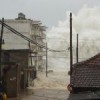
ENVIRONMENT: Honduras Heads List for Climate Risk
Honduras has been hit harder by extreme weather events than almost any other country over the last 18 years, says a study of weather-related losses, released here as the climate summit continues this week.Q&A: Military Activity Driving Rapid Glacier Melting
For the past several years, water expert Arshad H. Abbasi has been calling attention to the environmental degradation of the Siachen Glacier, one of the Himalayan glaciers and the largest in the world outside of the polar regions.« Previous Page — Next Page »


As unsustainable human consumption and production systems are driving changes in average temperatures and weather patterns, "abnormal" is increasingly becoming the norm. So far, a lack of financing has been standing in the way of a comprehensive global plan for climate adaptation, and a global financial crisis has contributed to an increasing reliance on public-private partnerships. Our Climate Change page provides you with the latest news about international and local efforts to address what's frequently been called "the challenge of our time", the forces behind the climate change and the impact it has on the world's most vulnerable populations. Along the way, we bring you stories on growing citizen awareness, new scientific data, and emerging climate policies towards sustainable development.

The Week with IPS

Tracking global progress towards a sustainable world

