
Thursday, November 19, 2026



News and Views from the Global South
Climate Change

CLIMATE CHANGE: The World Needs a Hero
Climate change is becoming an increasingly colossal problem, and civil society, fed up with fruitless negotiations, seems to have found its David: Maldives President Mohamed Nasheed.
CLIMATE CHANGE: ‘Cut Fossil Fuel Subsidies but Compensate the Poor’
Cutting governmental subsidies for fossil energy could lead to a 10 percent reduction in greenhouse gas emissions by 2050 as compared to 1990 levels, says a recent study by the Organisation for Economic Cooperation and Development.
CLIMATE CHANGE: Water Is the Missing Link in Copenhagen
When the World Meteorological Organisation (WMO) announced the grim news that 2009 is likely to rank in the top 10 warmest on record, the U.N. agency also stressed last week the widespread water-related calamities caused by global warming.
CLIMATE CHANGE: Developing Countries Insist Kyoto Stays
The U.N. Climate Change Conference enters its final week under a cloud of uncertainty as the Africa Group led a protest of the developing world against a perceived attempt to abandon the Kyoto Protocol.SRI LANKA: Local Climate Efforts: Too Little, Too Slow, Too Late?
Sri Lankan experts do not seem to be pinning their hopes on the ongoing climate talks in Copenhagen, saying greenhouse gas emissions will continue to torment the world as long as western lifestyles remain the same.
CLIMATE CHANGE-CUBA: “Energy is an Instrument of Power”
"Energy is an instrument of power. Whoever has energy, controls the world," Cuban expert Luis Bérriz said in an address to Klimaforum, the civil society meeting being held in parallel to the UN conference on climate change in the Danish capital.
CLIMATE CHANGE: Scientists Turn to Inuit for Clues
The Inuit people who live in and around the Arctic are among the worst victims of global warming, and scientists are now turning to their experience and indigenous knowledge to understand the staggering effects of climate change.
ARGENTINA: Solar Villages Light Up the Andes
The residents of the Puna, the dry Andean highlands in northern Argentina, are cut off from everything - except the sun. Living on arid land thousands of metres above sea level, they are on their way to becoming "solar villages."
CLIMATE CHANGE: Hope in 100,000 Flavours
The midpoint of a conference on climate change in which tremendous hope has been invested; unsurprising then that demonstrations of popular desire for decisive action against global warming took place around the world.
ENVIRONMENT-ICELAND: Do-it-Yourself Renewable Energy Catches On
When Innovation Centre Iceland (ICI) managers began courses in farming renewable energy in October they were unprepared for the enthusiastic response from citizens.
CLIMATE CHANGE: Portraits from the Summit
Among the thousands of people who have flocked to the Danish capital this week for the climate change summit and dozens of parallel activities are activists of all ages and stripes and representatives of the business community. TerraViva caught up to some of them to find out why they are here and what they hope to achieve.
ENVIRONMENT: Sun Greets “Flood for Climate Justice”
The sun came out in Copenhagen Saturday for the first time this week. But even though its rays were too weak to temper the bone-chilling cold, it shone brightly over the 5,000 people who braved the weather to participate in a demonstration organised by Friends of the Earth International (FOEI).
CLIMATE CHANGE: Bringing the Rainforest to Copenhagen
As delegates deliberate over the extent carbon emissions will be curbed in the closing days of the U.N. summit here, the environmental ramifications of that agreement are likely to be felt in places far removed from the negotiating table, particularly among indigenous people on the front lines of climate change.
CLIMATE CHANGE: Small Farmers Can Cool the World
Industrial agriculture may emit nearly half of climate-heating greenhouse gases, but that reality has gone unrecognised by negotiators at the climate treaty talks here, say farmers with La Via Campesina, an international movement of hundreds of millions of small-scale peasant farmers.CLIMATE CHANGE: Asian Delegates Want ‘Political Accord’, For Now
Asian delegations to the ongoing global negotiations on climate change are insisting that a political agreement must be reached to pave the way for a legally binding treaty in the near future.ENVIRONMENT: Europeans Pay Companies to Pollute More
Some of the world's most polluting companies are receiving financial support from the European taxpayer to promote the continued use of the fuels that cause global warming, according to a new report.
CLIMATE CHANGE: Least Developed Countries Spell Out Demands
The world's poorest countries want two billion dollars from the developed world to replenish the Least Developed Countries Fund.
CLIMATE CHANGE: The World Is Bogged Down in Copenhagen
Poor countries will suffer horrendous impacts if an agreement isn't reached by the end of the climate change summit in Copenhagen. That was the warning launched by the developing South Friday during the talks that remained as bogged down at the end of the first week as at the start.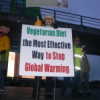
CLIMATE CHANGE: Cattle, the Ignored Predator
Because of its effect on the environment, cattle must be given the same priority in global agendas as nuclear weapons, wars and, in particular, climate change, says Brazilian activist João Meirelles Filho, author of two books on Amazon deforestation.
CLIMATE CHANGE: East Europe, Developed or Developing?
The European Union is presenting itself as a united front during negotiations in the Copenhagen climate change conference. But East European countries insist that they are developing nations and prefer to limit their aid and emissions commitments.CLIMATE CHANGE: Europe Makes Shy Commitments
"Decision-makers should stop thinking in realpolitik terms and acknowledge that we are out of time,’’ says Magda Stoczkiewicz, director of Friends of the Earth (FoE) in Europe.« Previous Page — Next Page »


As unsustainable human consumption and production systems are driving changes in average temperatures and weather patterns, "abnormal" is increasingly becoming the norm. So far, a lack of financing has been standing in the way of a comprehensive global plan for climate adaptation, and a global financial crisis has contributed to an increasing reliance on public-private partnerships. Our Climate Change page provides you with the latest news about international and local efforts to address what's frequently been called "the challenge of our time", the forces behind the climate change and the impact it has on the world's most vulnerable populations. Along the way, we bring you stories on growing citizen awareness, new scientific data, and emerging climate policies towards sustainable development.

The Week with IPS

Tracking global progress towards a sustainable world

