
Thursday, November 19, 2026



News and Views from the Global South
Climate Change
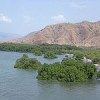
CLIMATE CHANGE: Coastal Carbon Sinks in Dire Need of Protection
What would it be like if the air we breathe was 30 percent more acidic? The oceans are already 30 percent more acidic, and on their way to becoming 120 percent more acidic in 50 years at the current rates of carbon dioxide emissions.
CLIMATE CHANGE: ‘We Know Why We Are Dying’ – Africa
Few are more aware of the devastating legacy failure will leave than the teams of African negotiators in the Danish capital to hammer out a final position.
Q&A: “We’re Here to Insert Some Reality into an Unreal Situation”
Bill McKibben is a U.S. writer, environmentalist and the founder of 350.org, an international climate campaign. His first book, "The End of Nature", was published in 1989 and is regarded as the first book written for a general audience about climate change.
/CORRECTION/*CLIMATE CHANGE: “The G77 Is More United Than Ever”
"If there's ever been a time in which the G77 has been more united than ever, that time is right now," was the categorical statement made by Venezuelan negotiator Claudia Salerno to TerraViva, after a tiny island nation in the south Pacific stirred things up at the COP15 climate meetings.
CLIMATE CHANGE: Willingly or Not, We Must Prepare for Geoengineering
So what do we do if COP15 does not bring adequate emission reduction targets or if the targets are not implemented by countries? What if we are faced with an ecological crisis in the next 15-20 years?
ENVIRONMENT: Darkness at Noon Clouds Cairo Skies
For the last decade, the autumn skies over Egypt - especially over capital Cairo, have been overshadowed by a thick haze people call "the black cloud".
CLIMATE CHANGE: Latin American Women Want Modified Trade Rules
"We don't need to change the climate, we need to change trade," said Brazilian activist Marta Lago at Klimaforum, the civil society meeting held in parallel with the climate change summit in the Danish capital.CLIMATE CHANGE: World Bank Touts Carbon Market
The World Bank proudly defended the global carbon market in the Danish capital Tuesday for its "contribution" to efforts to mitigate climate change, in spite of criticism from civil society.FINLAND: Biodiesel Breakthrough or Environmental Nightmare?
As Finnish energy major Neste Oil scales up production of its ‘green’ diesel NExBTL, environmental activists fear that more land will go under palm oil plantations at the expense of Southeast Asia’s threatened rainforests.
CLIMATE CHANGE: Brazil Defends Biofuels
Being the world’s largest producer and exporter of ethanol it is natural for the Brazilian government and its partners to push biofuels as the only real alternative for a world trying wean itself away from fossil fuels that contribute to global warming.
CLIMATE CHANGE: No Closed Doors at Parallel Summit
Two blocks from the Metro station on the busy M-1 Line, the first indication that pedestrians are slipping into the space-time continuum known as the "Free City" is the ubiquitous graffiti and occasional "boom!" of small explosive devices like M-80s echoing through the cobbled streets.
CLIMATE CHANGE: Latin America Between Hope and Realism
Latin America has come to Copenhagen with the goal that the wealthy nations of the North pay their climate debt by reducing greenhouse gas emissions and providing resources to developing nations. But facing the risk that this strategy could fail, the Latin American representatives are also willing to accept some compromises.
CLIMATE CHANGE: Deal On Forests Likely, But…
As debate ratchets up ahead of working out a climate change deal, a Dutch study says emissions from deforestation and land degradation are far lower than has been assumed. Will this have an impact on a deal to protect forests in Africa?
OIL: A Market Psychology of Fear?
With or without a binding deal at the climate talks in Copenhagen this month, it seems the world may have to cut its oil consumption, as emerging geological and economic trends limit the availability and affordability of petroleum.
Q&A: “We Are Moving Towards Modest Cooperation”
Vested interests in fossil fuels have blocked major steps against global warming so far, according to José Goldemberg, who has played a leading role at key times in the climate crisis facing humanity.
CLIMATE CHANGE: Beware of Carbon Trading Trap Warn Activists
As the climate change summit in the Danish capital moves into a second day, environmental groups warn that by pushing carbon offsetting and trade, governments of developed countries are bypassing their responsibility to significantly reduce domestic emissions and provide aid to developing countries.CLIMATE CHANGE: Greenhouse Gases Endanger Public Health – EPA
Twelve years after the climate change meetings in Kyoto, a much changed U.S. will show up at the Copenhagen conference this week, and, following recent developments in Washington, their ability to offer and agree to international climate actions has likely never been higher.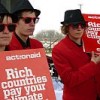
CLIMATE CHANGE: Rich Nations Resist Binding Commitments
Betrayal and backsliding by rich countries marks the beginning of the final negotiations for a global climate treaty, according to many developing world participants at the U.N.-sponsored talks here.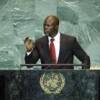
Q&A: “Copenhagen Should Target the Developed World”
Although a professional actor by trade, Djimon Hounsou takes his role as a campaigner against climate change at the U.N. seriously, and hopes to see a strong mandate reached in Copenhagen that puts the spotlight on developed countries to reduce their greenhouse gas emissions.
CLIMATE CHANGE: Hunger Strikers in “Moral Call to Action”
Hoping to emotionally engage world leaders and ordinary citizens, hundreds of people from around the globe have entered their fifth week of fasting at the start of the Copenhagen Climate Conference.
Q&A: ‘Economic Growth Is Making us Poorer’
Dinner one evening when he was a kid put William Rees on track to becoming a sustainability pioneer. It was after a day at work on the family farm when he was nine or 10. He saw he had had a hand in growing everything on his plate. That brought a fascination with a connection to earth that would never leave him.« Previous Page — Next Page »


As unsustainable human consumption and production systems are driving changes in average temperatures and weather patterns, "abnormal" is increasingly becoming the norm. So far, a lack of financing has been standing in the way of a comprehensive global plan for climate adaptation, and a global financial crisis has contributed to an increasing reliance on public-private partnerships. Our Climate Change page provides you with the latest news about international and local efforts to address what's frequently been called "the challenge of our time", the forces behind the climate change and the impact it has on the world's most vulnerable populations. Along the way, we bring you stories on growing citizen awareness, new scientific data, and emerging climate policies towards sustainable development.

The Week with IPS

Tracking global progress towards a sustainable world

