
Thursday, November 19, 2026



News and Views from the Global South
Climate Change
LEBANON: Global Warming Makes Mischief Worse
With its long, dry summers, Lebanon's diminishing woodlands are devastated by wild fires every year - and this year is no exception.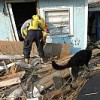
U.S.: Levee Uncertainty Weighs on Katrina’s Displaced
Today, the population of New Orleans is still about 175,000 people fewer than it was before Hurricane Katrina hit four years ago next month. Along with concerns about jobs and housing costs, the city's vulnerability to flooding has weighed heavily on the minds of many evacuees, many of whom have not returned.CLIMATE CHANGE: Publics See Warming as Urgent, Govts as Failing
A poll of 19 nations released here Wednesday reveals that majorities in most countries believe climate change should be a high priority for their governments, but relatively few thought that their leaders were doing enough about the problem.POLITICS: US-China Confab Short on Concrete Commitments
China and the United States concluded two days of talks Tuesday with the signing of a Memorandum of Understanding (MOU) that the Obama administration is touting as evidence of both countries' commitment to battling climate change and proof of a strengthening bilateral relationship.ENERGY: African Sun may Light up European Homes
Twelve German companies have drawn up ambitious plans to meet at least 15 percent of the European electricity demand by 2020 from solar thermal power plants installed in the North African Maghreb region.ENVIRONMENT: Rich Nations Vulnerable to Water Disasters
The growing shortage of water - a perennial problem in the world's poorer nations - is expected to eventually reach the rich nations in the Western world.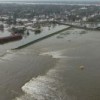
U.S.: Four Years Post-Katrina, Levee Protection Still Elusive
Four years after Hurricane Katrina, there have been some significant improvements to the levees of New Orleans. However, even with work scheduled to be completed in 2011, advocates say the U.S. government has left the standard of protection at dangerously low levels.
ENVIRONMENT: Swedes Going Green in Emergency
Patients in Stockholm can now be rushed to hospital in an ambulance that runs on processed sewage.U.S.: Better Balance Between Climate and Military Spending Urged
Despite its conviction that climate change represents a serious threat to national and global security, the administration of President Barack Obama has proposed spending one dollar on addressing the challenge for every nine dollars it intends to spend on the U.S. military, according to a new report by the left-leaning Institute for Policy Studies (IPS).CLIMATE CHANGE-INDIA: Tackling Transfer of ‘Green’ Technology
As Indian and United States negotiators wrangled this week over contributions to mitigating climate change, it became clear that the main hitch remains technology flow in a highly competitive trade environment.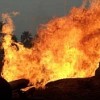
ENVIRONMENT-NIGERIA: Playing With Fire
Nigeria's gas flare-out date has once again been extended - this time to 2011. The decision follows 25 years of political procrastination by the federal government and illegal behaviour on the part of major oil multinationals engaged in flaring associated gas (AG), the byproduct of oil production in the Niger Delta.
ENVIRONMENT-MAURITIUS: Hold Your Fire
Mauritius appears to have a happy problem with the 400,000 tons of waste it produces each year. The island's only landfill is full and the government must decide whether to turn to incinerating waste - generating electricity in the process - or to compost it, to the benefit of farmers.SCIENCE: G8 Failure to Launch on Climate
The G8's failure to make meaningful commitments on climate last week pushes the world ever closer to global climate catastrophe, experts warn. Without commitments to take action, there is little comfort in G8 countries' agreement to keep overall global warming below 2.0 degrees Celsius.CLIMATE CHANGE: G8 Declares a Lack of Promise
The G8 summit is no climate change meeting, and not formally associated in any sense with the series of negotiating meetings leading up to the climate change conference in Copenhagen in December. But the outcome of a G8 sponsored forum on climate change should get environmentalists worried about any outcome in Copenhagen.G8: The Five Throw a Challenge
"The world needs a new global governance," the G5 declared Wednesday, "the construction of which must be based on inclusive multilateralism." As rhetoric goes, this might sound like more of the same. But the time and place of that declaration gave the words a new significance.G8: It Will Be a Tale of Two Summits
There is a reason that eight and five do not add up to 13 when it comes to the G8. And it is not just that the five developing countries that now attend the summit of the eight mighty ones as a matter of course are less rich. It's because they have their own way to go, and parallel with the G8 meet, their own summit to attend.
Q&A: "It’s Wrong to Burn Food of the Poor to Drive Cars of the Rich"
The world needs to overcome "the bizarre irony that rural areas, where food is grown, is home to cruel poverty and hunger," says Ismail Serageldin, former chair of the Consultative Group on International Agricultural Research (CGIAR).
AGRICULTURE: A Stormy Time for Indigenous Wisdom
Indigenous peoples risk losing control over their traditional knowledge if the World Intellectual Property Organisation (WIPO) insists on strict standards for managing access to information.TRANSPORT-BRAZIL: Recharge Your Batteries Here
Brazil has long been committed to developing alternatives to fossil fuels to power its vehicle fleet, to the extent that 90 percent of new cars sold in the country are flex-fuel, running on ethanol or gasoline in any proportion. Now the government is embarking on another technological field: electric vehicles.G8: Not Everyone Is Following the Leaders
Many civil society organisations are staying on in Sardinia island in support of a region severely affected by the economic crisis, after the G8 leaders summit was moved from there to the city of L'Aquila.
ENVIRONMENT: Scientists Study the Riches of the Mexican Pacific
Mexico’s Pacific coast, one of the world's richest seaboards in terms of biodiversity, has been the focus of very few scientific studies. A new observatory aims to fill that void.« Previous Page — Next Page »


As unsustainable human consumption and production systems are driving changes in average temperatures and weather patterns, "abnormal" is increasingly becoming the norm. So far, a lack of financing has been standing in the way of a comprehensive global plan for climate adaptation, and a global financial crisis has contributed to an increasing reliance on public-private partnerships. Our Climate Change page provides you with the latest news about international and local efforts to address what's frequently been called "the challenge of our time", the forces behind the climate change and the impact it has on the world's most vulnerable populations. Along the way, we bring you stories on growing citizen awareness, new scientific data, and emerging climate policies towards sustainable development.

The Week with IPS

Tracking global progress towards a sustainable world

