
Monday, September 28, 2026



News and Views from the Global South
Climate Change

Climate Finance Loans a Disaster for Climate-Burdened African Communities
African environmental activists at the ongoing climate summit (COP29) in Baku have called on climate financiers to stop suffocating poor countries with unbearable loans in the name of financing climate adaptation and mitigation on the continent.
Women, Indigenous Communities Must Lead Climate Finance Allocations at COP29—Plan International Global Director
Plan International, a global leader in advocating for children’s rights and gender equality, sees the need for women and Indigenous people to be at the forefront of climate negotiations.
CGIAR Developing Farmers’ Resilience in the Face of Climate Shocks
As COP29 negotiations continue in Baku, agricultural leaders are pitching the need for climate-resilient and data-driven solutions to support marginalized farmers and low-income communities.
Invest in Flooding Research Today To Protect Tomorrow
The United Nations recently released the 2024 Nationally Determined Contributions synthesis report, just weeks before presidents, global leaders, climate scientists and activists convene in Azerbaijan for the 2024 United Nations Climate Change Conference. The report reveals that current national climate plans are not sufficient.
COP29 Negotiators Urged to Define Financial Path to Education for Climate-Affected Children
Directly destroying schools and learning materials, climate shocks are increasingly taking away the right to education. A staggering 400 million students globally experienced school closures from extreme weather since 2022. As COP29 negotiations deepen, defining a sustainable financial path to learning for vulnerable children, particularly those caught up in crises and conflict, is critical and urgent.
COP29: African Countries Must Wake Up from ‘Distributed Carbon Emission Guilt’ to People-Centered Climate Action
Global warming is no longer just an issue for the environment but a crisis of life itself. Yet, African governments’ climate action strategies, specifically those submitted under the Nationally Determined Contributions (NDCs), remain disproportionately focused on emission reductions—an approach that fails to address the most pressing health needs of African communities. For many Africans, it’s hard to explain why their leaders prioritize reducing emissions, which are rather low and insignificant when the immediate threat of climate change is not their carbon footprint but their vulnerability to its effects.
‘Show Me the Money’—Grenada PM Calls for Climate Justice
"Though I come from a 'no worries' island, climate change is deeply worrisome for us," Grenada's Prime Minister Dickon Mitchell told IPS in an exclusive interview at COP29 currently underway in Baku, Azerbaijan. Asked how his country was recovering from Hurricane Beryl, Mitchell said the island in the last 24 hours “experienced flash flooding and landslides... So, apart from Hurricane Beryl, we are also dealing with other climate catastrophes.”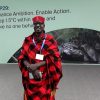
Seeking COP29 Solutions as Desert Lake Disrupts Harmonious Co-Existence With Indigenous Community
Climate change exacerbates the difficulties already faced by indigenous communities, multiplying their vulnerabilities from political and economic marginalization and loss of land and natural resources. The ongoing climatic carnage is displacing indigenous communities at seven times the rate of the global population.
‘Drill, Baby, Drill’
During his electoral campaign, incoming U.S. President Donald Trump highlighted that the U.S. holds more oil reserves than any other country, even surpassing Saudi Arabia. In this context, he openly encouraged big businesses to tap into these reserves with the words: ’Drill, baby, drill.’
UNDP’s Sustainable Energy Director Calls For Innovative Financial Solutions for Adaptation, Mitigation
Riad Meddeb, Director of the Sustainable Energy Hub at the United Nations Development Programme (UNDP), stressed the urgency of finding innovative financial solutions during COP29.
2024 Poised to Be Warmest Year Ever—WMO Warns of Escalating Climate Crisis
Once again, scientists issued a red alert by analyzing ongoing world’s weather and its impact on the climate. The year 2024 is on track to be the warmest year on record, contributed by an extended streak of high monthly global mean temperatures.
The 1.5 degrees Celsius Target from Paris (Probably) Died on November 5th.
So, the worst has happened. American voters have apparently just elected the most chaotic and kleptocratic individual in their country’s political history as their president. (We say ‘apparently’, because these days nothing can be certain about the integrity of the US political or electoral system – as is the case with far too many other countries.)
Countdown Begins in Defining Twelve Days to Historic Global Climate Deal
The 29th session of the Conference of the Parties on climate change has officially kicked off in Baku, Azerbaijan, with the promise of striking yet another historic global climate deal and finance adaptation, gender responsive action and financing, and forgotten issues such as food waste are top on the agenda as every action is as crucial as every fraction in the rise or fall of a Celsius degree.
4 Reasons Why the Climate Coalition Will Win Despite Trump
The nation which more than any other caused the climate crisis will leave it to the rest of the world to sort out the mess. That is a takeaway from the US election last week.
COP29: Making Space Applications Work for Women in Agriculture
When the first woman in space, Valentina Tereshkova, orbited the Earth in 1963, there were only three active Earth observation satellites. Today, the number is 114 times greater.
Cryosphere Crisis: Scientists Warn of Devastating Global Impacts Without Urgent Climate Action
Scientists warn of vastly higher impacts on billions of people’s livelihood and cost to the global economy by the accelerating losses in the world’s snow and ice regions, aka the cryosphere. Over 50 leading cryosphere scientists released an annual report on the status of the world’s ice stores on Tuesday (November 12) at the UN Climate Conference (COP29) in Baku. An updated report on the world's ice warns of “drastically higher costs without immediate emissions reductions.”
Farming in Crisis: Suicides and Climate Change Threaten India’s Agrarian Future
"Farming is in my blood, and I can’t imagine doing anything else," said Mahim Mazumder, a farmer from Assam. "Even though the past three to five years have seen drastic changes—with temperatures rising so much that even sitting under a tree no longer offers relief—I will keep farming, even if it only yields a small harvest. I've spent my entire life farming, and despite all the challenges, I’ll continue."
Climate Justice

Climate change continues to pose an existential threat to humanity. Recent science estimates that we may have less than six years left to change course.

UN Climate Summit Needs Action – not a COP-Out
The Paris Agreement on climate change is a decade old this month. While there has been progress - with new net zero pledges and new technological solutions, we are still grappling with the reality that global temperatures continue to soar. 2023 was the hottest year ever on record.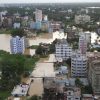
Cities Will Be Hit Hardest By Climate Change, UN Report Warns
Cities are in a unique position, simultaneously the biggest emitters of greenhouse gasses and the most affected areas of the greenhouse effect. As a new UN report shows that rapid urbanization and industrialization have adverse effects on the environment, causing a rise in sea levels, prolonged rainfalls and flooding, and an increase in overall temperature. The coastal areas that cities most often inhabit face the brunt of these effects, with marginalized populations being the most vulnerable.
Sic Transit Gloria Mundi: Preserving the Cultural Heritage
pyramids is the monument I have made,
a shape that angry wind or hungry rain
cannot demolish, nor the innumerable ranks
of the years that march in centuries.
I shall not wholly die:
some part of me will cheat the goddess of death.
« Previous Page — Next Page »


As unsustainable human consumption and production systems are driving changes in average temperatures and weather patterns, "abnormal" is increasingly becoming the norm. So far, a lack of financing has been standing in the way of a comprehensive global plan for climate adaptation, and a global financial crisis has contributed to an increasing reliance on public-private partnerships. Our Climate Change page provides you with the latest news about international and local efforts to address what's frequently been called "the challenge of our time", the forces behind the climate change and the impact it has on the world's most vulnerable populations. Along the way, we bring you stories on growing citizen awareness, new scientific data, and emerging climate policies towards sustainable development.

The Week with IPS

Tracking global progress towards a sustainable world

