
Sunday, November 8, 2026



News and Views from the Global South
Environment

Environmental Disasters Creating More Migrants Within Countries – Podcast
 In the final months of 2021 you likely saw countless media reports of migrant men, women and children getting blocked at borders trying to enter various countries. Two flashpoints were the Mexico-US border and the border between Poland and Belarus, but there were many others.

Ecstasy as Zimbabwe’s Smallholder Farmers Secure European Pineapple Market
In her wildest dreams, smallholder farmer Sarudzai Sithole never imagined that her pineapples could someday stock the produce section of Europe’s finest supermarkets.
Why Does Yangtze River Have its Own Protection Law?
The new Yangtze River Protection Law (YRPL), which came into effect on March 1, 2021, is China’s first legislation on a specific river basin. The Yangtze River is China’s longest and largest river system, stretching over 6,300 kilometres and has over 700 tributaries. With a drainage basin covering more than 1.8 million square kilometres, approximately one-fifth of China’s total land area, the river basin is home to over 40% of the country’s population.
Severe Water Stress, Absolute Scarcity for 2 to 4 Billion Humans by 2025
Now it comes to the scary water crises, as it is estimated that, globally, over two billion people live in countries that experience high water stress.
The Impact of Air Pollution on Child Health
Air pollution is a global public health crisis, and air pollution levels in India are among the highest in the world, posing a heavy threat to the country’s health and economy. According to the 2019 World Air Quality Report, India is home to 21 of the 30 most polluted cities in the world. In these cities, air quality can be as much as 10 times over the safe limits of air pollution recommended by the WHO.
Uruguay Launches Sovereign Bond Linked to Climate Targets
Sustainable finance continues to expand in Latin America, as governments and companies take advantage of growing interest among investors in instruments that protect biodiversity and respond to the climate crisis. In 2020, more than US$16 billion of green, social and sustainable bonds were issued in the region.
2021: Yet Another Challenging Year in Review
 In 2020, 1.8 million people across the world died from COVID-19.
At the end of 2021 the death toll has risen to over 5.3 million.

Interview with Siddharth Chatterjee, UN Resident Coordinator in China, on the Beijing Winter Olympics and Paralympics
The interview was originally conducted by Beijing Daily. Beijing Daily: The world is paying attention to whether the Beijing Winter Olympic Games can be successfully held 6 months after the Tokyo Olympics in the face of COVID-19. How do you evaluate the preparations for the Beijing Winter Olympics? What is the key to the success of the Beijing Winter Olym-pics? What kind of signal will the successful hosting of the Beijing Winter Olympics send to the world?
2021: A Grim Year for Planet Earth
Between the COVID-19 pandemic and the deadly manifestations of the climate crisis, there were few places to hide for most of us in 2021. Ageing billionaires riding booming stock markets could take their first flights into space in their own rockets, but for the rest of Planet Earth’s 8 billion people with their feet on the ground it was a year of placing hope in the hands of scientists and our political leaders to turn the tide.
America Faces a Fateful Crossroad in 2022
When my assistant handed me copy expressing my greetings and good wishes for 2022 for approval, I paused, thinking, “is that all I can say, just hope for a better, brighter new year?”
Sugarcane Gas Opens New Horizons for Energy Agriculture – Video
Nothing is wasted from sugarcane, one can conclude from the biomethane production process at the Cocal plant, a Brazilian company that produces sugar, ethanol, electricity and other by-products from sugarcane agro-industrial waste. 
Blue Ocean Solutions for Climate Resilience and Accelerated Development
Seychelles’ 115 islands are an exotic ocean ecosystem of beaches, coral reefs, and unique plant and animal species. Concerned with the impacts of climate change, the country has committed to decarbonize by 2050.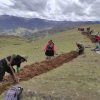
Rural Women in Peru Seed Water Today to Harvest It Tomorrow
"When I was a little girl we didn't suffer from water shortages like we do now. Today we are experiencing more droughts, our water sources are drying up and we cannot sit idly by," Kely Quispe, a small farmer from the community of Huasao, located half an hour from Cuzco, the capital of Peru's ancient Inca empire, told IPS.
What Would Europe, the US, Do with One Billion Climate Refugees?
A bit of fiction. Or maybe not. If things keep going the way they are, the result will be that such a massive flux would create instability and tensions, impact the global markets, cause record prices of fossil fuels, food and everything else, and the bankruptcy of big private financial corporations…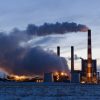
COP26 Agreed Rules on Trading Carbon Emissions – But They’re Fatally Flawed
One surprise from COP26 – the latest UN climate change conference in Glasgow – was an agreement between world leaders on a new set of rules for regulating carbon markets. This would allow countries to trade the right to emit greenhouse gases.
Green Gas: Energy as a By-Product of Sugarcane in Brazil
First came sugar. For four centuries, it was the main sugarcane product in Brazil. But since the 1970s sugarcane has grown and diversified as a source of energy: ethanol, electricity and biogas.
We Must Rise to the Occasion, Now.
In 2021, COVID-19 continued to plague the world – a world already burdened by armed conflicts, climate-induced disasters and forced displacement. Communities, nations and people struggled to maintain normalcy in the midst of the abnormal. This was especially notable in the education sector – a sector that is the very foundation for achieving all human rights and all Sustainable Development Goals.
Quest for Asian Innovation & Solutions in a Networked World
The UN’s 76th anniversary in 2021 arrived at a time of great upheaval and change. If the world is to transition from COVID-19 and we are to deliver on our promises to future generations - to secure a world where everyone can thrive in peace, dignity, and equality on a healthy planet – then 2022 must be the year we change both gear and discourse.
Covid-19 Has Accelerated New Agtech Development and Adoption in Asia-Pacific!
While the COVID-19 impact has been predominantly negative, the pandemic appears to have sparked increased interest in developing agricultural technology (agtech) to improve the efficiency of food systems, from input supplies through farming and processing to delivery and retail.
Nature-Based Solutions for Enhancing Coordinated Action Around Climate Change, Land and Biodiversity
A key outcome of COP26 climate summit is the enhanced focus on “nature-based solutions” – the plans for people to work closely alongside nature to avert a planetary catastrophe.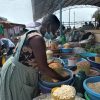
High Yield Seeds Could Address Food Shortages and Place Africa on Track to Zero Hunger – Experts
Rahab Munene’s shoe selling business crumbled at the height of COVID-19 in 2020. She traded the enterprise for a mobile grocery along the Thika Superhighway, Kiambu County.« Previous Page — Next Page »





Through our global network of local writers, we are continuing our award-winning coverage of global and local environmental challenges, with a focus on the people for whom the ecosphere matters in a direct way: rural dwellers who have little means to protect themselves against adverse conditions; communities that need to switch to sustainable development in order to survive; poor women and children, who are the most vulnerable in natural disasters. Sponsored by the United Nations Environment Program (UNEP), the United Nations Development Program (UNDP) and The World Bank (WB), IPS also maintains the award-winning Tierramérica, a specialised information service on environment and development.

The Week with IPS

Tracking global progress towards a sustainable world


