
Monday, November 2, 2026



News and Views from the Global South
Environment
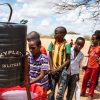
Water Scarcity: Coming Soon
In 1995, a highly-respected water expert in South Africa, Bill Pitman, in very concise terms illustrated that the country, already battling a growing lack of water then, would likely run out in 25 years if it did not increase its supply.
Golden Rice: Triumph for Science
After almost two decades, Golden Rice was approved last week by the Philippines authorities for use as food. This together with the approval of the bioengineered Bt eggplant represents a landmark victory of science over misinformation; it will provide consumers with improved nutrition (Golden Rice) and safer food (Bt eggplant).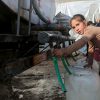
Water Poverty: The Political Connection
The water we drink and the air we breathe are the basis of life. With universal access to clean water and sanitation, we will be healthier, our economies will be stronger, gender equality will be more achievable, and more children will stay in school.
Child Rights’ Experts Warn that Displaced Children and Young People Risk Being Wiped Out of the Education System
The difficulties in accessing education faced by children and young people forcibly displaced from their homes were today laid bare in a virtual high-level roundtable convened by UNHCR, the UN Refugee Agency, Education Cannot Wait (ECW), the UK and Canada.
Protecting Plants Will Protect People and the Planet
Back-to-back droughts followed by plagues of locusts have pushed over a million people in southern Madagascar to the brink of starvation in recent months. In the worst famine in half a century, villagers have sold their possessions and are eating the locusts, raw cactus fruits, and wild leaves to survive.
Beware UN Food Systems Summit Trojan Horse
Undoubtedly, the world needs to reform existing food systems to better serve humanity and sustainable development. But the United Nations World Food Systems Summit (UNFSS) must be consistent with UN-led multilateralism. For the first time ever, the World Economic Forum (WEF), a partnership of some of the world’s most powerful corporations, is partnering the UN in launching the Summit, now scheduled for September, with its ‘Pre-Summit’ beginning today.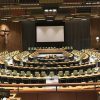
Is it Time to Create a UN Political Body for Climate Change?
As a wisecracking cynic once remarked: “The sun would never set on the British empire because God wouldn’t trust an Englishman in the dark“. Perhaps it was an uncharitable remark because most of the British colonies have long gone.
Why Are Some Pacific Lagoon Corals Resistant to Climate Change?
Abundant with diverse coral and fish species, the South-West Pacific reefs play a critical role in the marine ecosystems and economies of Pacific Island Countries and Territories (PICTs). While there is no question that climate change is affecting coral, the level and type of impact is not uniform. To help us better understand why these differences exist, a team of marine scientists from New Caledonia set off on a scientific mission to sample coral species around the mainland of this Pacific Island nation.
Rwandan Farmers Pin Hopes on New Tech to Tackle Food Losses
Rwanda is trying to reduce post-harvest loss by relying on new technologies to increase the amount of food available for consumption and help smallholder farmers confront some challenges caused by the overproduction of staple crops.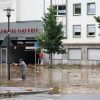
Europe’s Catastrophic Flooding Was Forecast Well in Advance – What Went So Wrong?
Almost 200 people dead and many others still missing. Billions of euros’ worth of damage. Communities devastated. Thousands of homes destroyed and their occupants traumatised.
Confronting a Worsening Climate
Across the United States, the last few months have brought along many climate-linked disasters. From surging wildfires in Hawaii to record-breaking Pacific Northwest heat waves to drought across the western states. The southwestern states also have seen heavy rains that resulted in flash flooding events.
Why is the UK Government Turning off the Tap During a Global Pandemic?
The UK government’s decision to reduce its Official Development Assistance (ODA) budget from 0.7% of gross national income (GNI) to 0.5% -- a cut of around £4 billion this year -- was confirmed last week by a majority of 35 votes in a House of Commons vote.
El Salvador’s Bitcoin Mining Proposal Faces Many Hurdles
That a country like El Salvador, poor and with many social needs, would embark on an effort to attract so-called bitcoin mining, which demands a huge amount of energy and does not generate large numbers of jobs, is an extravagance that many find hard to digest.
Cleantech Entrepreneurs Driving a Green Recovery in Barbados
Prior to the COVID-19 pandemic, the Eastern Caribbean island nation, famed for its beautiful landscapes, pristine white-sand beaches and temperate climate, attracted around a million tourists each year.
The Future of Food is in Our Hands
With its political and economic clout, the G20 should lead in delivering sustainable food systems as the world grapples with rising hunger, malnutrition and inequality.
Striving for Sustainability in Global Food Systems
As the global community gears up for the 2021 UN Food Systems Summit in September, it is significant that preparations are also underway by Global Reporting Initiative to deliver a new sector reporting standard for agriculture, aquaculture, and fishing.
Caribbean aims to Turn Foul-smelling, Enviro Problem Sargassum Seaweed into High-Value Products
 A regular visitor to the islands of the Caribbean has become a dreaded nuisance over the past ten years. The sargassum seaweed that typically washes ashore now arrives each year in overwhelming, extraordinary amounts for reasons that are not entirely clear.

At the UN, Climate Change & Security Must Be Tackled Together
Could the next wars be triggered by climate change? Until recently, the question might have seemed like science fiction, but now it is very real. Ethiopia and Egypt are locked in an upward spiral of tensions over the Nile, as a combination of dams and shifting weather patterns pose existential risks to both countries.
“If Only the Fighting Would Stop “ A Sudanese Woman’s Wish
With her bare hands, Roda clears debris and forages scraps from her wrecked teashop after attackers scorched Gumuruk, a town in the Greater Jonglei region where conflict frequently disrupts daily life and stifles progress.New Global Framework for Managing Nature Through 2030: 1st Detailed Draft Agreement Debuts
The UN Convention on Biological Diversity (CBD) Secretariat today released the first official draft of a new Global Biodiversity Framework to guide actions worldwide through 2030 to preserve and protect Nature and its essential services to people.
Combating COVID-19 and Ensuring No One is Left Behind
If the world wants to beat back the COVID-19 pandemic and ensure no one is left behind in the recovery, two issues thrown into sharp relief by the pandemic need attention: digitalization and regional cooperation.« Previous Page — Next Page »





Through our global network of local writers, we are continuing our award-winning coverage of global and local environmental challenges, with a focus on the people for whom the ecosphere matters in a direct way: rural dwellers who have little means to protect themselves against adverse conditions; communities that need to switch to sustainable development in order to survive; poor women and children, who are the most vulnerable in natural disasters. Sponsored by the United Nations Environment Program (UNEP), the United Nations Development Program (UNDP) and The World Bank (WB), IPS also maintains the award-winning Tierramérica, a specialised information service on environment and development.

The Week with IPS

Tracking global progress towards a sustainable world


