
Tuesday, November 3, 2026



News and Views from the Global South
Environment
New Global Framework for Managing Nature Through 2030: 1st Detailed Draft Agreement Debuts
The UN Convention on Biological Diversity (CBD) Secretariat today released the first official draft of a new Global Biodiversity Framework to guide actions worldwide through 2030 to preserve and protect Nature and its essential services to people.
Combating COVID-19 and Ensuring No One is Left Behind
If the world wants to beat back the COVID-19 pandemic and ensure no one is left behind in the recovery, two issues thrown into sharp relief by the pandemic need attention: digitalization and regional cooperation.
Bridging the Gap and Crossing the Bridge
It may be a challenge, but it is also an absolute necessity: bridging the gap between international law and reality and quickly crossing the bridge to reach all crisis-affected children and youth left furthest behind. Inclusive and equitable quality education is the right of every girl and boy and the objective of Sustainable Development Goal 4.
Q&A: UN Food Systems Summit Opportunity for the World to Unite on Healthy, Fair & Sustainable Food Systems
Before the COVID-19 pandemic upended every sphere of life, the world was lagging on a goal to end hunger by 2030. According to the United Nations, more than 820 million people had already been categorised as food insecure, meaning they lacked access to reliable and sufficient amounts of affordable, healthy food.
“The Critical Importance of Ecosystem Restoration”
June 2021 marked the launch of UN Decade on Ecosystem restoration. This effort aims at reversing the damage that us humans have caused and are still causing to Nature. It is clear that we have to reverse course and spare no effort into making this ‘Decade on Ecosystem Restoration’ a success. Preserving Nature and maintaining its services are critical for our survival on this planet and for our livelihoods.
Calls to Halt Construction of Massive Oilfield in One of Africa’s last Wildernesses
Wildlife and environmental campaigners have called for international action as concerns grow over a project to create a massive oilfield in one of Africa’s last wildernesses.
Bangladesh’s Indigenous Forest Dwellers Fear Losing Ancestral Land as Officials Grapple with Land Grabs
When the Bangladesh Forest Department felled Basanti Rema’s banana orchard, Rema, a Garo indigenous forest-dweller of Madhupur Forest, felt she was living a nightmare. Rema, from Pegmari village in Madhupur, Tangail district, had cultivated the banana plants on half an acre in the Madhupur Forest. But the Forest Department claimed that the land on which the bananas were cultivated belonged to the department.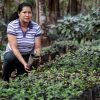
Why we Need to Build Economies– not Walls– to Stop Migration
If you speak to farmers in El Salvador, many will tell you about the time they were driven to head north across Central America towards the US. The routes to the border are many, but the origins are so often the same: desperation and hope that better employment opportunities can be found elsewhere.
Threat of Blackouts in Brazil Highlights Climate Crisis
Twenty years after the blackout that prompted nine months of rationing to keep the power grid from collapsing, Brazil may see a repeat of the traumatic situation, this time with a more obvious climate change undertone.
Stopping Marine Plastic Pollution: A Key IUCN Congress Goal
Documented images of albatross chicks and marine turtles dying slow deaths from eating plastic bags and other waste are being seared into our consciences. And yet our mass pollution of Earth’s seas and oceans, fuelled by single-use plastics and throw-away consumerism, just gets worse.
Water: A Matter of Survival in the World of Pandemics
The COVID-19 pandemic has undeniably amplified the existing vulnerabilities of billions of people worldwide. Marginalized communities in developing countries were excluded from social protection and support.
Climate Change: Your Choices Matter
Life is a series of choices. And choices have consequences. When it comes to climate change, some choices have bigger consequences than others, and there's a startling takeaway: your next "big" decision will play a meaningful role in our collective ability to reach Net-Zero by 2050.
With a Little Help, Local Communities Rack up Record Success with Heritage Rice Grains
Madhuri Roy left the famous Kamakhya temple in Guwahati, Assam. She had sought the goddess’s blessings for the safe delivery of her youngest daughter's baby, which was due in a few weeks. Shanty shops lined the temple outside and Roy’s eyes fell on a stack of black rice packets. All through her daughter’s pregnancy she had craved her childhood favourite black rice pudding. But during the country’s COVID-19 lockdown Roy could not procure it even though Meghalaya, her Himalayan home state, grew it.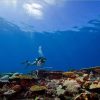
The Last Coral Reef Wilderness: the Chagos Archipelago
On the Global Reef Expedition—the largest coral reef survey and mapping expedition in history—scientists from the Khaled bin Sultan Living Oceans Foundation traveled to the Chagos Archipelago to study some of the most remote coral reefs on Earth.
Why Pacific Island Nations, like the Federated States of Micronesia, need Climate Change Finance for Food Security Now
Robby Nena is one of the many farmers and fishermen on the frontline of climate change in the Federated States of Micronesia (FSM), where coastal flooding and erosion, variable and heavy rainfall, increased temperature, droughts and other extreme weather events are becoming all too common.
To Build Back Better from the Pandemic, We Must Overhaul the Way We Deal with Development Finance
Over the past 18 months, the impacts of the coronavirus pandemic have transformed our lives and prompted a period of deep reflection as a global community. In some sense, we are only now starting to understand our vulnerabilities, and in particular, how deeply exposed and interconnected we are as people, communities and as countries.
Southeast Asia and Food Price Inflation: Double Whammy
In 2020, Southeast Asian countries were already facing varied challenges that affected the region’s food supplies and prices. The onset of the Covid-19 pandemic later in the year exacerbated the region’s food insecurity and poverty. Southeast Asian countries need to take a hard look at food security, even as the double challenges — climate change and the Covid-19 pandemic — continue to fester.New global index seeks to transform how developing nations are supported
The Commonwealth Secretary-General Patricia Scotland has spoken today urging the international community to make crucial changes to how it delivers finance to developing nations, proposing a new system that moves beyond the use of GDP as the sole criteria for receiving certain types of support.
Ivanancy Vunikura: Navigating the Waves of Change
In April 2021, the Pacific Community (SPC) coordinated the 14th Triennial Conference of Pacific Women and the 7th Meeting of the Pacific Ministers for Women, hosted by the Government of French Polynesia. The conference brought together decision-makers, development partners, research institutions and civil society organisations. Following this landmark event, SPC will continue to publish portraits of inspiring gender champions who are at the heart of Pacific development programmes.
Latin America Vastly Underspends on Green Post-Pandemic Recovery
Latin America is investing too little in a green recovery from the Covid-19 pandemic, with only 2.2% of the region's stimulus funds spent on environmentally sustainable projects last year, according to a new platform developed by Oxford University and the UN.
Water Harvesting Strengthens Food Security in Central America
At the school in El Guarumal, a remote village in eastern El Salvador, the children no longer have to walk several kilometers along winding paths to fetch water from wells; they now "harvest" it from the rain that falls on the roofs of their classrooms.« Previous Page — Next Page »





Through our global network of local writers, we are continuing our award-winning coverage of global and local environmental challenges, with a focus on the people for whom the ecosphere matters in a direct way: rural dwellers who have little means to protect themselves against adverse conditions; communities that need to switch to sustainable development in order to survive; poor women and children, who are the most vulnerable in natural disasters. Sponsored by the United Nations Environment Program (UNEP), the United Nations Development Program (UNDP) and The World Bank (WB), IPS also maintains the award-winning Tierramérica, a specialised information service on environment and development.

The Week with IPS

Tracking global progress towards a sustainable world


