
Saturday, November 7, 2026



News and Views from the Global South
Environment

Horn of Africa Drought Threatens Re-run of Famines Past
Humanitarian groups and the United Nations are warning of another drought in the Horn of Africa, threatening a repeat of the deadly dry spell and famine that claimed lives in Somalia and its neighbours eight years ago.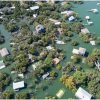
How Best to Tackle Inequality in the 21st Century? Start with Climate Change
Do you prefer to hear good news or bad news first? I will begin by giving you the (unsurprisingly) bad news. Today’s world is an unequal place. Standards of living vary massively both between and within countries.
Will a Global Fund Help Deliver UN’s Development Agenda?
The United Nations, which has been tracking both the successes and failures of its highly-ambitious Agenda for Sustainable Development, has warned that “progress has been slow” in many of the 17 Goals after four years of implementation.
Parts of Kenya are Already Above 1.5˚C
Kenya’s getting hotter. Much hotter than the 1.5˚C increase that has been deemed acceptable by global leaders, and it is too hot for livestock, wildlife and plants to survive. Thousands of households, dependent on farming and livestock, are at risk too.
Heatwaves are a ‘New Normal’, Says Red Cross
It is barely the middle of the month, but the verdict is in: July has been hot.
The Road to Zero Hunger
Over 820 million people across the globe are currently undernourished, according to a new report released here.
Want to Inspire More People to Act on Climate Change? Broaden the Framing
“It has never happened before,” is a sentence that is becoming excessively common in the news due to a changing climate where new extremes are becoming normal.
Rwanda Prepares the Foundations for Climate-Resilient Cities
How do you plan a resilient city? A city that can withstand climate change impacts, and the natural disasters that it produces at increased frequencies. And how do you protect the city, its individuals and communities, its business and institutions from either the increased flooding or prolonged droughts that result? It’s a complex question with an even more complex solution, but one that the central African nation of Rwanda is looking to answer.
A Relentless Battle Against Poverty & Hunger in World’s Most Populous Region
The world’s two most populous nations-– China and India—have been making steady progress in eradicating extreme poverty, but have fallen short in their attempts to eliminate extreme hunger, according to the Bangkok-based UN Economic and Social Commission for Asia and the Pacific (ESCAP).
International Green Court: A solution to achieving climate justice?
(The Daily Star) - WE’RE running out of time on climate change. The UN Intergovernmental Panel on Climate Change’s (IPCC) report released in October 2018, revealed that there are only a dozen years left for global warming to be kept to a maximum of 1.5 degrees Celsius (2.7 degrees Fahrenheit). Reaching temperatures beyond that, even half a degree higher, will significantly worsen the risks of droughts, floods, extreme heat and poverty for hundreds of millions of people. Of course, we are already feeling these symptoms as the five hottest years on record, globally, all took place within the current decade. According to scientists at National Oceanic and Atmospheric Administration, 2016 was the hottest, 2015 the second hottest, and 2017 the third hottest—2018 is currently on track to be the fourth hottest. Urgent changes are needed in order to keep global temperatures down.
Avoiding the Mistakes of the Asian Green Revolution in Africa
Research scientists are studying groundwater resources in three African countries in order to understand the renewability of the source and how people can use it sustainably towards a green revolution in Africa.
Let’s Talk About Sex – and Why Power Matters
Every year on World Population Day (July 11), UNFPA receives queries from journalists about the total number of people around the world. Numbers are indeed important because they help governments develop policies that respond to evolving needs for services such as education and health.
Drought, Disease and War Hit Global Agriculture, Says U.N.
The United Nations has warned of drought, disease and war preventing farmers from producing enough food for millions of people across Africa and other regions, leading to the need for major aid operations.
Today’s Menu: Pesticide Salad, Leaded Fish with Plastic, Chemical Fruit
In case you were not aware or just do not remember: all you eat, drink, breathe, wear, take as a medicine, the cosmetics you use, the walls of your house, among others, is full of chemicals. And all is really ALL.
Bangladesh is our best teacher in climate change adaptation: UN ex-chief Ban Ki-moon
(The Daily Star) - Former United Nations secretary general Ban Ki-moon today said Bangladesh is the best teacher in climate change adaptation.
What Should FAO’s New Director General Focus on?
On 23 June 2019 Mr Qu Dongyu of China was elected as the new Director General of the Food and Agriculture Organization. FAO is one of the largest UN specialized agencies with a budget for 2018-19 of US$2.5 billion, offices in over 130 countries and more than 11,000 employees.
Climate Change Victims: What Will You Do Next?
Contemporary politics generates a lot of noise and smoke, with little attention devoted to understanding, analysing and fixing the causes of the noise and smoke. The global public discourse is dominated by statements made by politicians and aspirants to power, designed to shock, awe and draw support.
Climate Change Deniers Violate Human Rights
Whoever still thinks climate change is purely an environmental issue, threatening only nature, needs to think again. Climate change is also essentially a human issue because of its devastating effect on human life – and rights. It exacerbates existing inequalities, undermines democracy and threatens development at large. Likewise, by far the greatest burden will fall on those already in poverty, while the rich will be able to buy their way out of rising heat and hunger.
Solar Collectors and Solidarity Change Lives in Argentina
"This is the best thing ever invented for the poor," says Emanuel del Monte, pointing to a tank covered in black tarps protruding from the roof of his house. It forms part of a system built mostly from waste materials, which heats water through solar energy and is improving lives in Argentina.
We Can Get the 2030 Agenda Back on Track – With More Empowered, Inclusive, & Equal Partnerships
The 2030 Agenda for Sustainable Development, universally adopted in 2015, is a plan to create a better and more sustainable future for all in just 15 years, through 17 Sustainable Development Goals (the SDGs). It sounds implausible.
Why Environmental and Humanitarian Action Must Be Linked
Environmental and humanitarian action is often understood as two different sectors. However, the lack of awareness regarding its intersections could lead to further long-term devastation.« Previous Page — Next Page »





Through our global network of local writers, we are continuing our award-winning coverage of global and local environmental challenges, with a focus on the people for whom the ecosphere matters in a direct way: rural dwellers who have little means to protect themselves against adverse conditions; communities that need to switch to sustainable development in order to survive; poor women and children, who are the most vulnerable in natural disasters. Sponsored by the United Nations Environment Program (UNEP), the United Nations Development Program (UNDP) and The World Bank (WB), IPS also maintains the award-winning Tierramérica, a specialised information service on environment and development.

The Week with IPS

Tracking global progress towards a sustainable world


