
Tuesday, October 13, 2026



News and Views from the Global South
Environment

New Approaches Urgently Needed to Tackle Resurgent Social Crises
Despite uneven economic recovery since the pandemic, poverty, inequality, and food insecurity continue to worsen, including in the Asia-Pacific region, which used to fare better than the rest of the Global South.
States Individually Accountable For Contributions to Climate Change—Fiji
At The Hague, the United Nation’s highest court heard Fiji, a small island nation, lay out its arguments on the threat posed by climate change and the legal obligations, especially those of developed nations.
After Gaps in UN Agreement, National Laws Must Step Up To Protect Community Land Rights
This time last year, the forestry space was abuzz with news of the big Blue Carbon deals. The deals set a staggering amount of land in Sub-Saharan Africa – 20% of the land in Zimbabwe, 10% of Liberia and Zambia, 8% of Tanzania, and an undisclosed amount of land in Kenya – to be managed by a firm in the United Arab Emirates.
Rural Laboratory Innovates in Northeastern Brazil
In the municipality of Congo, in the state of Paraiba, in the driest territory of Brazil's semi-arid region, an original initiative seeks to prove it is possible to overcome several challenges concerning family farming. It is the EcoProductive Pilot Project.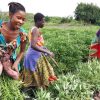
How an App Transformed Farming for Rural Tanzanian Women
In the sun-scorched soils of Moshi, where every drop of rain counts, two female farmers have defied the odds through technology. Mwajuma Rashid Njau and Mumii Rajab, once locked in a daily struggle to survive, have found a mobile phone their best ally.
Courage, not Compromise? A Rallying Cry that Failed a Deadlocked COP Meeting
Courage and not compromise. That was the motto desperately launched by members of the civil society in the twilight of the negotiations of the Plastic Pollution Treaty in Busan, South Korea last week.
Climate Change’s Dire Consequences Laid Bare at International Court of Justice Hearings
At the International Court of Justice on Tuesday, December 4, 2024, Brazil called for climate justice, and Canada urged swift action on the world's "greatest challenge," while China advocated for equity and development rights. These countries are among the 98 that will make presentations during the fortnight of hearings, after which the court will give an advisory opinion.
Focus on Africa: IPBES Plenary Session Makes Inaugural Visit to Biodiverse Continent
The Intergovernmental Science-Policy Platform on Biodiversity and Ecosystem Services’ (IPBES) first Plenary session in Africa is a “crucial acknowledgement of Africa’s important contribution to biodiversity conservation, which is a global public good, a heritage that Africa has the privilege to share with the peoples of the world,” says Dr. Luthando Dziba, from South Africa, co-chair of the IPBES Multidisciplinary Expert Panel.
Small Island States Urge International Court to Look Beyond Climate Treaties
A few UN member states responsible for the majority of emissions have breached international law, Ralph Regenvanu, a special climate envoy from Vanuatu, told the International Court of Justice in the Hague in his opening address.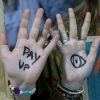
COP29 Falls Short on Finance
COP29, the latest annual climate summit, had one job: to strike a deal to provide the money needed to respond to climate change. It failed. This was the first climate summit dedicated to finance. Global south countries estimate they need a combined US$1.3 trillion a year to transition to low-carbon economies and adapt to the impacts of climate change. But the last-minute offer made by global north states was for only US$300 billion a year.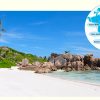
Giving the Ocean a Fighting Chance Through the Great Blue Wall
The Ocean is our life source, but for decades it has been repeatedly marred by humankind. With the disposal of pollutants into the Ocean, overexploitation of Ocean resources and the human-driven increase of global temperatures, the Ocean is changing and not for the better. Our Oceans are warming, corals are dying, fish stocks are declining, toxic chemicals are being released into the Ocean – these eAects are clearly visible today, but there is hope. There are organisations from all around the world that are fighting to save our Ocean.
Confronting the Global Crisis of Land Degradation
A major new scientific report was launched December 1, a day ahead of the opening of the 16th meeting of the Conference of the Parties to the UN Convention to Combat Desertification (UNCCD COP16).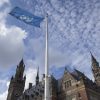
Youth-Led Landmark Climate Change Case Starts in The Hague
The intersection of law, diplomacy, and science will come under the spotlight at the International Court of Justice hearings starting today (Monday, December 2, 2024) in The Hague as the court starts its deliberations into the obligations under international law of UN member states to protect people and ecosystems from climate change.
Maya Train is Yet to Deliver Promised Benefits
Indigenous craftsperson Alicia Pech doesn’t know about the Maya Train (TM), the Mexican government's most emblematic megaproject that runs through five states in the country’s south and southeast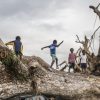
A New Compass for Climate Action
The climate crisis has become devastating across the world over the past few months: super typhoons sweeping through the Western Pacific, unprecedented superstorms in the Gulf of Mexico, raging wildfires across the Amazon rainforest, severe flooding in Central and Eastern Europe, just to mention a few. Rising seas and intensifying storms threaten to devastate communities and erase entire countries from the map.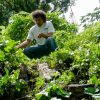
Solar Project Causes Social and Environmental Conflict in Rural El Salvador
With machete in hand, Salvadoran farmer Damián Córdoba weeds the undergrowth covering the trunk of what was once a leafy tree to show the deforestation taking place on the Santa Adelaida farm, where a company seeks to install a solar park in western El Salvador.
Equitable Ocean Prediction Systems: Bridging the North-South Divide
At their recent Leaders’ Summit in Rio de Janeiro, the G20 committed to support developing countries in responding to global crises and achieving the Sustainable Development Goals (SDGs). To meet that pledge, the world’s leading economies need to enhance global collaboration and investment in ocean prediction systems and technology.
Lahore’s Smog: With the Sun Out, the Government Lifts Restrictions
Atif Manzoor, 45, the owner of the renowned blue pottery business in Multan, had every reason to feel cheerful last week when the sun finally came out. For a good three weeks, the city of Sufi shrines had been shrouded in an envelope of thick smog.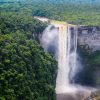
Guyana’s Dream to Be a Green Oil Producer
Long before the transformative discovery of its offshore oil in 2015, Guyana had made a strong pledge to decarbonization and climate action as set forth in its Low Carbon Development Strategy (LCDS) 2030. The development of its oil industry has led to remarkable economic growth in Guyana, including a 62.3% growth rate in 2022.
Bangladesh Bans Polythene Bags Again, Sparking Hopes for the Eco-Friendly ‘Sonali Bag’
After Bangladesh’s interim government banned polyethene bags, a new sense of hope has emerged for the Sonali bag—a jute-based, eco-friendly alternative developed in 2017 by Bangladeshi scientist Dr. Mubarak Ahmed Khan. Sonali bag, or the golden bag, is named after the golden fiber of jute from which it is made.
Never Disparage a Toilet
In most Western European countries you can purchase –or rent- a 60 square-metres flat that is equipped with two toilets, one for her and one for him. Larger apartments may feature even more. For those who can afford it, such facilities are taken for granted. Yet, nearly half the global population—over 3.5 billion people—live without access to safely managed sanitation, including 419 million forced to practice open defecation.« Previous Page — Next Page »





Through our global network of local writers, we are continuing our award-winning coverage of global and local environmental challenges, with a focus on the people for whom the ecosphere matters in a direct way: rural dwellers who have little means to protect themselves against adverse conditions; communities that need to switch to sustainable development in order to survive; poor women and children, who are the most vulnerable in natural disasters. Sponsored by the United Nations Environment Program (UNEP), the United Nations Development Program (UNDP) and The World Bank (WB), IPS also maintains the award-winning Tierramérica, a specialised information service on environment and development.

The Week with IPS

Tracking global progress towards a sustainable world


