
Sunday, October 11, 2026



News and Views from the Global South
Environment

COP29: Advancing work for Climate Finance and for Climate-Adapted Agri-Food Systems
Frustrations over the pace of climate action and the size of the finance target agreed in Baku are valid from the perspective of low-income countries, especially Small-Island Developing States (SIDS). It is also important to recognize that there has been real progress in some countries at the agri-food-nutrition-climate-water-nature-livelihoods intersection, and this seems to be particularly the case in some countries in the Alliance of Champions for Food Systems Transformation (ACF).
Once Scattered by Colonialism, Today United in Urgent Pursuit of Climate Justice
The Seychelles consider the ongoing public hearings at the International Court of Justice (ICJ) both timely and critical “for the people of the small island developing state in the middle of the Indian Ocean,” Flavien Joubert, Minister for Agriculture, Climate Change and Environment of the Seychelles, told the court today.
Nature Can Help Africa Make the Most of COP29 Outcomes
Despite mixed reactions to the outcomes of COP29, Africa has the opportunity to take the lead in harnessing nature to tackle the effects of climate change and secure a resilient future.
Redefine Business Success to Include Nature
Sustaining nature is not just an environmental goal—it is an essential component of sustainable business—and requires that we redefine business success to include the wise stewardship of nature.
Micro-Dams Spark a Wave of Water Sustainability in Brazil – VIDEO
 They look like attempts to copy the moon’s surface, in some cases, as craters multiply in the grasslands. But they are actually micro-dams, barraginhas in Portuguese, which have spread in Brazil as a successful way to store water and prevent soil erosion in rural areas.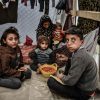
FAO Renews Its Commitment to Right to Food Guidelines
The Food and Agriculture Organization (FAO) launched its newest report on the Right to Food Guidelines on December 10, which focuses on that focused on the urgency of food security as well as the measures that will be taken by the organization to eradicate hunger and malnutrition in the coming decade.
Water Shortages Hit Zimbabwe Towns as Country Struggles To Overcome Impact of El Niño
At a borehole not far from Mpopoma High School in Bulawayo, Zimbabwe’s second largest city, 48-year-old Sakhile Mulawuzi balances a white 25-liter bucket of water on her head as she holds another 10-liter blue bucket filled with water. She trudges these back home along a narrow pathway leading to her house in Mpopoma, one of the high-density areas here.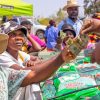
In Zimbabwe, Women Are Leading the Battle Against Climate Change
When Susan Chinyengetere started to focus on farming in her home village in south-eastern Zimbabwe, she wondered if she could earn a living and raise her children. With climate catastrophes ravaging the country, her hesitation on rain-fed agriculture worsened. But two years later, the 32-year-old mother of two from Mafaure village in Masvingo, about 295 km from the capital Harare, is now a champion in farming.
No State Is Truly Independent if It Suffers Significant Injury Without Consequence—Palau
After many decades of colonial rule, Palau was the last country to emerge from the UN Trusteeship. Palau celebrated 30 years of independence in October 2024 “and takes seriously the rights and responsibilities of independence. Independence should mean that Palau is free to build its own future and be responsible for the security, safety, and well-being of its own people,” said Gustav N. Aitaro, the Minister of State of the Republic of Palau at the International Court of Justice (ICJ).
Central American Countries Backtrack on Metal Mining Ban
Metal mining has a renewed momentum in Central America, encouraged by populist rulers who, in order to soften environmental damage, claim they can develop it in harmony with nature, which is hard to believe
Pacific Community Calls Out Urgency of Climate Loss and Damage Finance for Frontline Island Nations
Advancing development of the new Climate Loss and Damage Fund was a key call by Pacific Island nations at the COP29 United Nations Climate Change Conference being held in Azerbaijan in November. For Pacific Island Countries and Territories, the fund represents a critical step towards addressing what they consider a gross climate injustice: despite contributing less than 0.03 percent of global greenhouse gas (GHG) emissions, they bear the brunt of climate change's devastating impacts.
‘For the Human Race, Ignoring the Climate Emergency Is No Longer an Option’
At the International Court of Justice (ICJ), no matter if the country had high Himalayas, was a small island nation or was experiencing armed conflict, they all agreed that the due diligence principle and the obligation of states to prevent harm caused by climate change, especially for high greenhouse gas emitters, were non-negotiable.
South Africa’s G20 Presidency: A Call for Transformative Leadership in a Fractured World
South Africa’s G20 Presidency begun in December, with only 12% of SDG targets on track and significant backsliding on more than 30%. As we write this today, there is an urgent need for a paradigm shift and practical solutions for a progressive, people-centred, and development-driven agenda in a fractured global landscape that needs collective healing.
Plastics, Power, and Politics: The High-Stakes Fight for a Global Treaty
As the fifth round of negotiations of the Intergovernmental Negotiating Committee (INC) for a global plastics treaty concluded in Busan, South Korea (25 November-December 1 2024), the meeting underscored both the complexities and the promises of multilateralism. What we saw in Busan was indicative of other environmental treatymaking spaces, including ones on climate and biodiversity.
African Union, Nations Lay Bare Climate Vulnerabilities at UN’s Top Court
Kenya agrees with many UN member states testifying before the International Court of Justice (ICJ) that the law of international responsibility should hold countries legally responsible for major damage to the global climate system.
UNCCD COP16 Raises Hopes for Ambitious Global Land Action
While many delegates at the 16th meeting of the Conference of the Parties to the UN Convention to Combat Desertification (UNCCD COP16) hope that this could be the convention’s own Paris moment—referring to the historic Paris agreement inked by UNFCCC signatories—however, this hedges heavily on the UN parties’ seriousness to combat drought, desertification and land degradation.
Climate Finance Not Charity, But Obligation, International Court of Justice hears
Developing nations should not bear the brunt of the climate crisis caused by the industrialized world's historical emissions. This was the resounding message as the Solomon Islands, India, and Iran, among others, presented their cases before the International Court of Justice (ICJ).
Conservation Agriculture Transforming Farming in Southern Africa
On the dusty plains of Shamva District in Zimbabwe, Wilfred Mudavanhu's maize field defies drought.> With the El Niño-induced drought gripping several countries in Southern Africa, Mudavanhu’s maize crop is flourishing, thanks to an innovative farming method that helps keep moisture in the soil and promotes soil health.
COP29 Outcomes – A Call to Action for the World’s Most Vulnerable Nations
The conclusion of the 29th Conference of Parties (COP29) brings with it a blend of urgency, frustration, and a glimmer of hope for the Least Developed Countries (LDCs), Landlocked Developing Countries (LLDCs), and Small Island Developing States (SIDS).
New Approaches Urgently Needed to Tackle Resurgent Social Crises
Despite uneven economic recovery since the pandemic, poverty, inequality, and food insecurity continue to worsen, including in the Asia-Pacific region, which used to fare better than the rest of the Global South.
States Individually Accountable For Contributions to Climate Change—Fiji
At The Hague, the United Nation’s highest court heard Fiji, a small island nation, lay out its arguments on the threat posed by climate change and the legal obligations, especially those of developed nations.« Previous Page — Next Page »





Through our global network of local writers, we are continuing our award-winning coverage of global and local environmental challenges, with a focus on the people for whom the ecosphere matters in a direct way: rural dwellers who have little means to protect themselves against adverse conditions; communities that need to switch to sustainable development in order to survive; poor women and children, who are the most vulnerable in natural disasters. Sponsored by the United Nations Environment Program (UNEP), the United Nations Development Program (UNDP) and The World Bank (WB), IPS also maintains the award-winning Tierramérica, a specialised information service on environment and development.

The Week with IPS

Tracking global progress towards a sustainable world


