
Friday, November 20, 2026



News and Views from the Global South
Environment

“Latin America Faces an Environmental Emergency”
An Uruguayan expert warns that the unrelenting extraction of natural resources in Latin America fails to take into account the environmental damage, with the pretext that the wealth generated will sustain social programs.Ecobreves – BRAZIL: Lack of Seeds for Reforestation
The scarcity of seeds and seedlings of native species is blocking Brazil's plan to plant 20 billion trees over the next five years.Ecobreves – VENEZUELA: A Bicycle in Exchange for Zero Garbage
The government of the northern Venezuelan state of Miranda, which covers 8,000 square kilometers and includes the eastern one-third of Caracas, launched a "Zero Garbage" program at the Monagas school to convince students and teachers alike to recycle plastic, paper and glass.Ecobreves – HONDURAS: Coral Reefs Have Legal Protection
The Honduran Parliament approved a special law to preserve coral reefs in the Islands of Bahía, in the Caribbean, said legislator Germán Leitzelar, of the Innovation and Social Democratic Unity Party.Ecobreves – CHILE: Environmentalists on War Footing
More than 70 national and foreign organizations together issued a public statement in opposition to the proliferation of open-pit coal mining projects in Chile, citing their disastrous environmental consequences.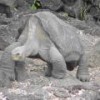
The Return of the Giant Tortoise
An ecological restoration plan in Ecuador is unfolding with the successful return of 39 Galápagos tortoises to their habitat.
MEXICO: Conservation Can Be a Weapon Against Poverty
"I cut down all of that section," said Esteban Martínez as he pointed to a rectangle of land cleared of trees in the central Mexican state of Querétaro.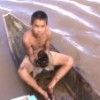
PERU: ‘Don’t Minimise’ Impacts of Amazon Oil Spill
Pluspetrol's Jun. 19 petroleum spill has left the Marañón River, in the Peruvian Amazon, with oil and grease levels thousands of times greater than the maximum allowed for human consumption, affecting more than 4,000 local residents.ANGOLA: Drilling Ever Deeper, Hoping for the Best
While BP struggles to contain an oil spill that U.S. government estimates indicate is now the largest ever in the Gulf of Mexico, questions are being asked about how well prepared Africa's oil-producing countries are for a similar incident.
BRAZIL: Belo Monte Dam Means Floods for Some, Drought for Others
"There will be two years of abundance, and then famine," says Brazilian indigenous leader José Carlos Arara, laying bare his opinion of the promises that the Belo Monte hydroelectric dam will not alter the living conditions of the people in this part of the eastern Amazon.
Gulf Spill Galvanises Activist Community
With the U.S .government and oil giant British Petroleum under fire for their handling of the more than two-month-old Gulf Coast oil spill disaster, environmental and community activists across the country are taking matters into their own hands.Caribbean Summit Seeks United Front to Economic Crisis
Caribbean Community (Caricom) leaders are gathering here next week for their annual summit still struggling to recover from the two-year global economic and financial crisis that has taken a major toll on their individual economies.
PARAGUAY: Clean Water Out of Reach for Native Peoples
Of the many things that are not within the reach of everyone in Paraguay, safe drinking water is the one the indigenous population longs for most.Free Ride for Oil and Coal Industry May Be Over
Every day, governments give away an estimated two billion dollars of taxpayer money to the fossil fuel industry. This unmatched largesse to a highly profitable sector by countries verging on bankruptcy or unable to feed large numbers of their own people is "complete madness", according to many experts.
BRAZIL: Belo Monte Dam Will Change Way of Life on Xingu River
At dawn, the "captain" fired on the village leader and the shooting began. "The forest trembled," says one survivor: the local indigenous people fled, leaving their dead behind. Only one young girl remained. But she sank her teeth into the chest of one of the assailants with such force that they slit her throat to pull her off him.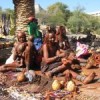
TRADE-SOUTHERN AFRICA: The End of EPA Acrimony May Be in Sight
Southern African trade ministers have pledged to sign a significantly scaled down economic partnership agreement (EPA) with the European Union (EU) before the end of 2010. Could this be the conclusion to years of divisive negotiations?AUSTRALIA: New PM Called On to Tackle Climate Change
Australia’s newly appointed prime minister, Julia Gillard, has hardly warmed her seat, yet she has already been urged to take action on climate change.
Conservation Can Be a Weapon Against Poverty
In the Sierra Gorda, in central Mexico, a new approach is being tested for protecting the environment in a way that also ends poverty.
Nature vs. Nurture in Forest Recovery
Some experts disagree with the German government's plan to extend virgin natural areas, saying it will open the way for pests. Supporters say it will help protect biodiversity.Ecobreves – BRAZIL: Self-Sufficient Streetlights
A self-sufficient streetlight created by engineer Fernando Ximenes, of the northeastern Brazilian state of Ceará, could save up to 21,000 reais (11,280 dollars) per kilometer of public lighting.Ecobreves – ARGENTINA: Referendum on Agro-Chemical Plant
Residents of Casilda, in the eastern Argentine province of Santa Fe, will gather at the voting booths in July to vote on whether an agro-chemical factory can be built in their town.« Previous Page — Next Page »


Through our global network of local writers, we are continuing our award-winning coverage of global and local environmental challenges, with a focus on the people for whom the ecosphere matters in a direct way: rural dwellers who have little means to protect themselves against adverse conditions; communities that need to switch to sustainable development in order to survive; poor women and children, who are the most vulnerable in natural disasters. Sponsored by the United Nations Environment Program (UNEP), the United Nations Development Program (UNDP) and The World Bank (WB), IPS also maintains the award-winning Tierramérica, a specialised information service on environment and development.

The Week with IPS

Tracking global progress towards a sustainable world


