
Friday, November 20, 2026



News and Views from the Global South
Environment

Río de la Plata Under Land-Based Attack
The waters of the Río de la Plata (River Plate) estuary flowing into the Atlantic Ocean suffer the effects of poor management along the Uruguayan coast, though there are some signs of improvement.Ecobreves – BRAZIL: Logging Town Halts Deforestation
The Green Municipality program in the district of Paragominas, in the northern Brazilian state of Pará, is held up as an example for having dramatically reduced deforestation, planting 50 million trees and standardizing rural properties -- which means better environmental regulation.Ecobreves – CUBA: Quake Alert Continues
Cuba has beefed up its system of prevention for dealing with a major earthquake disaster after the series of temblors that followed the tragic January quake in nearby Haiti.Ecobreves – HONDURAS: Agatha Cost 72 Million Dollars
Tropical storm Agatha left a wake of destruction in her path across Honduras three weeks ago, causing 72 million dollars in losses in farming and road infrastructure, say officials.Ecobreves – VENEZUELA: Yellow Butterflies Return to Caracas
The yellow butterflies have returned, after a harsh dry season, as the rainy months begin in the valley where Caracas is located. These insects have been absent for nearly three decades as a result of urban sprawl.Caribbean Under Fire for Pro-Whaling Stance
The votes of six Caribbean countries could help decide whether or not the International Whaling Commission (IWC) will ease the 1986 global ban on commercial whaling and allow hunting in the Southern Ocean Whale Sanctuary around Antarctica.
Q&A: “Sustainability Is Paramount for Latin American Development”
Although the financial, climate, energy and food crises continue to create new challenges, Colombian biologist Margarita Astrálaga believes that now could be the time for Latin America "to advance towards a more equitable and sustainable development."EU: To Kill, But Not Pollute
European Union subsidies earmarked for reducing air travel's contribution to climate change may help develop deadlier warplanes than those already found in the world's arsenals, Brussels officials have admitted.HONDURAS: Miskito Women Fight on Nature’s Side
Seven years ago, in the isolated Honduran region of Mosquitia, on the Caribbean coast, a group of women, mostly single mothers, elderly or widowed, overcame their fear and timidity -- thanks in part to a waste recycling project.ARGENTINA: Turning Wasteland into Woodland
In Santiago del Estero, one of the Argentine provinces hit hardest by deforestation and desertification, an oasis of native tree species is being created to restore the soil and entice back farmers who were forced to leave their land.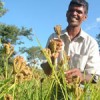
INDIA: Farmers Push Comeback of ‘Cereal of the Poor’
Eshwarappa Banakar has been a farmer most of his adult life, but these days he has also turned banker – banker of seeds, that is, and especially of millet strains.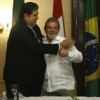
ENERGY: Brazilian Dams in Peru’s Jungle, to Supply Brazil
An energy deal that Peru and Brazil signed this week in the Amazon city of Manaus in Brazil is opposed by environmentalists and local indigenous communities in Peru where the planned hydroelectric dams will be built. What is at stake?
PARAGUAY: “Pause” Farming Expansion in Gran Chaco, Say Activists
Extensive cattle farming in northwestern Paraguay is the leading cause of deforestation in the Gran Chaco, one of the world's leading regions in biodiversity and South America's second largest forested area, after the Amazon.Obama Vows Clean Energy Push, Green Groups Want Details
Despite the pleas of some conservative politicians that parallels should not be drawn between the oil spreading over the Gulf of Mexico and the need to transition out of a reliance on fossil fuels, U.S. President Barack Obama made it clear Tuesday night that he sees the race against the spreading oil as inherently connected to the race against a changing climate.ARGENTINA-URUGUAY: Joint Environmental Monitoring, a Way Forward?
A mutual inspection system, like the one Argentina and Brazil have developed for the nuclear industry, could contribute to solving the conflict between Argentina and Uruguay over pulp mills on border rivers.
CUBA: How to Hurricane-Proof a Caribbean Island
The residents of Isla de la Juventud (Isle of Youth), the second largest of the Cuban archipelago, know a lot about hurricanes, but it wasn't enough to avoid the destructive power of Hurricane Gustav two years ago.
Ixtoc Disaster Holds Clues to Evolution of an Oil Spill
On a spring day in the Gulf of Mexico, a pipe issuing from the sea floor ruptured, sending an explosion rippling up to the drilling platform above and spewing oil into the surrounding waters. Experts scrambled to seal off the ever-increasing mass of oil by capping the pipe, clogging it or covering it. Nothing worked.
SOMALIA: Questions Abound about EU’s “Combating” of Piracy
Modern German justice had never handled a case of piracy until Jun 11, when 10 Somali seafarers, including children, were presented at a tribunal in the city port of Hamburg, some 300 km west from Berlin, on charges of robbing cargo in the Indian Ocean.
DEVELOPMENT: Violence Escalates Around India’s Largest Inland Lake
Basudev Dalai, 43, never thought that the fishing village where he has lived all his life and which has been home to generations of fishermen like him would be embroiled in violent clashes over the very source of their livelihood.CENTRAL AMERICA: Food Security Further Undermined by Climate Disasters
Adverse climatic conditions and weather-related disasters are damaging crops in El Salvador and neighbouring countries in Central America, aggravating the food vulnerability that the region already faces.Polar Heat Bringing Harder Winters
Last winter's big snowfall and cold temperatures in the eastern United States and Europe were likely caused by the loss of Arctic sea ice, researchers concluded at the International Polar Year Oslo Science Conference in Norway last week.« Previous Page — Next Page »


Through our global network of local writers, we are continuing our award-winning coverage of global and local environmental challenges, with a focus on the people for whom the ecosphere matters in a direct way: rural dwellers who have little means to protect themselves against adverse conditions; communities that need to switch to sustainable development in order to survive; poor women and children, who are the most vulnerable in natural disasters. Sponsored by the United Nations Environment Program (UNEP), the United Nations Development Program (UNDP) and The World Bank (WB), IPS also maintains the award-winning Tierramérica, a specialised information service on environment and development.

The Week with IPS

Tracking global progress towards a sustainable world


